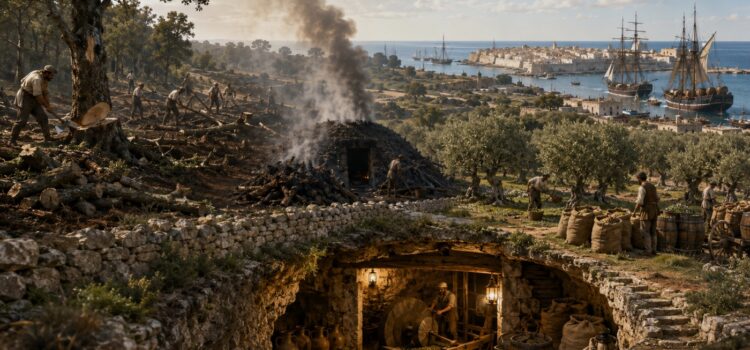
In October Puglia’s olive harvest gets going and the mills start up again. What you see inside an olive mill, the month’s confirmed events, from FèXtra in Mattinata to the Camminata tra gli Olivi, and how to ask about joining the harvest.
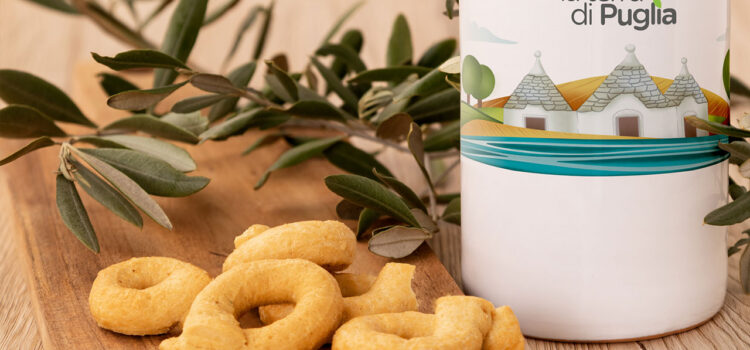
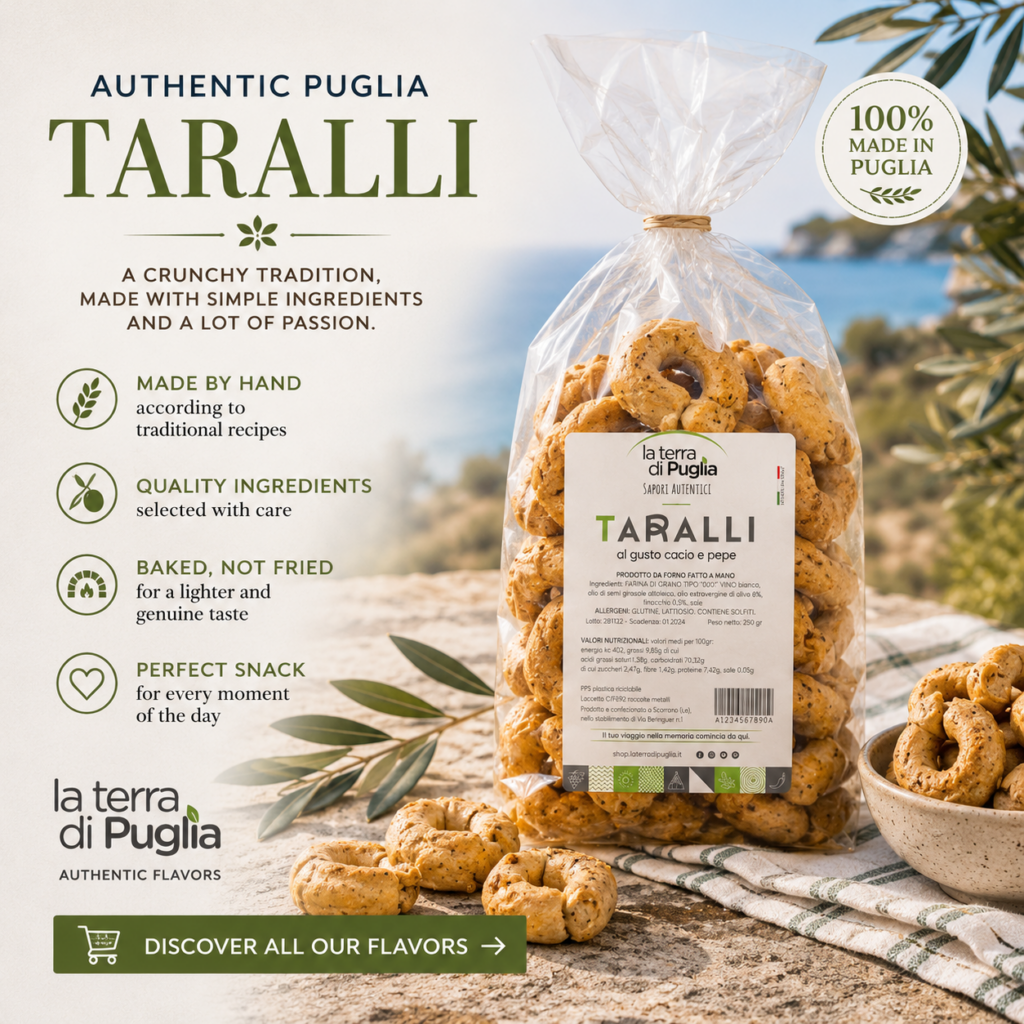
Savoury Apulian taralli have about 450-470 kcal per 100 g; a 35 g portion is about 160 kcal. Small and large taralli, wholemeal, sweet and Neapolitan ones.
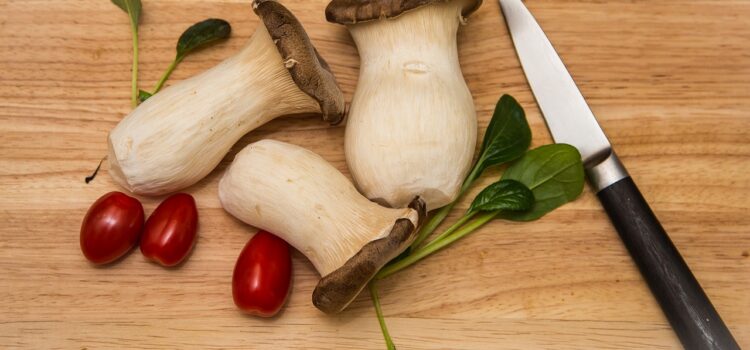
The cardoncello is the mushroom of Puglia’s Murgia plateau, growing in pastures in autumn and spring. Picking it takes a permit, and every mushroom should be checked for free by the health authority. The season, the rules and the autumn festivals.
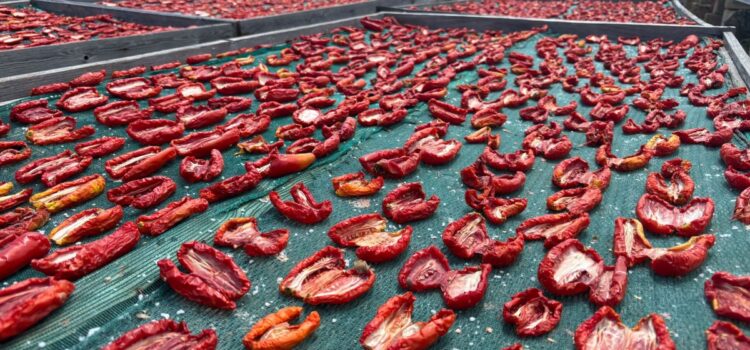
Apulian sun-dried tomatoes are salted and dried hard. How to soften them: a rinse, a short boil or a soak in water and vinegar, then garlic, oil and herbs.
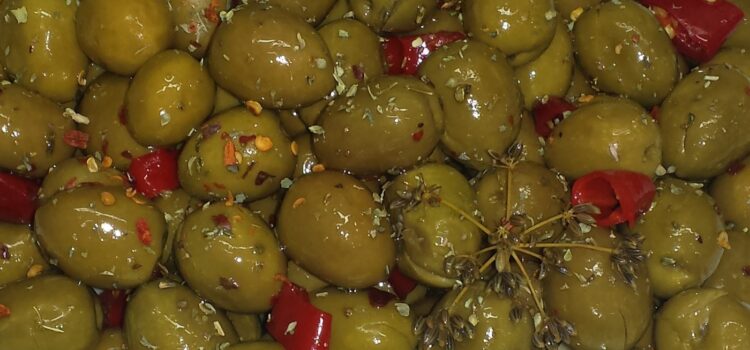
In October the biggest olives never went to the mill: they were split with one sharp tap, soaked for a week in water changed every day, then dressed with garlic, wild fennel and chilli. How cracked olives were made at home in Puglia.
The 2026-2027 season has opened: down 40% around Foggia, Taranto and Brindisi, 30% on the Gargano, 20% around Bari. Only Lecce is up, and by 60%: the groves replanted after Xylella are coming into production. But the warehouses are still full of last year’s oil.
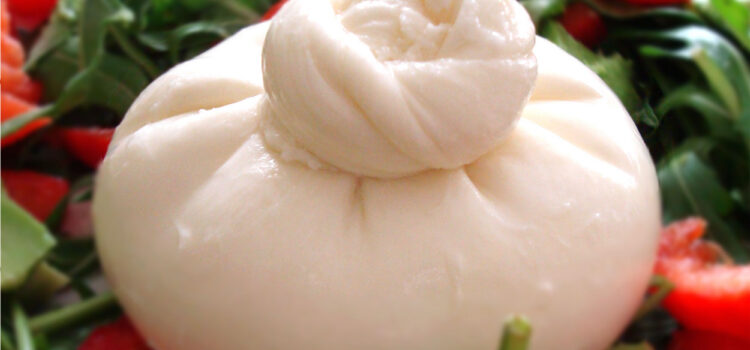
The Guardian sent a writer to Barletta-Andria-Trani, the province of Puglia almost nobody visits. In Italy the piece became a row over one sentence about mozzarella — which is not the newspaper’s opinion. Here is what the article actually covers, place by place.
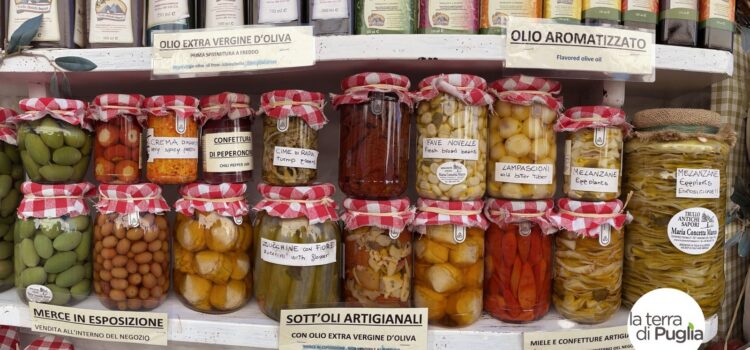
What is worth taking home from Puglia, and what is not: olive oil, taralli, pasta, preserves, wine, the pumo and Grottaglie ceramics, chosen by how you travel and who the present is for — plus the rule on cheese and cured meat if you fly back to Great Britain.
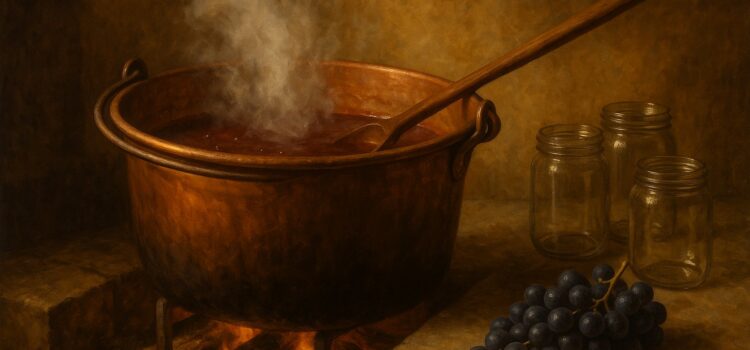
In Puglia the grape preserve is called mostarda, and the name comes from the must, not from the mustard seed. The two Italian mostarde share one origin and each lost one ingredient along the way. What the Puglia Region record says, and why a no-added-sugar version works.
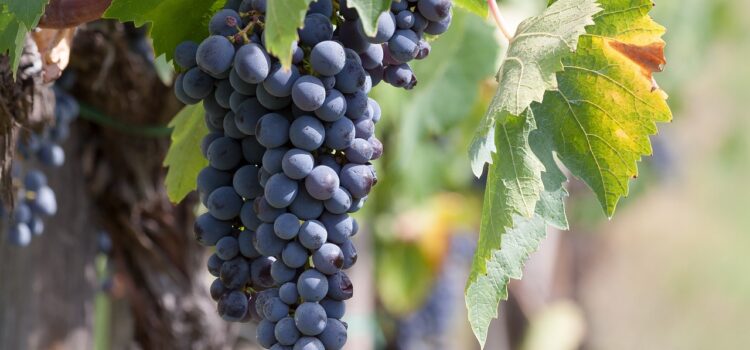
Primitivo and Negroamaro are coming in, and Coldiretti expects 10% more grapes than last year. Two generations ago the same week started at five in the morning, the grapes travelled in fifty-kilo reed baskets, and the must was made by treading barefoot in a stone palmento.