In short. Puglia and Apulia are the same place. Apulia is the Latin name, still used in English; Puglia is what Italians say, and what you will see on road signs, wine labels and menus. Neither is wrong. This page explains where the two names come from, and what the region is actually like — from the Gargano in the north to the tip of the Salento.
Apulia welcomes you with its bright sun, its clear sea, the scent of its fields and the lights of its towns. Stretched along the south-eastern edge of the Italian peninsula — the heel of the boot — it feels like a balcony over the Mediterranean.
Puglia or Apulia? Both, and here is why
The confusion is so common that it is one of the things people most often search for. The answer is simple:
- Apulia is the Latin form, and the one English has used for centuries. You will find it in history books, in Roman sources and in the formal English name of the region.
- Puglia is the Italian name — pronounced POO-lya. It is what you will hear on the ground, and what appears on every road sign, train ticket and bottle of olive oil.
If you are booking a flight or reading a guidebook in English, both will get you to the same place. If you are talking to someone in Italy, say Puglia.
A land that has been arriving at, not conquering
This is a friendly and hospitable land, and it has been arrived at many times. Over the centuries the Dauni, Peucetians, Messapians, Greeks, Romans, Ostrogoths, Byzantines, Saracens, Normans, Swabians, French and Spaniards all came — some to raid, many peacefully, and a good number decided to stay, drawn by the climate and by the people. Living and working alongside those already here, they soon felt at home.
The traces are everywhere, and they are not kept behind glass: they are the towns people still live in.
From the Gargano down to the Salento
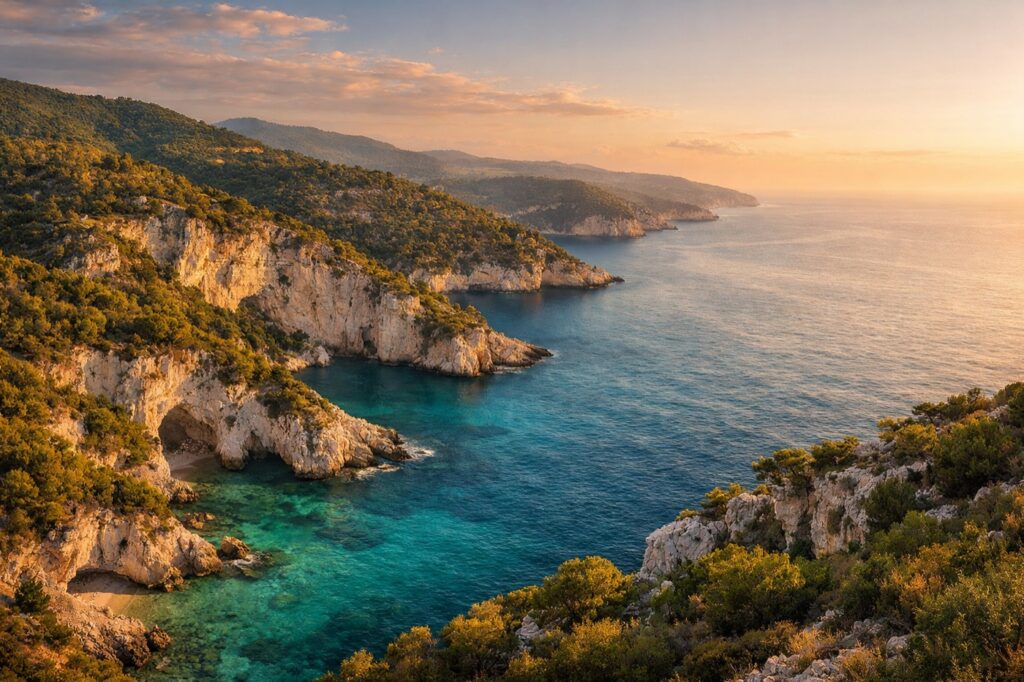
In the north, the Gargano — the spur of the boot — rises out of the Adriatic with its grottoes, its forest and its pilgrimage: the Basilica of St Michael the Archangel, cut into the rock at Monte Sant’Angelo, and San Giovanni Rotondo, made famous the world over by Padre Pio.
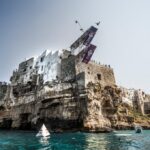
From there you look down over the Tavoliere, the great plain that has long been called the breadbasket of Italy, and along the coast to Barletta, with the castle built by Frederick II and the site of the famous Challenge — the Disfida — of 1503. A little further south stands the cathedral of Trani, the pearl of the Adriatic, built where land and sea meet.
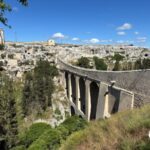
Inland rise the hills of the Murgia, with their pastures and their stone. And at the far end, embraced by two seas — the Adriatic on one side, the Ionian on the other — is the Salento: olive groves, vineyards, almond and cherry trees, and a coastline that changes character every few kilometres.
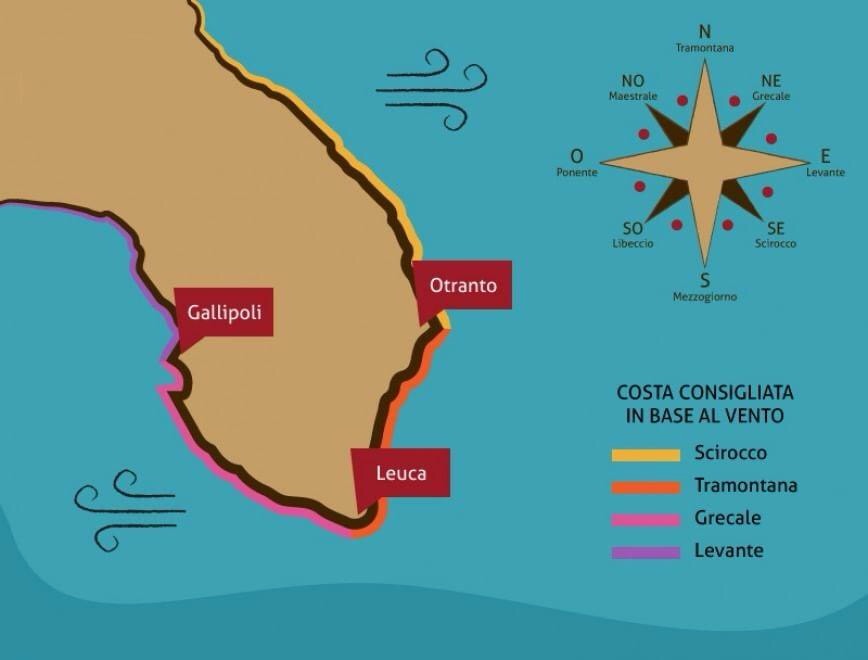
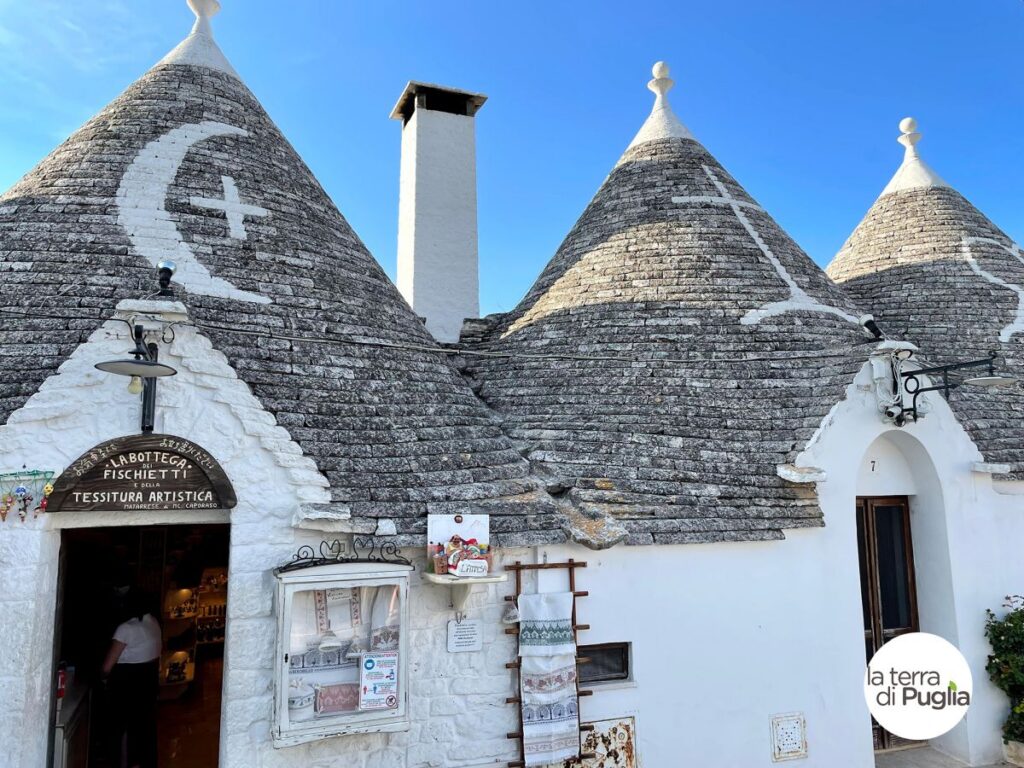
One region, several worlds. Puglia is long — around 400 kilometres from the Gargano to Santa Maria di Leuca — and it does not feel the same at both ends. The north is mountain and forest and pilgrimage; the centre is stone, cathedrals and the trulli of the Valle d’Itria; the south is flat, white-walled and surrounded by sea. Plan for the drive, and do not try to do it all in three days.
What the land gives
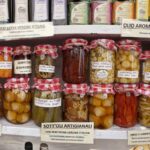
The cooking follows the land, not the other way round. Puglia is the leading olive-growing region of Italy, and its oil is what most of the country cooks with. It grows durum wheat, which is why the pasta here is made with semolina and water rather than eggs. It has two coastlines, so fish is never far. And it has a long tradition of making a great deal out of very little — a cuisine that is poor in the noblest sense of the word.
Where to go next. If you came here for the food, start with the Apulian recipes — the ones our grandparents handed down. If you came for the oil, there is a whole section on Apulian extra virgin olive oil, including how to tell a good one. And if you are planning a trip, the map of Puglia shows how the region is laid out.
And when you have decided roughly where to go, the region is broken down area by area and town by town in Visit Puglia — six areas, thirty towns, with what is actually worth stopping for in each. How to get here, and which airport to pick: getting to Puglia.