In short. Not a list of towns — those are under Where to go — but a list of things: the sea and its caves, the castles Frederick II left behind, the underground, the baroque, and the trulli. Arranged by what you feel like doing rather than by where you happen to be.
Puglia rewards a visitor who decides what they want to see before deciding where to sleep. The region is long and the good things are scattered along it, so a day built around one idea beats a day built around a map.
The sea, which is two seas
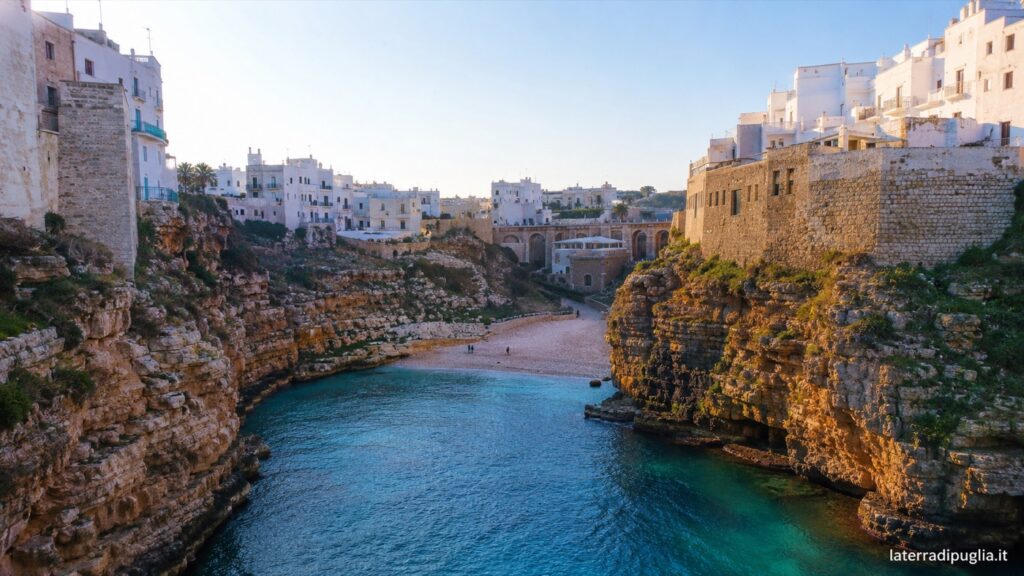
The Adriatic on one side, the Ionian on the other, and they do not look alike: the Adriatic is rock and cliff and deep water, the Ionian is sand and shallows. In the Salento you can have both in the same day.
- Five beaches with a Blue Flag, if you want the water quality settled in advance
- The sea caves of Vieste, on the Gargano, reachable only by boat
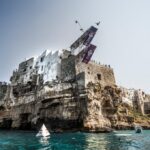
- Grotta della Poesia, the collapsed sea cave near Roca — read the page before you go, the rules have changed
- The Tremiti islands, an hour offshore and a different country
What is underneath
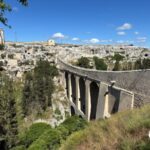
Puglia is limestone, which means water has been at work under it for a very long time. The Castellana caves run for three kilometres below the Murgia, and the ravines — the gravine — around Massafra and Laterza are canyons full of rock-cut churches.
The castles, and the strangest of them
Castel del Monte — the octagonal castle Frederick II built on a hill in the Murgia around 1240, with no obvious military purpose. Nobody has settled what it was for.
The rest of them are in the towns and are best visited there: the Swabian castle of Barletta, the Aragonese castles of Taranto and Brindisi.
Stone: baroque, romanesque, and dry
- Baroque — the baroque of Lecce, carved into a limestone so soft it can be worked like wood
- Romanesque — the cathedrals of the Adriatic, above all Trani, which stands on the water itself
- Dry stone — the trulli, and the symbols painted on their roofs
And the towns themselves
Two are worth going out of your way for even if you see nothing in them: Ostuni, white on its hill, and Otranto, with the mosaic floor of its cathedral. The full list, area by area, is under where to go in Puglia.
How long you need. Nothing here is more than about four hours’ drive from anything else here, but that is still four hours. Two of these themes in a week is comfortable; four is a coach tour.