In short. The Ionian arc runs from the Murgia down to the north-western edge of the Salento, taking in the 24 towns of the province of Taranto. It is a coast of terraces stepping down to the sea, cut through by the gravine — deep ravines that give the area its other name, the bank of the gravine. It is also the least visited part of Puglia by foreigners, and the one with the oldest history.
Taranto was the greatest city of the Greek west, richer and larger than Athens. Grottaglie has been making ceramics since before Rome. Manduria makes the wine everyone drinks without knowing where it comes from. And almost nobody puts any of it on an itinerary.
What the area is
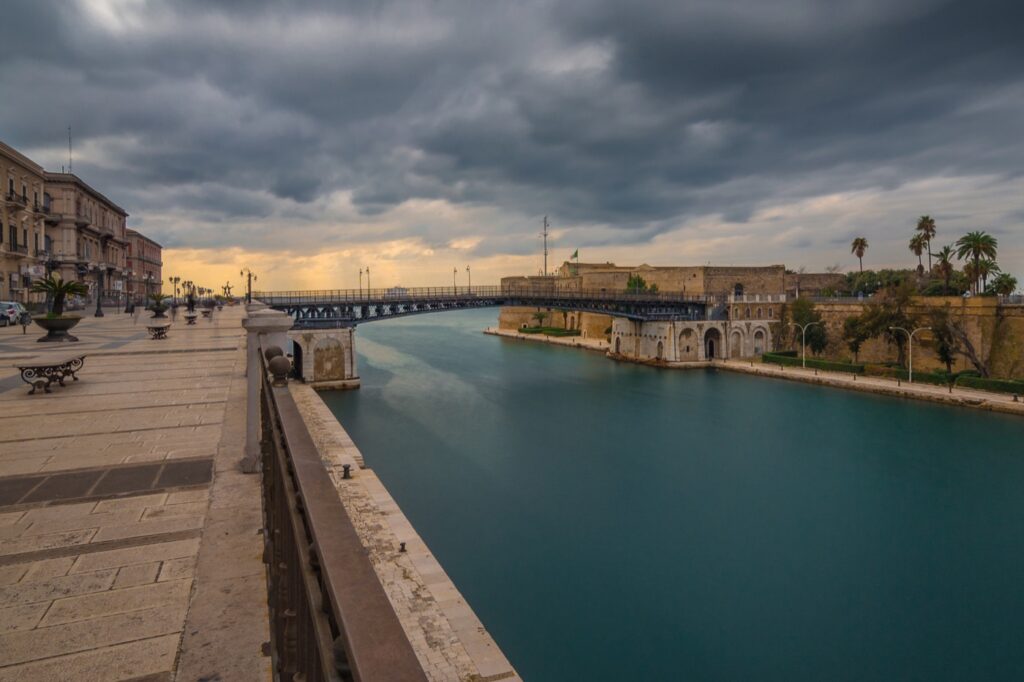
Officially this is the Arco Ionico Tarantino, a sub-region that reaches from the Murgia in the north down to the north-west of the Salento along the Ionian shore. It does not appear in the usual division of Puglia, which is part of why it is overlooked.
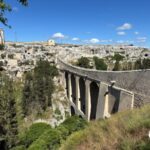
The bank of the gravine. The other name for this area describes its shape: the Murgia plateau does not fall to the sea in one drop but in a succession of terraces and steps, like a natural amphitheatre following the whole coast of the province. Cutting through those terraces are the gravine, deep limestone ravines carved by water, full of caves that have been used as houses, churches and tombs for thousands of years.
The towns of the arc — twenty-four of them — include Laterza, Ginosa, Castellaneta, Palagianello, Mottola, Palagiano, Massafra, Crispiano, Taranto, Montemesola, Villa Castelli, Grottaglie, Monteiasi, Carosino, San Giorgio Ionico, Monteparano, Roccaforzata, Faggiano, Lizzano, Leporano, Pulsano, Fragagnano, San Marzano di San Giuseppe, Sava, Maruggio and the coastal part of Manduria.
The five to start with
- Taranto — the city of two seas, founded by Sparta, with the finest collection of Greek gold in the world.
- Grottaglie — the ceramics town, with a whole quarter of workshops cut along a ravine.
- Manduria — Messapian walls, a spring described by Pliny, and the home of Primitivo.
- Massafra — cave churches in a canyon, and a serious tradition of witchcraft.
- Castellaneta — ravines, a long sandy marina, and the birthplace of Rudolph Valentino.
What comes out of it
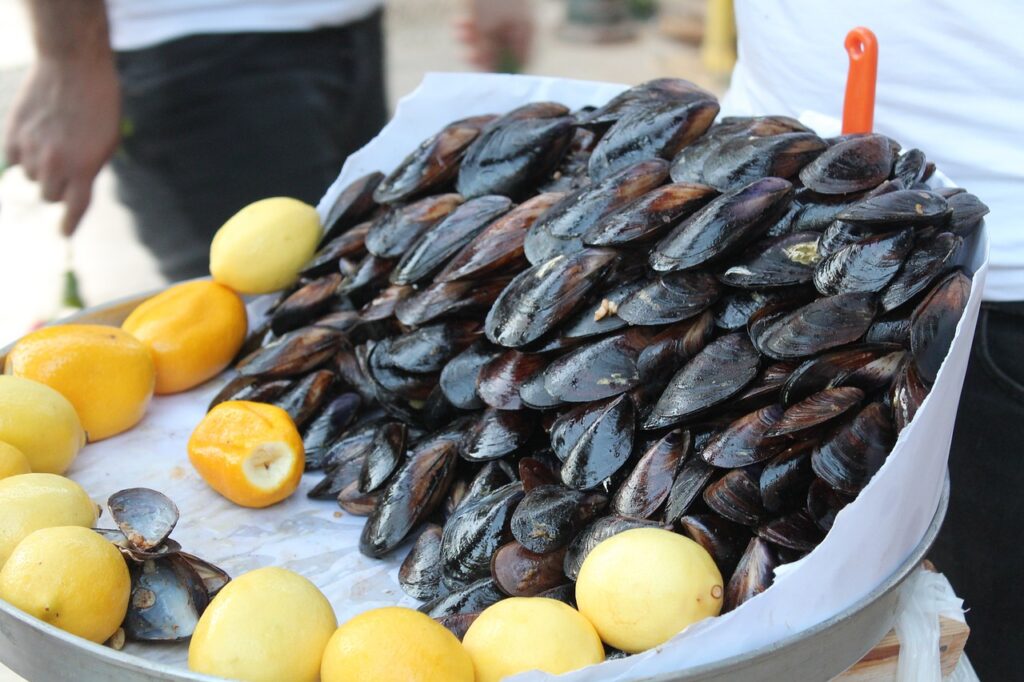
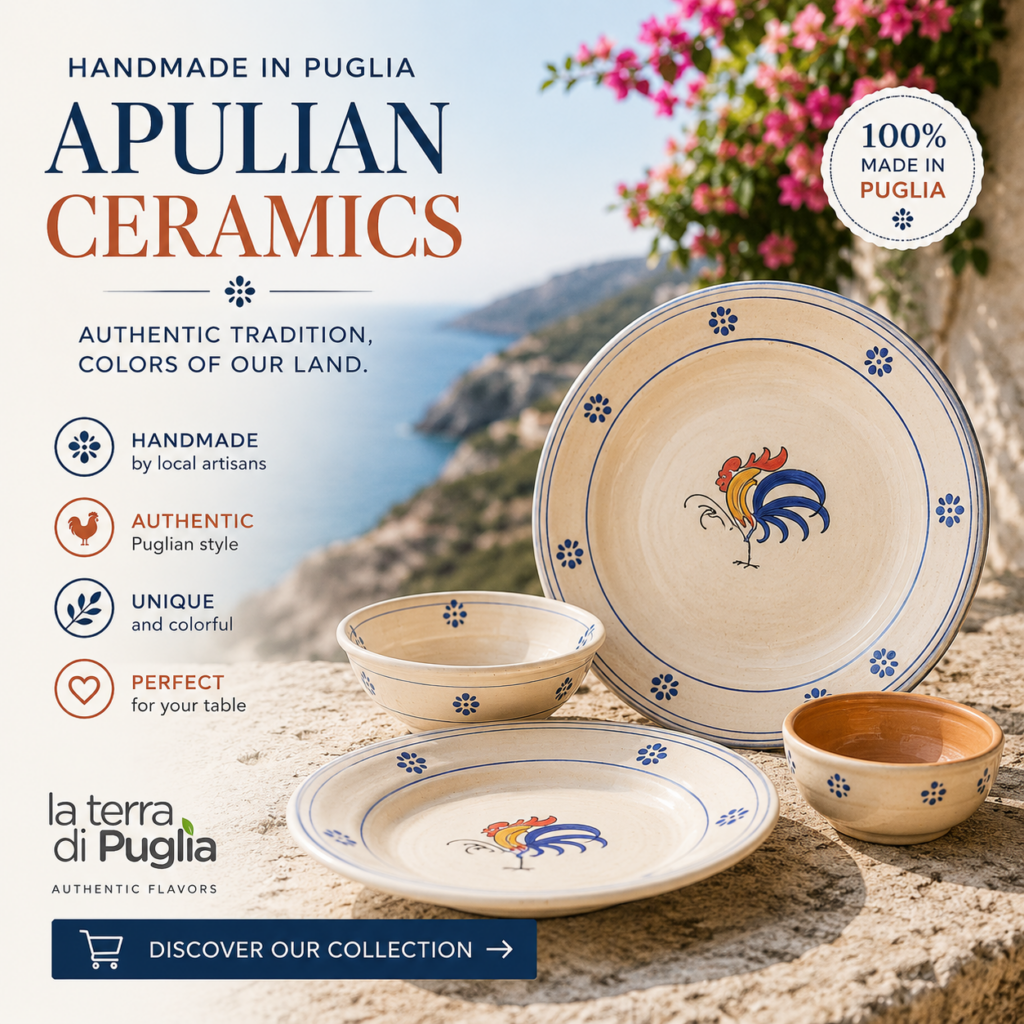
Three things, and all three leave the region. The mussels of Taranto, farmed in the Mar Piccolo and on every menu in the province. The Primitivo di Manduria, one of the great southern reds. And the ceramics of Grottaglie — the only place in Puglia with a DOC mark for its pottery, and one of the twenty-eight official ceramic towns of Italy.
Two of them ship. The wine and the ceramics of this coast go out from Puglia directly — the pumo, the good-luck bud made in Grottaglie, is among the things we send abroad most: see the shop.
On the ceramics themselves, and the pumo in particular, there is a longer piece: Apulian ceramics and the pumo.
The Ionian coast is one of the six areas of Puglia covered in this guide. To see how it sits against the rest, go back to where to go in Puglia.
In late summer 2026 this is also where the region’s biggest event happens: the Mediterranean Games at Taranto, 21 August to 3 September.