In short. The Valle d’Itria is the part of Puglia that ends up on the postcards: a shallow karst valley on the southern edge of the Murgia plateau, covered in conical stone houses called trulli, whitewashed hill towns and dry stone walls. Five towns matter — Alberobello, Ostuni, Locorotondo, Martina Franca and Cisternino — and they are all within twenty minutes of each other.
This is the densest, easiest and most photographed corner of the region, and the one place in Puglia where you do not need to drive far to see something different. It also has the best food in the interior, and the best reason to eat standing up.
Where it is
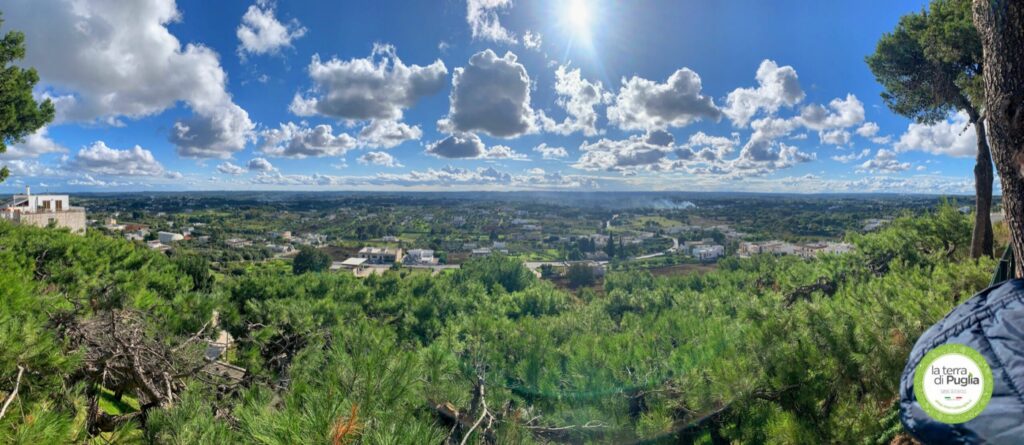
Geographically the valley is the southernmost extension of the Murgia, the limestone plateau that runs down the middle of Puglia. Below the plateau the rock has collapsed and dissolved into a genuine valley, and the floor of it is farmed: vineyards, olive groves, oak woods and Mediterranean scrub, cut into small plots by walls of stacked stone.
It sits across three provinces at once — Bari, Brindisi and Taranto — which tells you something about how little administrative borders mean here. It is roughly 50 kilometres from Bari, and both airports are inside an hour.
The trulli, and why they were built to fall down
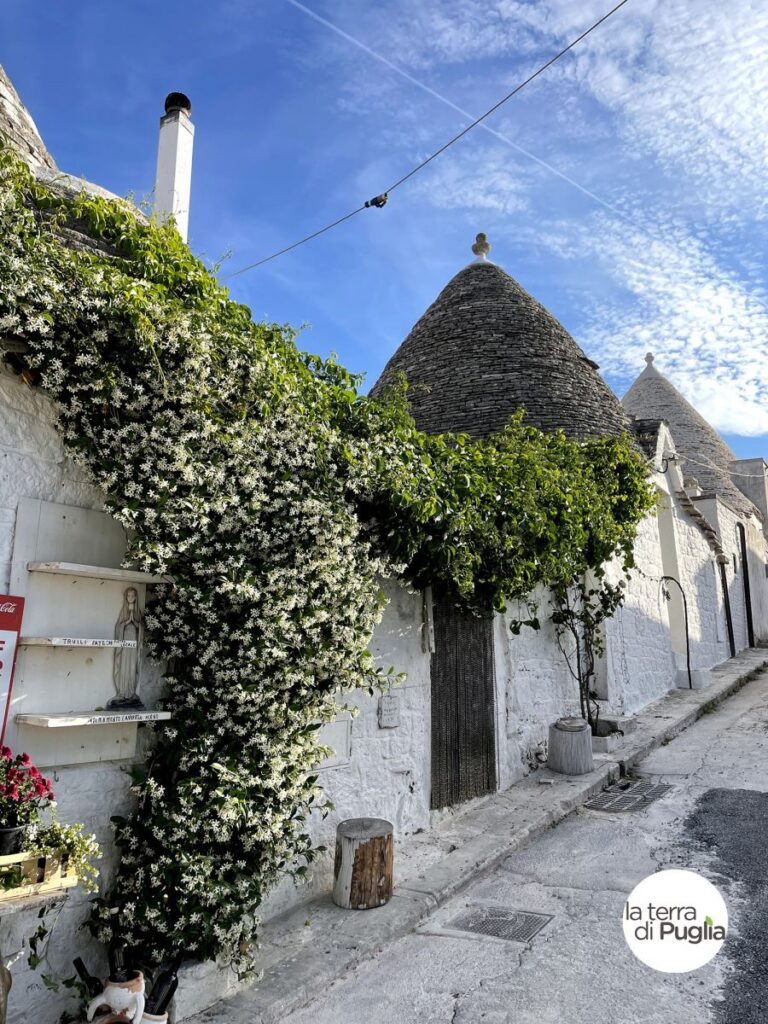
A trullo is built by the false-arch method: slabs of local limestone stacked in concentric rings that narrow until they close, with no mortar anywhere in the structure. It is a dry building, held up by its own weight and geometry.
A tax dodge that became a World Heritage Site. Under the Kingdom of Naples, permanent dwellings were taxable. Local tradition — tied to the fief of the Acquaviva d’Aragona counts — holds that peasants built without mortar precisely so a roof could be taken apart in a hurry when the king’s assessors were coming: pull the keystone at the top of the cone and the whole roof collapses, leaving a structure that is not a house and therefore not taxed. The same tradition says the expedient is why Alberobello was not allowed to become an autonomous town until 1797. What began as tax resistance by farmers is now a UNESCO World Heritage Site and one of the most recognisable images of Italy.
There is more on how the technique works, and on the painted symbols you will notice on the cones: the symbols on the trulli, and the tax dodge.
Where the name comes from
The Itria is thought to come from the Madonna Odegitria — “she who shows the way” — a devotion that spread with the expansion of the Byzantine Empire around the tenth century, and left its name on the valley.
The five towns
They are close enough that you can see three in a day, and different enough that it is worth not doing so.
- Alberobello — the trulli town, and the only one that is a World Heritage Site.
- Ostuni — the white town on the ridge, with the sea below it.
- Locorotondo — a perfectly circular old town, and the best base of the five.
- Martina Franca — baroque, the largest of them, and the home of the capocollo.
- Cisternino — the quietest, and the one you eat in.
One day, three days, five days
The question everyone asks is how long the valley needs. Honestly:
- One day — Alberobello in the morning, for the Rione Monti and Aia Piccola districts, then Locorotondo in the afternoon, fifteen minutes away, and stay for the sunset from the belvedere.
- Three days — day one Alberobello; day two Locorotondo in the morning, Cisternino in the afternoon and dinner at one of the butcher-grills in the old town; day three Martina Franca, and the Castellana caves if there is time.
- Five days — add a day for Ostuni and a day for Ceglie Messapica, and fit in a tasting at one of the Locorotondo DOC or Martina Franca DOC wineries.
What you eat here
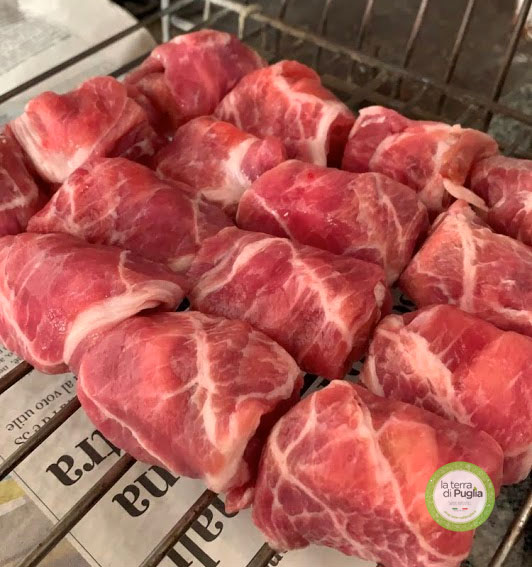
Bombette, and how to order them. A bombetta is a roll of pork capocollo wrapped around caciocavallo cheese, pancetta and a mince of parsley and garlic, then grilled over wood. The point is where you eat them: not in a restaurant, but in a butcher’s shop with a grill at the back — the fornello pronto. You choose the meat at the counter, they cook it while you wait, and you eat it standing, wrapped in paper. Tradition puts their origin in Martina Franca; Cisternino is where they became famous.
Beyond the grill: strascinate di grano arso, pasta made with burnt-wheat flour, a dish that came out of genuine poverty; cardoncelli mushrooms from the oak woods; and the wines — Locorotondo DOC, Martina Franca DOC, and the white of the valley made from Verdeca and Bianco d’Alessano. The olive oil of Villa Castelli carries its own DOP.
Underground, ten kilometres away
The caves of Castellana. Ten kilometres from Alberobello, the caves run for three kilometres under the Murgia and are among the finest karst systems in Europe. The largest chamber, the Caverna della Grave, has a vault 70 metres high; the Grotta Bianca at the far end is a chamber of calcite crystals so pure the walls and ceiling are entirely white, like an interior under snow. They were discovered in 1938 and now take over 300,000 visitors a year. There is a short route of about a kilometre, fifty minutes, which works with children.
We have written it up separately: the caves of Castellana.
Getting there
- By car — from the north, the A14 and the Bari Sud or Gioia del Colle exits, then the state road towards Alberobello and Locorotondo: about 50 km, fifty minutes. From Taranto, the SS172, known as the road of the trulli, which links Martina Franca, Locorotondo and Alberobello directly.
- By air — Bari Karol Wojtyła is 45 to 55 km from Alberobello and Locorotondo; Brindisi is 35 to 45 km and more convenient for Ostuni and Martina Franca.
- By train — the Ferrovie del Sud Est run from Bari to Alberobello, Locorotondo and Martina Franca. For Cisternino and Ostuni take the main Bari–Brindisi–Lecce line to Fasano or Ostuni and continue by bus.
The Valle d’Itria is one of the six areas of Puglia covered in this guide. To see how it sits against the rest, go back to where to go in Puglia.
On the northern edge of the valley, in the province of Bari, is Putignano — home of the longest carnival in Italy, which opens on 26 December and ends with a funeral for Carnival itself.
This is also the part of Puglia most foreigners end up buying into, and the prices show it. What a house actually costs here, province by province: buying a house in Puglia in 2026.