The Guardian sent a writer to Barletta-Andria-Trani, the province of Puglia almost nobody visits, and came back talking about burrata. In Italy the piece became a row over one sentence — «I don’t eat mozzarella outside Puglia» — which is not the newspaper’s opinion at all. Here is what the article actually covers, place by place, from people who live here.
On 14 September the Guardian published «Burrata and beyond: a foodie tour of northern Puglia, Italy», by Liz Boulter. Italian media picked up a single line from it, and turned it into a fight with Campania over mozzarella.
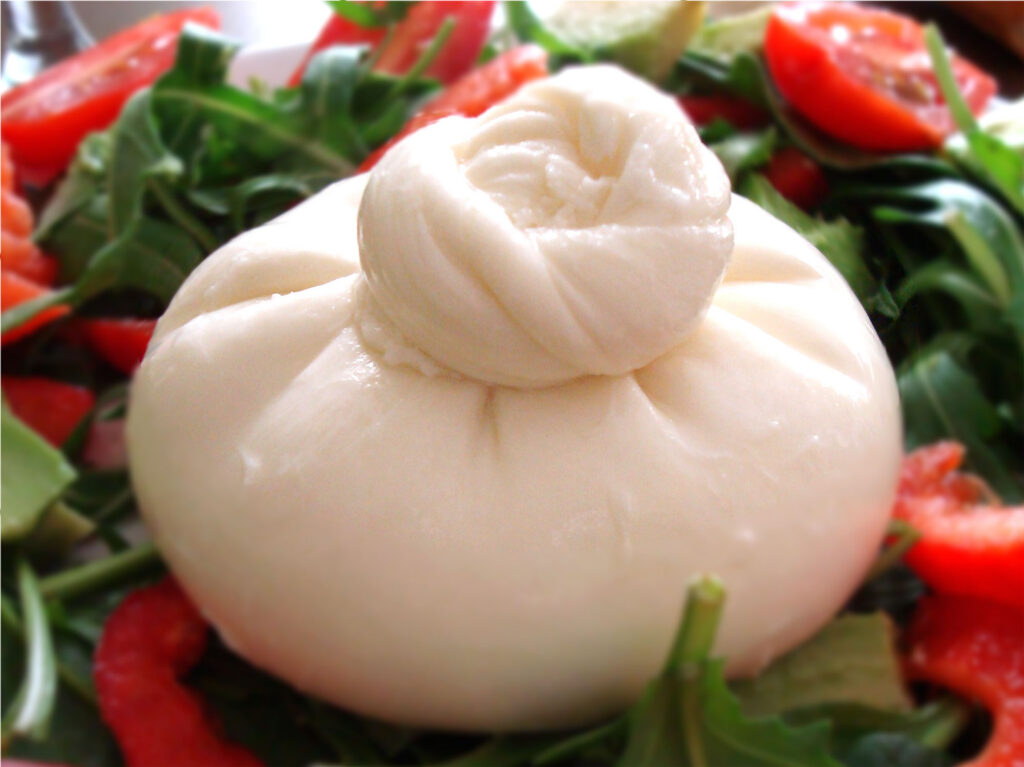
The line is Savio’s, not the paper’s — he is from Barletta and he is showing the writer around. «I don’t eat mozzarella outside Puglia. It’s not the same.» It is what someone from here says at a table, which happens every day in Puglia and in Campania too.
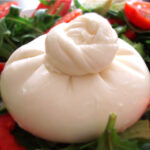
And technically he has a point. Burrata is not aged. It is stretched — the curd is pulled in boiling water — and it is meant to be eaten within twenty-four to forty-eight hours. After that the shell hardens and the stracciatella inside loses its cream. A cheese whose whole quality lives in two days does not travel well. That is the fact behind the slogan.
The province the guidebooks skip
The trip covers Barletta-Andria-Trani, with side trips to Canosa and Minervino Murge — not Alberobello, not Polignano, not the Salento in August. That choice is the most useful part of the piece for anyone planning a trip.
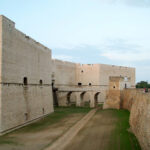
- Barletta — the Norman castle, the cathedral, the sette strade of the old centre, and, as the article notes, almost no foreign visitors.
- Andria — the town where burrata was invented, and the dairy where you can watch it being made.
- Trani — the Romanesque cathedral built on the water and the harbour where the fishing boats come in at dawn.
- Canosa di Puglia, which the piece calls Puglia’s «little Rome» for its catacombs and Roman remains.
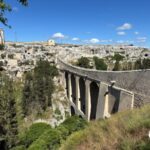
- Minervino Murge, under eight thousand people, and the Murgia all around it.
The dairy, and where burrata comes from
The central stop is a dairy in Andria, where the cheesemaker demonstrates the process and explains the name: mozzare, the cutting motion that separates the stretched curd. The writer’s verdict on cheese made minutes earlier is the part nobody quoted in Italy — a «juicy, elastic texture» and a «gorgeous cheesy, umami flavour».
Then the origin story, which the Guardian gets right: a cheesemaker named Lorenzo Bianchino, snowed in outside Andria, could not get his milk to market and revived an old technique for keeping butter — cream and stracciatella wrapped in a pouch of stretched curd. We have told that story too.
One date the sources disagree on. The Guardian says «about a century ago». In Puglia the commonly told version is 1956, at masseria Piana Padula between Andria and Castel del Monte. The cheese now carries Protected Geographical Indication status as burrata di Andria — and the specification protects the technique and the area, not the year it was born.
What they ate
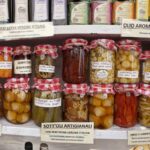
The addresses are the practical payload, because none of them appear in international guides: Portento in Barletta for pizza and antipasti of goat cheese, grilled caciocavallo and small-batch salami; U’ Vulèsce in Cerignola; Il Turracciolo in Andria, with broad bean and chicory «meatballs»; A Sud dell’Anima in Minervino; the sixty-year-old bakery Mosé in Barletta; the Scoop gelateria in Canosa.
And Masseria Barbera near Minervino Murge, where the Guardian reports that 90% of what reaches the table is grown on the farm — and where the writer tries grilled donkey fillet and calls it «the best meat I’ve ever tasted».
Among the products named: Bella di Cerignola olives, the plum-sized local variety; cacioricotta grated over pizza; goat prosciutto; and spaghetti al sugo bastardo, «bastard sauce», so called because the yellow tomatoes it is made with take three times as long to pick. On pizza the article makes a technical rather than a hierarchical point: the Puglian version is less soft and more baked than the Neapolitan one.
Beyond the table
The piece leaves food for three things. Olive oil, with mill visits — including a tour of ancient groves with a tasting for €15. The salt pans of Margherita di Savoia, with their white mountain of salt. And an e-bike ride through the Murgia to a bauxite quarry described as «a mini grand canyon» — the one on the Murgia, not the better-known quarry at Otranto.
Two places to stay, at opposite ends: a restored seventeenth-century palazzo in Barletta, doubles from €97, and an organic masseria with six rooms around an eighteenth-century courtyard, two hundred hectares and six-hundred-year-old olive trees, from €230.
Why this matters more than the argument
The BAT is an hour from Bari airport, where most flights from the UK land — so the least visited province of Puglia is also one of the easiest to reach. In September, when the Salento empties out, it is at its best.
The rest is a familiar story: one sentence lifted out of context, turned into a headline, and a row that catches fire in a few hours. Read whole, the article is about a Romanesque cathedral on the sea, a national park, Castel del Monte down the road, and a piece of Puglia you can still visit without queueing.
Fresh Puglian dairy has a short life — burrata is at its best in the first twenty-four to forty-eight hours — which is exactly why, outside Puglia, «it’s not the same». On our shop La Terra di Puglia dairy products ship refrigerated: as close to the dairy counter as distance allows.