You are heading home from Puglia and want to take back something that is actually worth it — not a fridge magnet or an anonymous bottle of oil from the airport. This guide helps you choose by how you travel, what you can carry and who the present is for, with one rule to know before you buy cheese or cured meat if you are flying back to Great Britain.
Puglia is one of those places that stays with you. The trouble is that when you want to take some of it home, you end up in a souvenir shop full of things that could come from anywhere. Or you buy the right oil and then cannot take it on the plane. Or you buy too much and the case will not close.
This guide is practical. It tells you what is worth bringing back — and what is not — depending on how you travel, your budget and the occasion.
How this guide works: first the practical rules for travelling by car, plane or train, then the food that really counts, then the things that are not food, and finally what to do if you did not manage to buy everything or would rather have it shipped home.
First things first: how are you travelling?
The answer changes everything. If you are driving home you can load whatever you like — a case of wine, five litres of oil, jars of preserves, ceramics. If you are flying you have to deal with cabin baggage, liquids and weight. The train sits somewhere in between.
- By car: no practical limit. You can take wine, oil in tins, preserves and fragile ceramics. The only constraints are the weight of your bags and the space in the boot, so this is the moment for the bulky or breakable things you could not fly with.
- By plane with checked baggage: watch the liquids — oil, preserves and wine go in the hold, well protected. Ceramics need serious packing. The weight limit is usually 23 kg. Avoid glass bottles in your hand luggage.
- By plane with hand luggage only: liquids over 100 ml will not get through security — forget oil, preserves and wine. You can take taralli, dried pasta, baked goods and small ceramics: anything solid and within the size limit.
- By train: no formal limit on liquids, but weight and comfort matter. Do not weigh yourself down with cases of wine — pick a few things of real quality.
The most useful tip if you are flying: buy the heavy or liquid things in the first days, have them shipped home through a local courier — many agriturismi and shops offer the service — and pack only what survives the journey. Or buy online once you are back: some quality Apulian products arrive in 24-48 hours in the same condition as if you had bought them on the spot.
The food that is really worth bringing back
Not everything in the tourist shops deserves space in your case. Here is what makes sense, and why.
Extra virgin olive oil is the number one product — but only the right one. Look for certified origin (not “packed in Italy” but “olives grown in Puglia”), the cultivar on the label and the harvest year. A good Coratina or a PDO blend is something you will not easily find outside the region. If you fly with checked baggage, take it in a tin: it travels better than a glass bottle. There is more on choosing it in our guide to Apulian olive oil.
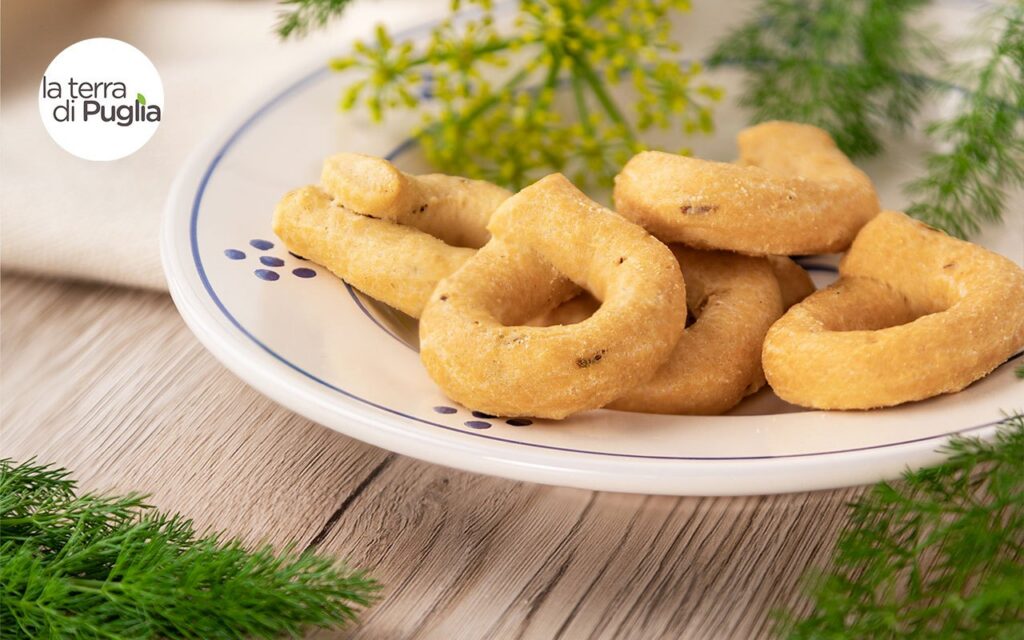
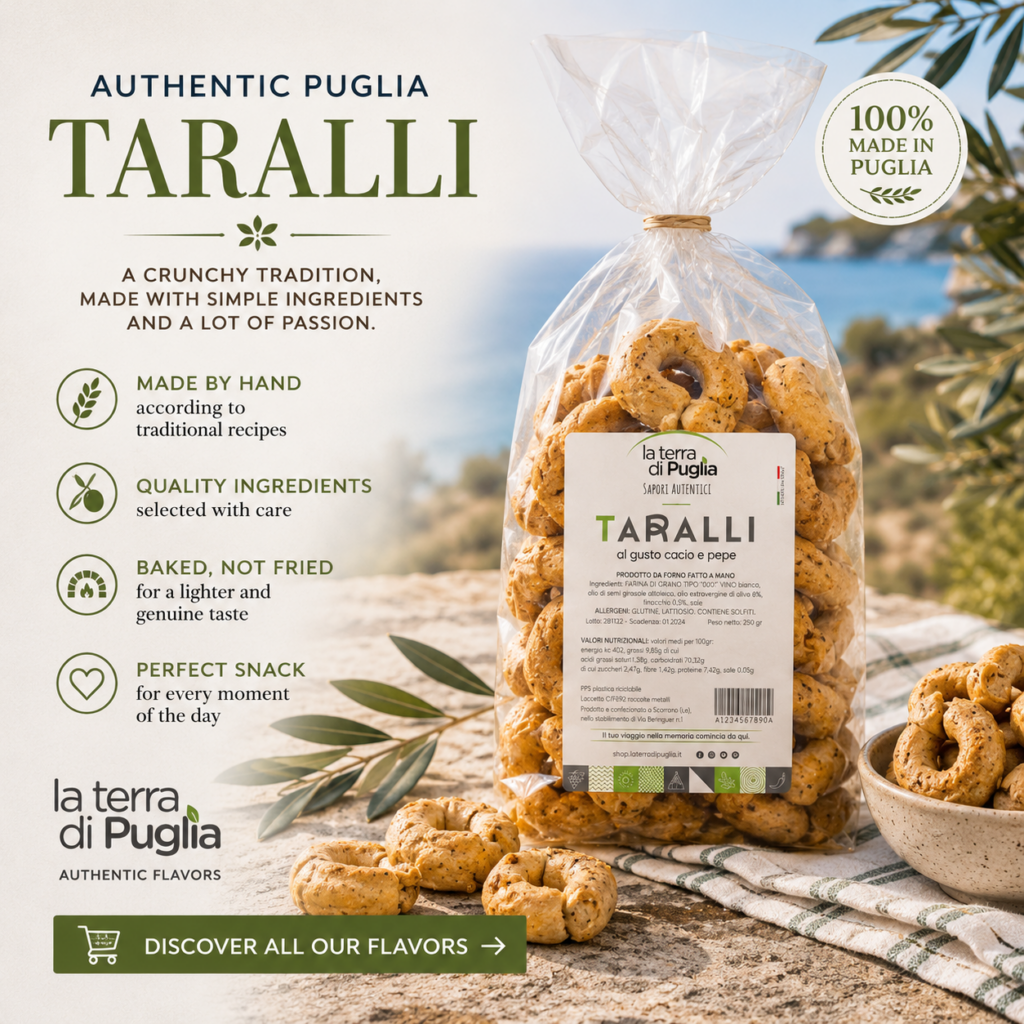
Taralli are the perfect food souvenir if you are flying: light, solid, not a liquid, and they keep for weeks. A bag of taralli with fennel or onion says more than any other souvenir. They cost little, weigh little and always go down well.
Artisan pasta — orecchiette, troccoli, sagne — is another product that travels well whatever the conditions. Apulian durum wheat, bronze dies, slow drying: you can taste the difference from industrial pasta. An iconic shape for someone who does not know Puglia, a less familiar one for someone who has been.
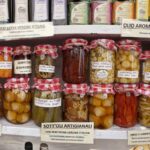
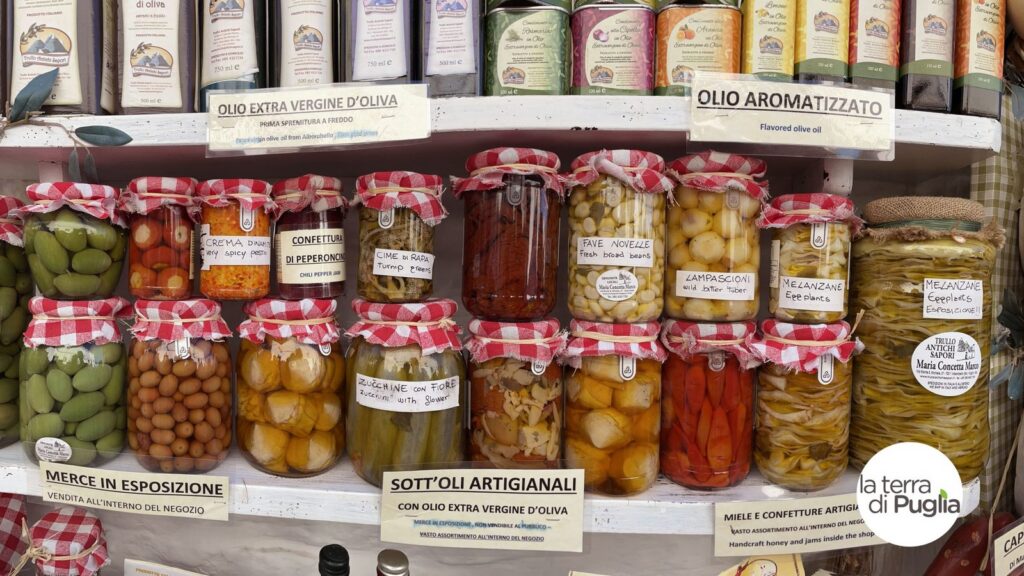
Preserves in oil — aubergines, lampascioni, turnip tops, peppers — are the most direct way to take Apulian cooking home. They need the hold, but they last for months and tell the story of a cuisine with no real equivalent. Lampascioni in particular are very hard to find outside Puglia.
Wine — Primitivo, Negroamaro — only makes sense if you can put it in the hold or the car. A bottle of Primitivo di Manduria or a Negroamaro from the Salento is a present that almost always pleases; we explain the two in Primitivo and Negroamaro. Skip the duty-free: the mark-up there is on the name, not the quality.
Vincotto is one of those products few people know outside Puglia and almost everyone likes once they try it. It is grape must or figs cooked down slowly into a thick, aromatic syrup, used on cheese, desserts and ice cream. Light, original and hard to find anywhere else.
Caciocavallo is the other product worth the space, and it changes character as it ages: more or less sharp, excellent on its own, grated, or sliced into baked dishes and the rolled meat that in Bari they call braciole. Unlike oil and preserves it is solid, so the liquids limit on planes does not apply.
Of cured meats, Puglia has one that is worth the trip: capocollo from Martina Franca, a Slow Food presidium, tender and savoury, with well-balanced veins of fat and a scent of woodland, aromatic berries and fig vincotto — because fig vincotto is exactly what it is cured with. It is the present that impresses people who know their food.
Flying home to Great Britain? Leave the cheese and the capocollo. Under the current GOV.UK rules, you cannot bring cheese, milk and dairy products, pork or products made from these meats into Great Britain from EU countries for personal use. Taralli, pasta, olive oil, vegetable preserves and wine are not covered by this rule. If you are flying to another country outside the EU, check its rules on meat and dairy before you buy: they vary, and they are often strict.
The things that are not food: what lasts
Puglia has a craft tradition that goes well beyond food. These are objects you use, display, and that tell a story every time someone sees them in your home.
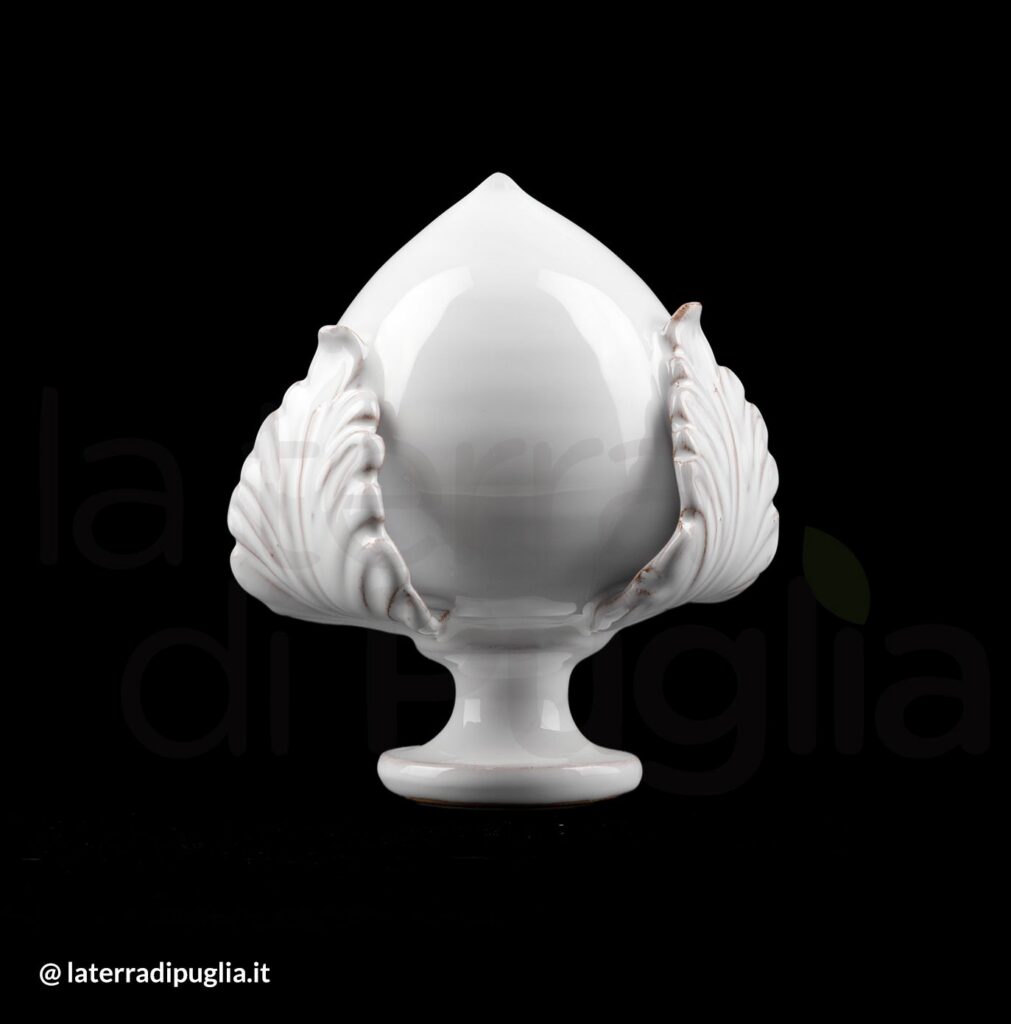
The Apulian pumo is the most recognisable symbol — a ceramic flower bud, handmade in Grottaglie, standing for rebirth and prosperity. It is the Apulian good-luck charm par excellence, and it comes in every size, from 5 centimetres to collector’s pieces. Careful: the real ones are handmade and it shows — the surface is not perfectly even and the colours vary slightly. Mass-produced ones are smooth and identical.
There is a second sign, easier to spot in a crowded shop in the evening: a pumo made in an industrial mould is pot-bellied, with coarse leaves. One thrown by hand on the wheel has thin ceramic and a slender, sinuous bud. Once you have seen them side by side, you will never mix them up.
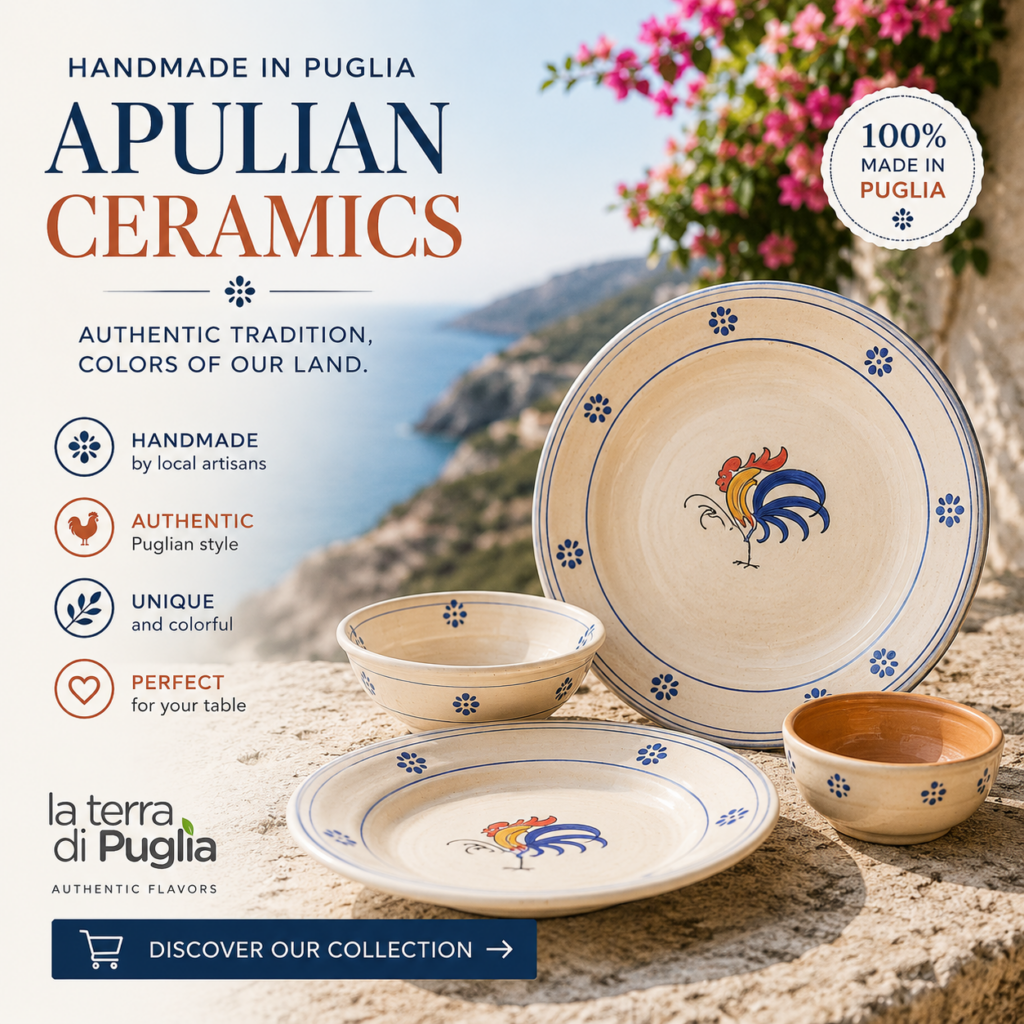
Ceramics from Grottaglie in general are one of the most important craft traditions in southern Italy: plates, bowls, jars and vases, made in a potters’ quarter where the work is still done the way it was centuries ago. A piece of Grottaglie ceramics is a souvenir that lasts for generations.
Luminarie are the light structures that decorate the streets during Apulian saints’ feasts — a visual icon of the region, and we have written about the most famous in the luminarie of Scorrano. To take home, there are small decorative versions, perfect to hang up or use as a centrepiece.
Salento embroidery and lace — less known but remarkable — is a tradition still alive in some towns of the lower Salento. You will not find it in the standard tourist shops: you have to look for it in the craft workshops of the small villages.
Papier-mâché from Lecce is the other art you can take home: figurines, nativity scenes and religious sculptures of surprising finesse, made with a technique that takes years of apprenticeship, in historic workshops still active in the centre of Lecce. Then there is Lecce stone, a limestone that is soft when it is quarried and very hard once exposed to the air: it is carved into small objects that nowhere else makes. Ceramic pupi, terracotta, wrought iron and Salento embroidery complete the picture — all workshop goods, not souvenir-shop goods.
A tip on ceramics: price is the first sign of authenticity. A handmade plate from Grottaglie cannot cost €3 — there are hours of work in it. If the price looks too low to be real craft, it probably is not. The market stalls in the old towns of Lecce or Alberobello often sell ceramics made elsewhere with an Apulian label: be wary of rock-bottom prices.
Who are you buying for?
Who it is for changes the choice.
- For someone who loves cooking: quality extra virgin olive oil, artisan pasta in an unusual shape, preserves in oil, vincotto. Products that get used and make a difference in the kitchen.
- For someone who does not know Puglia: taralli, a bottle of wine, dried figs with almonds. Easy products that introduce the regional food without being intimidating.
- For an important present: a ready-made food gift box, or a piece of handmade ceramics paired with some food. Object plus food always works.
- For colleagues at the office: taralli, baked goods, traditional biscuits. Easy to share, reasonably priced for the quantity.
- For children: traditional Apulian sweets — cartellate, mostaccioli, sweet taralli. Or a small, brightly coloured pumo as a lucky charm.
If you did not buy enough — or want to do it before you leave
It happens all the time: you get home from Puglia and realise you wish you had brought more oil, more preserves, more taralli. Or that you forgot something for someone. Authentic Puglia can be shipped — and in many cases what arrives by courier is better than what you find in the tourist shops on the spot.
In our shop you will find typical Apulian products chosen from small artisan producers — the same quality you would look for in the local markets, without the queue. It is also useful if you are planning your trip and want to give someone a taste of Puglia before you even leave.
Did not find what you were looking for — or want to send Puglia to someone’s door? We ship directly from Puglia, with products chosen from small artisan producers.
Liquids on planes: at most European airports, liquids in cabin baggage must be in containers of no more than 100 ml, in a clear bag of up to one litre. Oil, wine and preserves always go in the hold. Always check your airline’s current rules before you fly. The rule on meat and dairy into Great Britain is taken from the GOV.UK page “Bringing food into Great Britain”, read in September 2026.