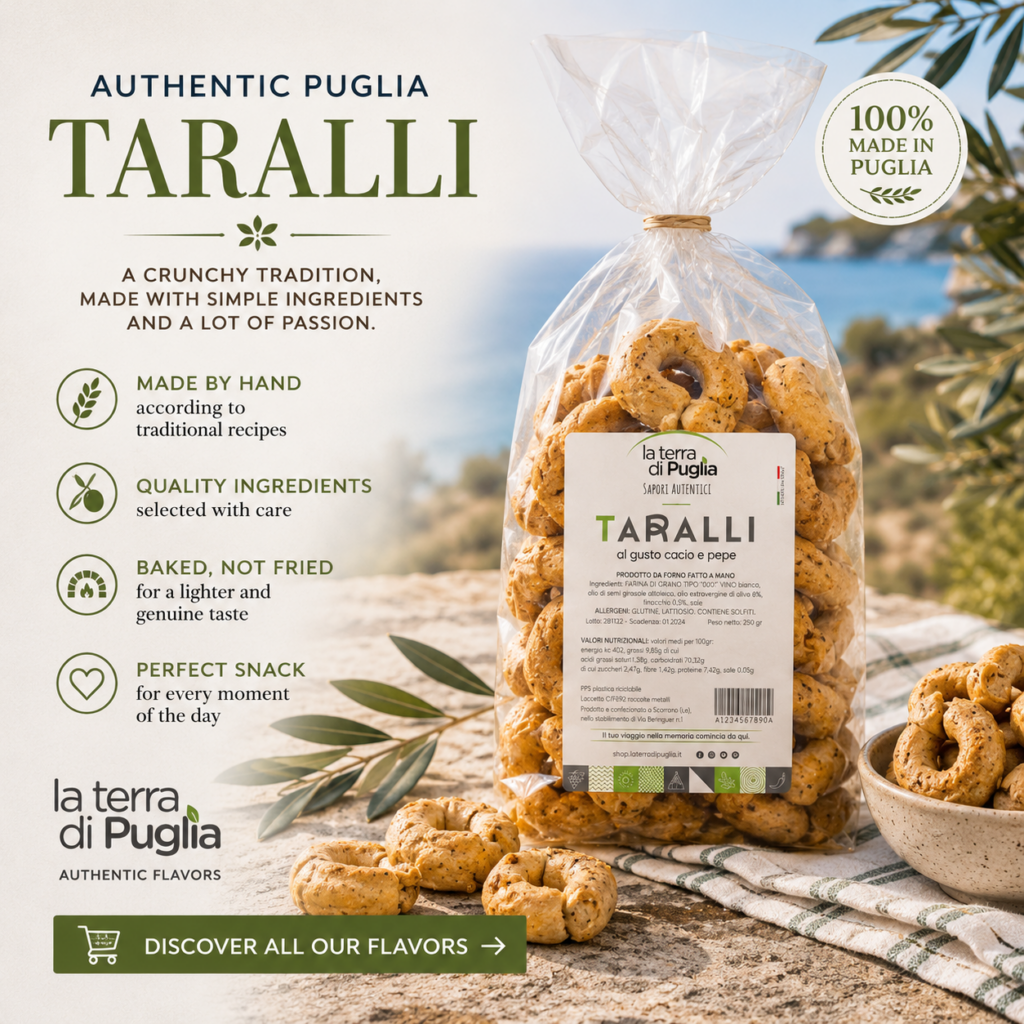
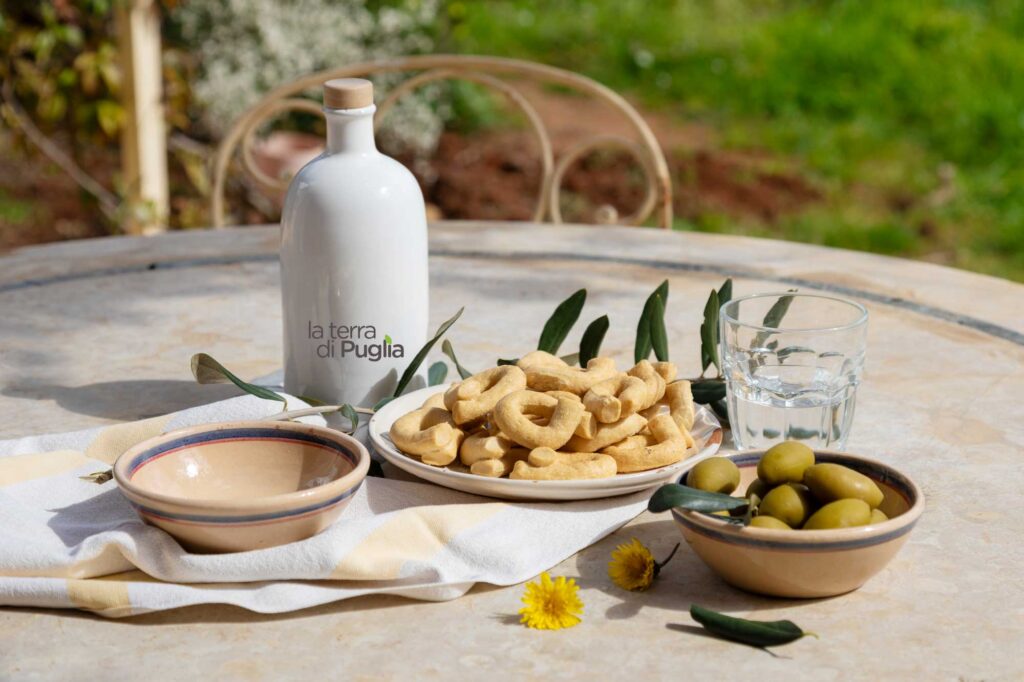
In short. Taralli are the savoury rings of Puglia: flour, dry white wine, extra virgin olive oil and salt — nothing else. What makes them is the method: they are boiled first, then baked. Recipe for 1 kg of flour, about 40 minutes in the oven.
Every household in Puglia has taralli in a jar, and every household swears by a slightly different flavouring. The dough, though, is always the same four things — and there is no butter and no egg anywhere near it.
Ingredients
- 1 kg of plain flour (type 00)
- 30 g of salt
- 300 ml of dry white wine
- 250 ml of extra virgin olive oil
Method
1. The dough. Work the flour, wine, oil and salt together until you have a smooth, elastic dough. Cover it with a cloth and let it rest for 20 minutes somewhere that is not too cold.
2. Shaping. Take pieces of dough and roll them into small sticks about 8–10 cm long and 1 cm thick. Close each one into a ring, overlapping the two ends and pressing them together with a finger to seal.
3. Boiling. Bring a large pot of water to the boil with a tablespoon of salt. Drop the taralli in ten at a time, and lift them out with a slotted spoon as soon as they rise to the surface. Lay them on a cloth, side by side, and let them drain for a few minutes.
4. Baking. Grease a baking tray and arrange the taralli on it without letting them touch. Bake in an oven already heated to 200 °C for about 40 minutes, until they turn light golden brown.
Why boil them at all? The brief boil gelatinises the surface starch. That is what gives a tarallo its dense, glassy crust and the snap it makes when you break it — and it is the step people skip when they wonder why theirs came out like biscuits.
Flavourings
If you want to flavour them, add one of these to the dough while kneading: fennel seeds, sesame, chilli pepper, oregano, or flakes of dried onion. Around 5 or 6 g of spice is enough for 1 kg of dough.
How they are eaten. With a glass of wine, before dinner, or broken into a salad. They keep for weeks in a sealed tin — which is the whole point of a food invented to use up flour and last.
More Apulian baking and the rest of the tradition are in our collection of Apulian recipes.