In short. Puglia was invaded by everyone who ever crossed the Adriatic, and kept something from each of them. Two Greek-speaking pockets, an Albanian one, a dance that began as a cure, buildings made without mortar, and a saint who became Santa Claus.
The heel of Italy points at Greece and Albania, and for most of its history that mattered more than the fact that it points away from Rome. What survives is not folklore staged for visitors: it is language, building technique and ritual that never stopped being used.
The dance that was a cure
The pizzica is the fast tambourine dance of the Salento, and it did not start as entertainment. It was the music played over women said to have been bitten by a spider, for days at a time, until the bite was danced out.
- Tarantism, and the chapel at Galatina — where the ritual actually took place, and what anthropologists made of it
- From the pizzica to the Notte della Taranta — how a healing ritual became a concert that fills a village of two thousand people
The languages that should not still be here
In a handful of villages of the Salento people still speak griko, a Greek dialect, and a few dozen kilometres away, at San Marzano di San Giuseppe, Albanian has been spoken since the fifteenth century. Neither is a revival: they were simply never dropped.
- Griko and the Grecia Salentina
- The Apulian dialects, which change from one town to the next
Building without mortar
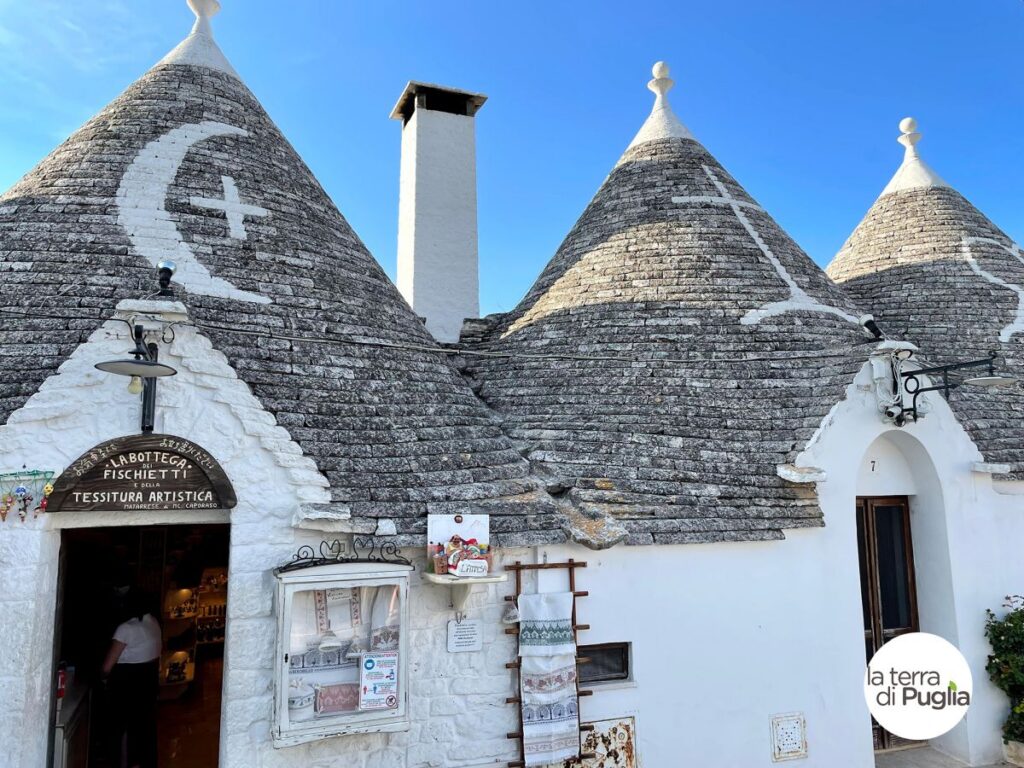
The trullo is a dry-stone house with a conical roof, built without mortar — which is why they could be taken apart quickly, and why there are stories about that being the point. The symbols painted on the roofs are the part nobody explains the same way twice. The ceramics of Puglia belong to the same family of things: made by hand, in the same towns, for a very long time.
Saints, and the calendar they set
The year in an Apulian town is still organised around its patron saint, and the biggest of them travelled: San Nicola of Bari is the same figure who became Santa Claus. The feasts themselves, with their dates, are under festivals and events.
Living memory
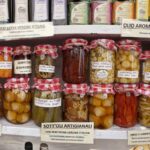
Some traditions are recent enough that people remember them: the day of the sauce, when a whole family spent the last Sunday of August bottling tomatoes, and Ferragosto in the sixties, when the sea was reached on the back of a lorry.
The oldest inhabitant. The Man of Altamura has been in a karst cave near the town for something like 150,000 years, encased in calcite. He is still down there: nobody has tried to remove him.