In short. Puglia feeds a large part of Italy, and it eats what it grows. Durum wheat, olive oil, vegetables, cheese and the fish of two seas: this is the door to everything the region produces, and to the pages that explain each thing in turn.
Ask anyone in Italy where the food comes from and Puglia will be part of the answer. The region is the country’s largest producer of olive oil, one of its largest producers of durum wheat, and the home of a cheese — burrata — that has travelled further than the town that invented it.
What Puglia actually produces
Four things carry the rest, and they turn up in every dish on every table from the Gargano to Santa Maria di Leuca.
- Durum wheat — semolina, not soft flour. It is why Apulian pasta is made with water and no eggs, and why the bread keeps for a week.
- Olive oil — used raw as much as for cooking. Puglia is the leading olive region of Italy.
- Vegetables — the everyday cooking of the region leans on the land, not on the sea, whatever the two coastlines might suggest.
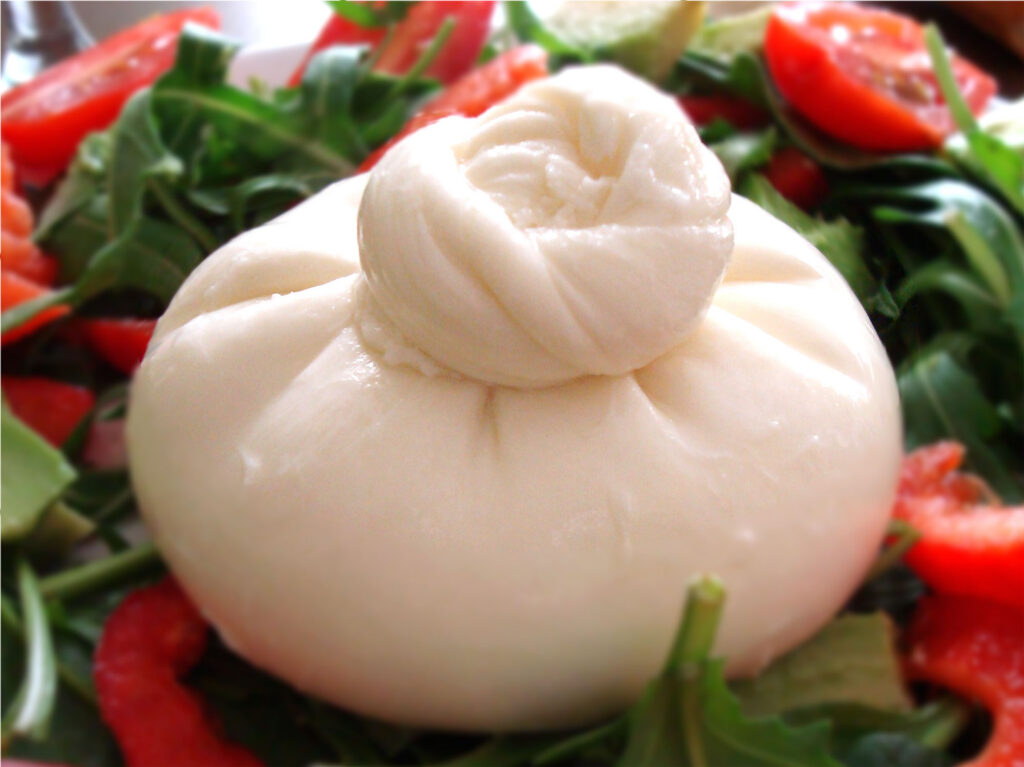
- Cheese and dairy — burrata, born in Andria in 1956 and protected today by an IGP, plus the mozzarella, the ricotta and the aged pecorini.
The branches of this section
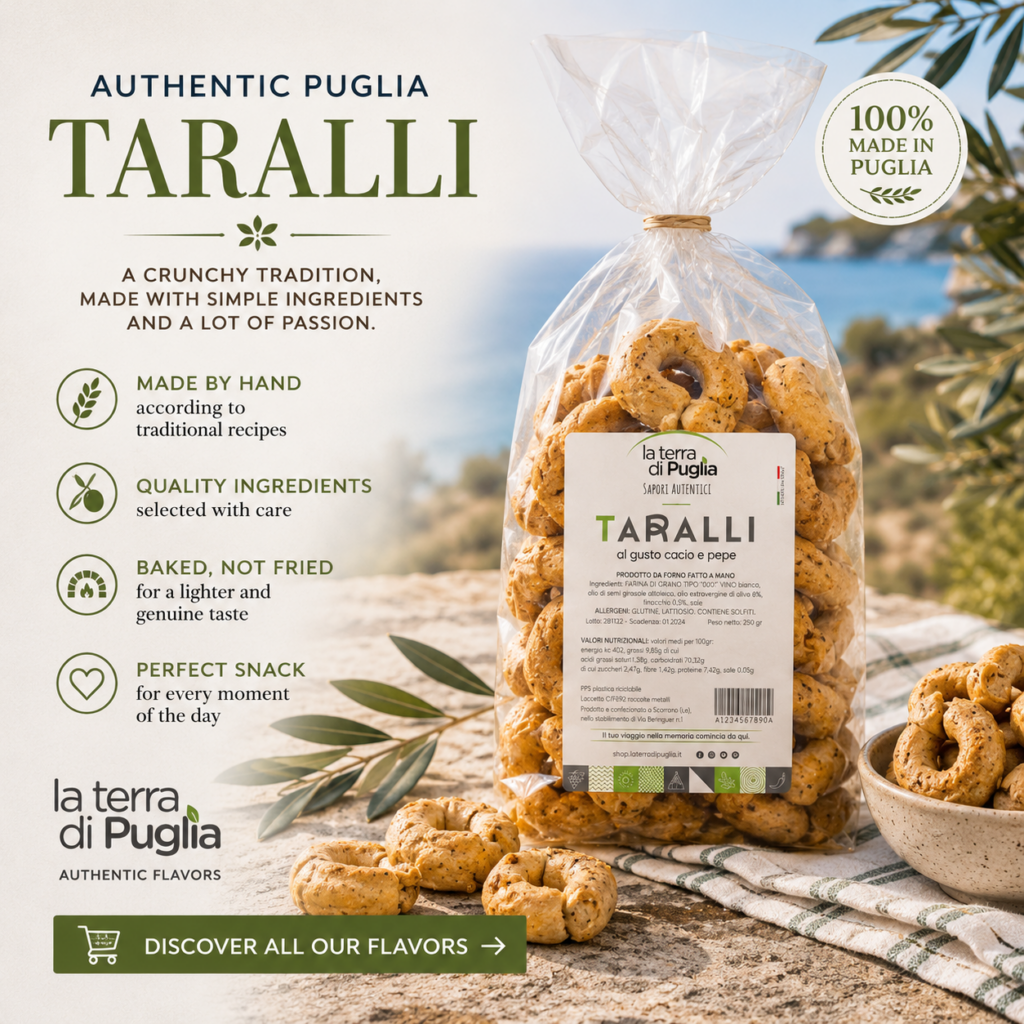
Bread, wheat and frise — the bread of Altamura and its DOP, the twice-baked frise of the Salento, taralli, and the wheat all of it starts from.
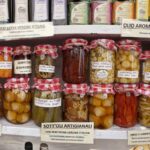
Typical products of Puglia — the things a visitor takes home: cheeses, cured meats, preserves, the sweets of the feast days.
The fruit and vegetables of Puglia — what actually grows here, season by season, including the ones you will not have met before.
Apulian extra virgin olive oil — the largest olive region in Italy, its four protected denominations, and how to tell one oil from another.
Wines of Puglia — primitivo, negroamaro and the DOC areas, from the Tavoliere down to the tip of the Salento.
Food, and how to cook it, are two different things
This section is about the products: what they are, where they come from, why they taste the way they do. If you want to make the dishes, they live next door in the Apulian recipes, arranged by course.
A note on names. Italian food labels are precise, and the difference matters when you are buying. DOP ties a product to a place and a method, both of them written down in a legal specification. IGP is looser: at least one stage of production must happen in the named area. Burrata is an IGP. The bread of Altamura is a DOP — the first bread in Europe to be granted one, in 2003.
Where to start reading
Four pieces that between them explain most of what ends up on an Apulian table: what to eat in Puglia for the overview, burrata and the capocollo of Martina Franca for the two products the region is proudest of, and the olive harvest for the month that decides the year.
Most of what you read about here can be sent to your door. Our shop carries the specialities of Puglia, packed by the same small producers we write about.