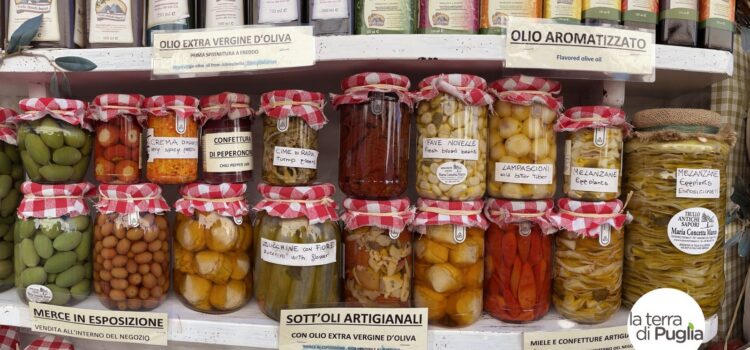
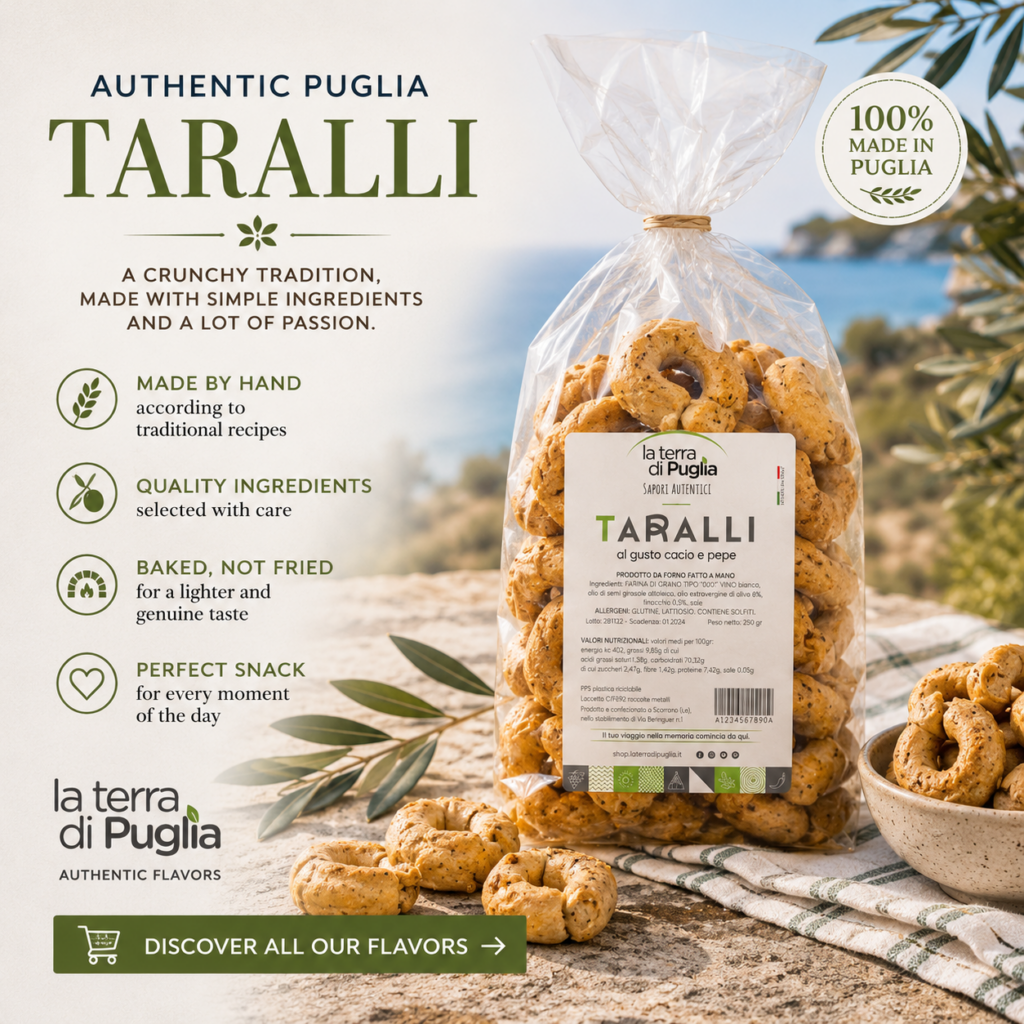
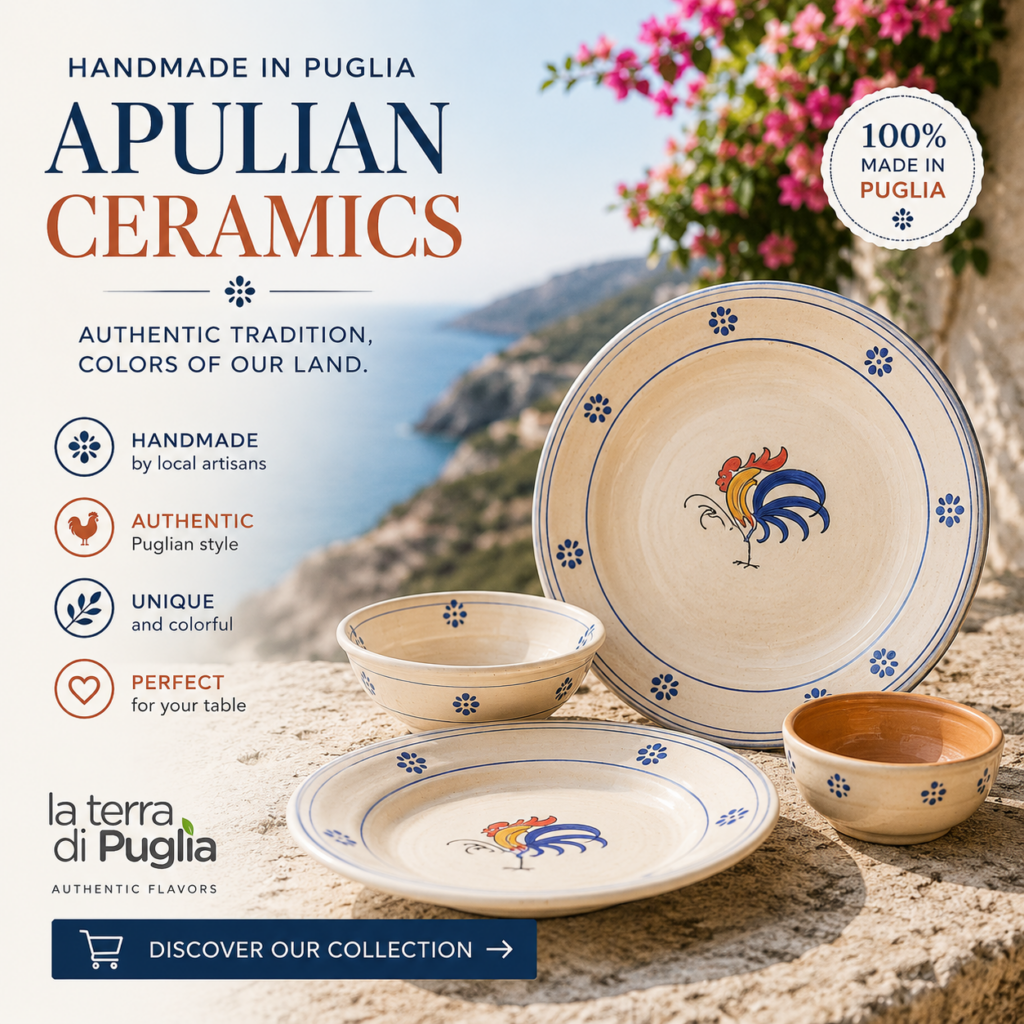
What is worth taking home from Puglia, and what is not: olive oil, taralli, pasta, preserves, wine, the pumo and Grottaglie ceramics, chosen by how you travel and who the present is for — plus the rule on cheese and cured meat if you fly back to Great Britain.
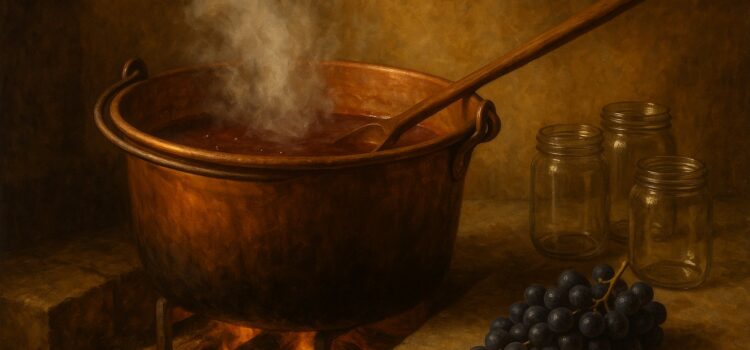
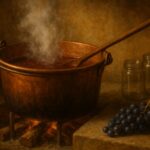
In Puglia the grape preserve is called mostarda, and the name comes from the must, not from the mustard seed. The two Italian mostarde share one origin and each lost one ingredient along the way. What the Puglia Region record says, and why a no-added-sugar version works.
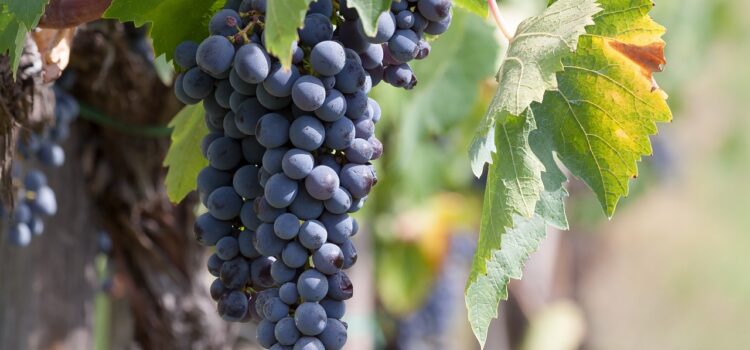
Primitivo and Negroamaro are coming in, and Coldiretti expects 10% more grapes than last year. Two generations ago the same week started at five in the morning, the grapes travelled in fifty-kilo reed baskets, and the must was made by treading barefoot in a stone palmento.
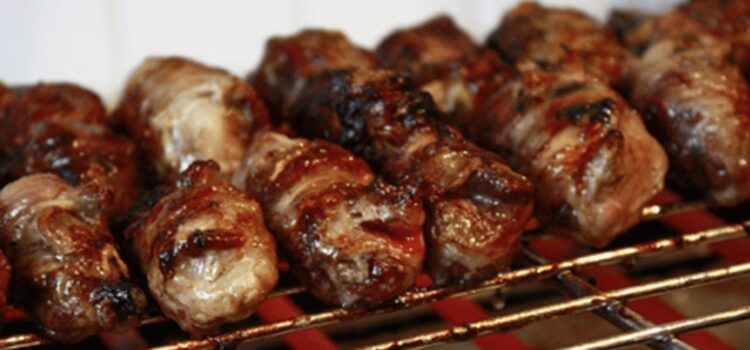
Small rolls of lamb offal wrapped in caul fat and tied with the animal’s own gut, cooked over coals. What is inside them, why they have six names, and the four ways they are cooked.
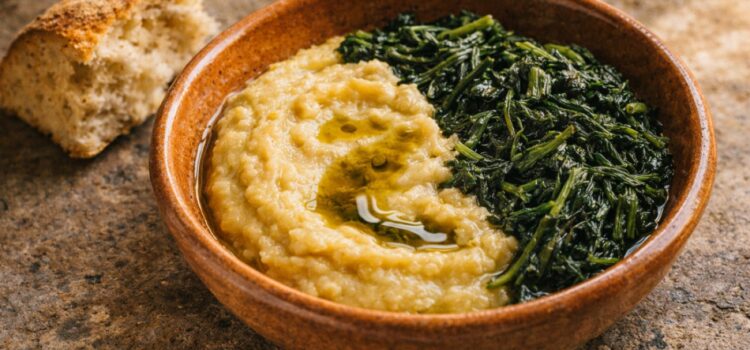
Not the version in the nutrition books, but the everyday table of people who have lived here for generations: from extra virgin oil to broad beans and chicory, from native pulses to durum wheat pasta and local red wine.
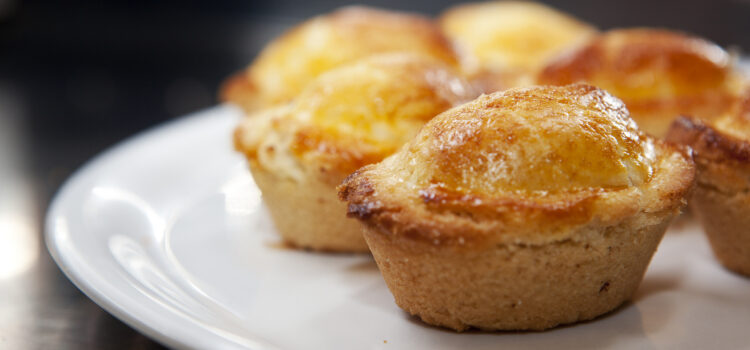
In Galatina, next to the pasticciotto, there is the africano: a sort of meringue made with the yolks instead of the whites. You will not find it anywhere else in Italy.
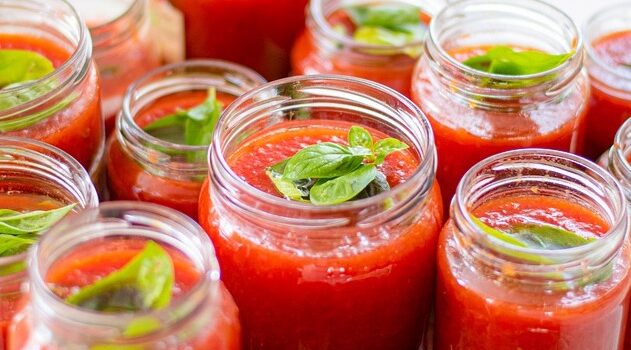
Your home-made passata has separated from its water? It is almost always a question of cooking. Why it happens, how the double boil prevents it, and how to strain the pulp if you bottle raw.
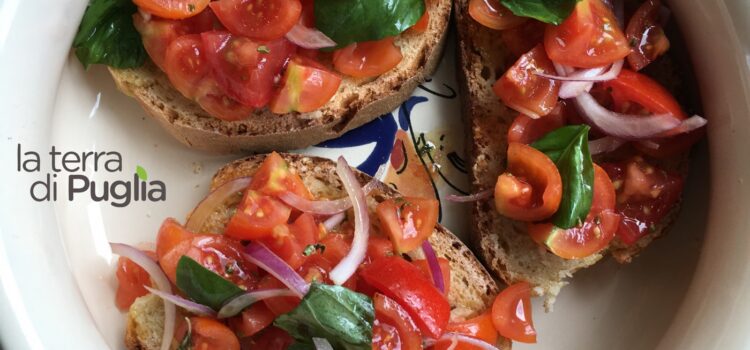
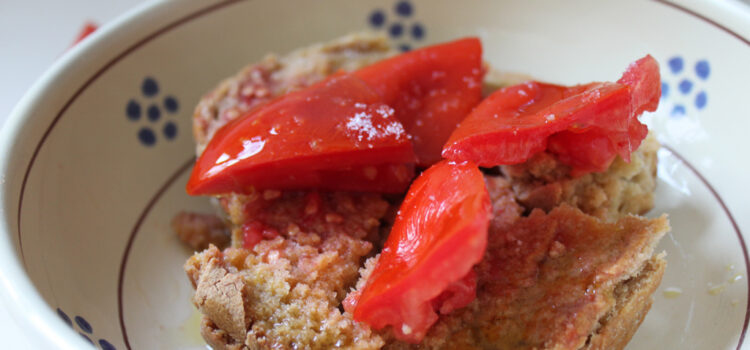
The full recipe: the pre-ferment, the exact proportions, the double baking that makes them properly hard, and the Salento way of soaking them with the sponza frise.