In short. Taranto was founded by Spartan colonists in 706 BC and became the richest and most powerful city of Magna Graecia — in the fourth century BC larger than Athens. It sits between two seas joined by a swing bridge, it has the oldest cathedral in Puglia, and its archaeological museum holds the greatest collection of Greek gold anywhere in the world.
Very few visitors to Puglia get to Taranto, and the reason is a modern one — the steelworks, and the reputation that came with them. What that costs the visitor is one of the most important ancient cities in the Mediterranean.
The city of two seas
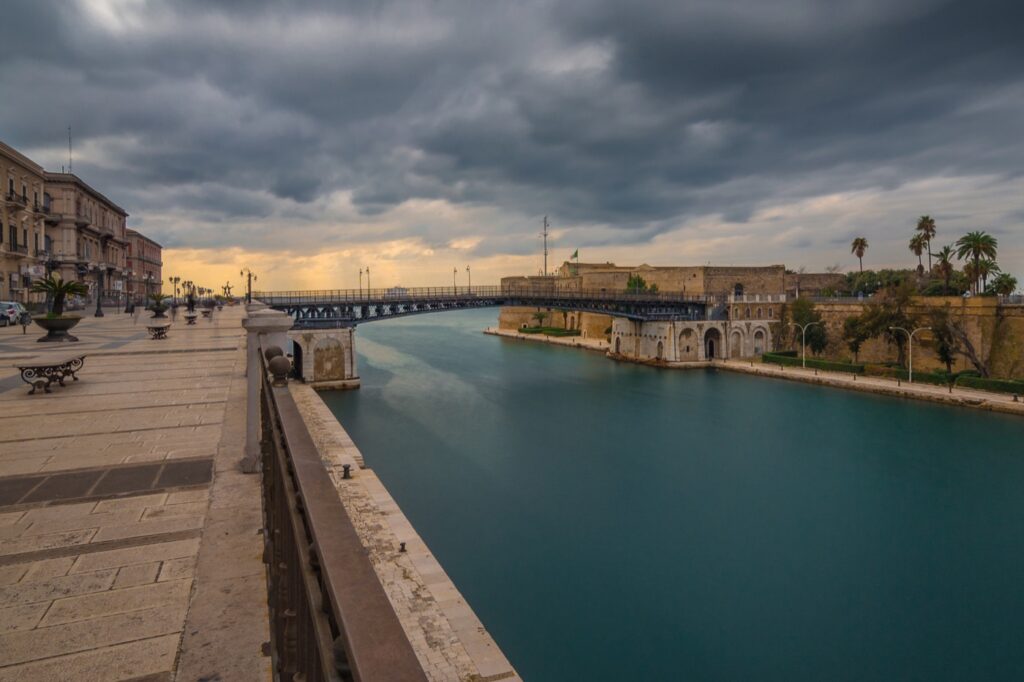
Taranto lies between the Mar Grande and the Mar Piccolo, and the swing bridge is the point where they meet — it joins the island of the old town to the peninsula of the new. It is the symbol of the city and the best place to understand its geography in one look.
Taras, the Athens of the south
Bigger than Athens. Ancient Taras was founded by Spartan colonists in 706 BC and became the wealthiest and most powerful city in Magna Graecia. By the fourth century BC it was the largest city of the Greek west, with a population estimated between 300,000 and 500,000 — more than Athens at the same date. Archytas of Tarentum lived and worked here: mathematician, philosopher and statesman, and a direct influence on Plato. The city’s bronzes, its red-figure pottery and its coinage circulated across the whole Mediterranean.
The MarTA
The museum that changes what you think ancient Puglia was. The National Archaeological Museum of Taranto — the MarTA — is one of the most important archaeological museums in Italy and still nowhere near as visited as it deserves. It holds the largest collection of Hellenistic goldwork in the world: diadems, necklaces and earrings worked with a refinement that has no equal. Add the votive terracottas, the painted sarcophagi, the red-figure vases and the bronzes, and what emerges is a city that in the fourth century BC was rich, learned and extremely powerful. Spend half a day here before walking the old town: it changes what you are looking at.
What else to see
- The cathedral of San Cataldo — begun around the year 1000, the oldest cathedral in Puglia.
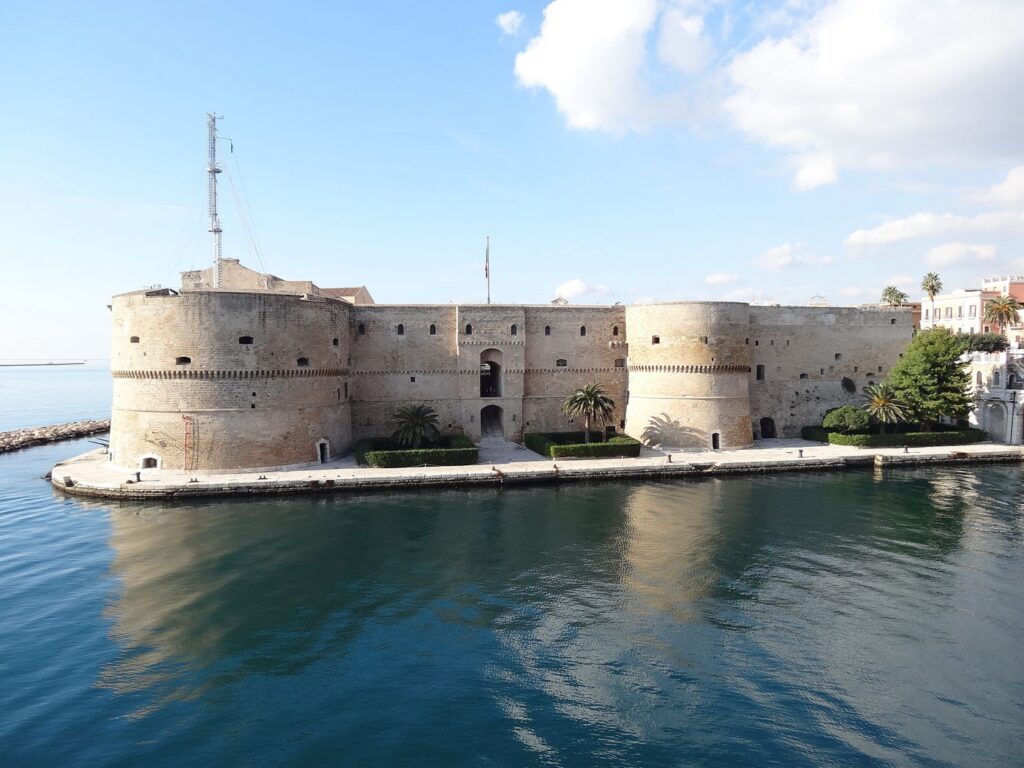
- The Aragonese castle — fifteenth-century, enlarged in the 1400s, and today held by the navy.
- The Doric temple — sixth century BC, and one of the very few visible remains of the Greek city.
- The Bellacicco hypogeum — in the old town, also home to the Spartan Museum, and the quickest way to see the layers of the city stacked up.
- The de Laclos fortress — built under Napoleon at the end of the eighteenth century as a Mediterranean outpost.
Around all of it are the Greek and Roman necropoleis, the crypt of the Redeemer, and a run of palaces in every style the city passed through — Romanesque, Gothic, Renaissance, baroque, liberty and neoclassical.
Eating, and the beaches
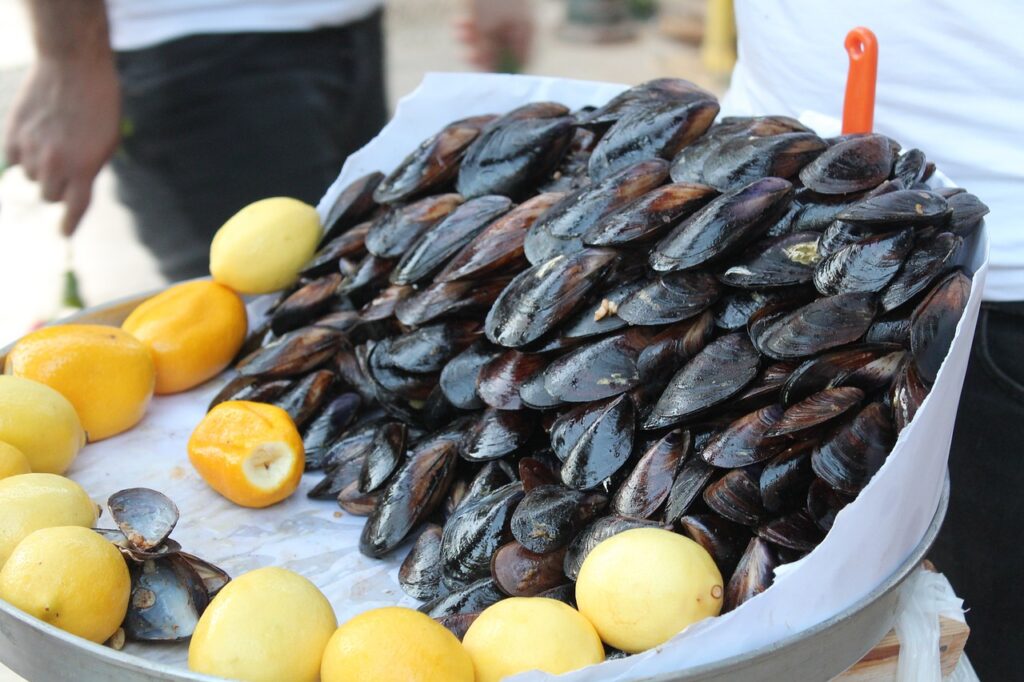
The mussels farmed in the Mar Piccolo are what Taranto is known for at an Italian table, and they turn up in everything. Beyond them: panzerotti, bombette, pettole, the local clementines and chiancaredde pasta.
For swimming, the city’s own beaches are Porto Pirrone, Canne, Gabbiano, the Marina di Taranto and Lido Azzurro.
Around it
Grottaglie and its ceramics are twenty minutes inland; Massafra is fifteen kilometres away in the ravines. The Valle d’Itria starts immediately to the north — the SS172 runs from here up to Martina Franca and Alberobello.
Taranto is the capital of the Ionian coast, and the oldest important city in this guide.
From 21 August to 3 September 2026 it is also the sporting capital of the Mediterranean: the 20th Mediterranean Games bring 4,000 athletes from 26 nations here and to twenty other Apulian towns.