In short. Grottaglie has been making pottery since before Rome, and still does: it is the only town in Puglia with a DOC mark for its ceramics and one of the twenty-eight official ceramic towns of Italy. Its workshops are concentrated in one quarter, cut along a ravine below the medieval bishop’s castle, and you can watch the work being done.
This is a place with a single subject, and it is the better for it. If you want to bring one thing home from Puglia that was made by the person who sold it to you, come here.
An old trade
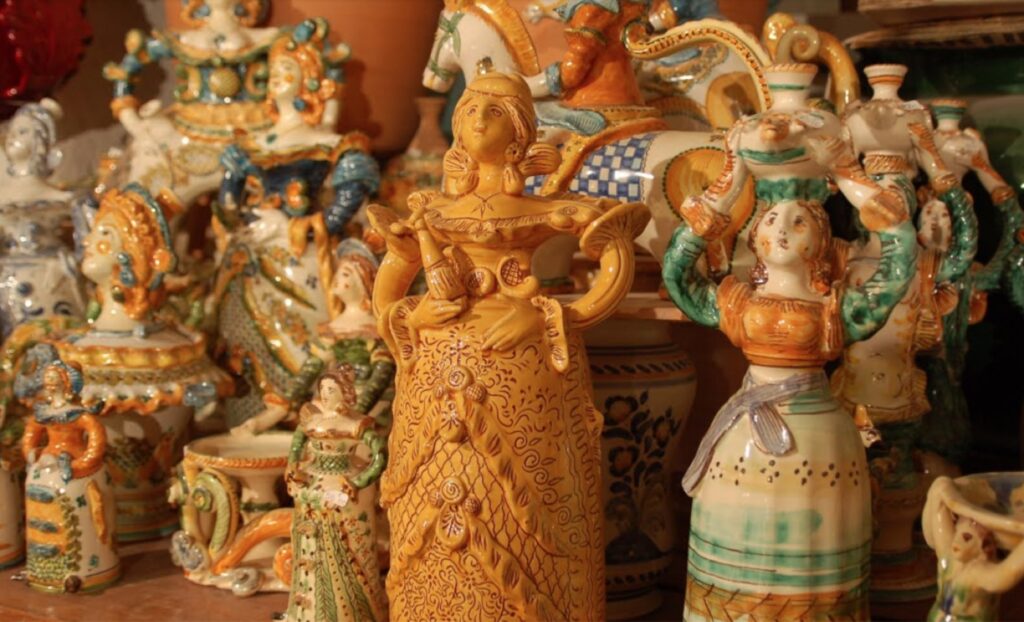
Ceramic finds from the classical period show how old and how important the craft was here, and it reached its height in the time of Magna Graecia. It never stopped: the trade still matters to the town economically as well as creatively, and it is the reason Grottaglie carries the DOC mark — the only town in Puglia to do so — and sits on the national list of twenty-eight ceramic towns.
What they make
- The Bianchi di Grottaglie — once made for the wealthy: pure, simple shapes under a white glaze with no decoration at all, so that the form and the material do the work.
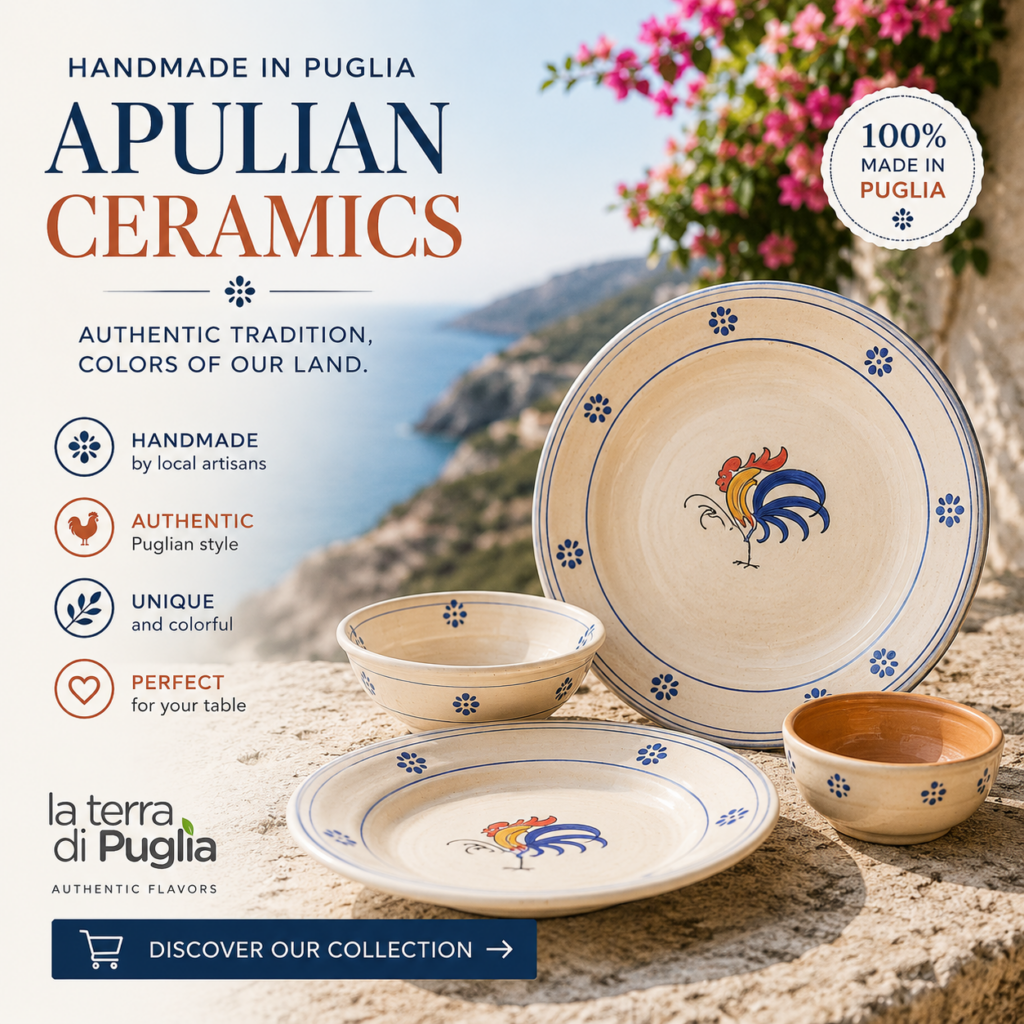
- The rustic tradition — pottery made for everyday need, and the reason the craft survived. The best-known pieces are the capasoni, the great jars used to hold wine, along with dishes and utensils in a palette of four colours: dirty green, blue, manganese and ochre yellow.
- The pumo and the lucky owl — the good-luck bud and the owl, in every colour and size, and the two things most likely to leave in a suitcase.
- Terracotta whistles — brightly painted, cheap, and the traditional thing to buy for a child.
How a piece is actually made — the wheel, the glazing by hand, the two passes through the kiln — and what separates Grottaglie from the other two ceramic towns of Puglia, is set out in Apulian ceramics. The ceramic balloons come out of the same workshops.
What a pumo actually is. The pumo is a ceramic flower bud, and it is not decoration for its own sake: it is an apotropaic object, a bud about to open, meaning prosperity and protection. They sit on balconies and gateposts all over Puglia. The full story is here: Apulian ceramics and the pumo — and we ship them: see the shop.
The ceramics quarter
The workshops are not scattered through the town. They are gathered in the Giudecca, the old Jewish quarter, along the Gravina di San Giorgio and beneath the medieval Episcopio castle. Walking those lanes you pass one workshop after another, and in most of them the potters are at the wheel and will let you watch. Pieces run from a two-euro whistle to serious work.
It is the single best souvenir street in Puglia, and the prices are what they should be when there is no middleman.
Around it
Taranto is twenty minutes away, and worth the day for the museum alone. To the north the country climbs into the Valle d’Itria — Martina Franca is close.
Grottaglie is the workshop of the Ionian coast, and the reason half the ceramics you see across the region exist.