In short. Venice has masks. Putignano has enormous papier-mâché floats, the longest carnival in Italy — it opens on 26 December and runs to Shrove Tuesday — a mask of its own called Farinella, and a funeral for Carnival on the last night, with a papier-mâché pig in the coffin.
After Venice it is one of the oldest carnivals in Europe, and its roots are in peasant ritual rather than aristocratic costume.
🕯️ It starts the day after Christmas
The opening ceremony is the exchange of the candle, on 26 December: people carry a candle into the church to ask forgiveness in advance for the sins they are about to commit during Carnival. That same evening comes the Festa delle Propaggini — rhyming satirical verse in dialect about the year’s events and the local powerful, performed by actors dressed as farmhands and carrying their tools.
From 17 January, the feast of Saint Anthony Abbot, the Thursdays begin, each one mocking a different rank of society, always in the same order: monsignors, priests, nuns, widowers, bachelors, married women and, last, the cuckolds.
🐻 The bear, and the inverted weather
2 February, Candlemas. Tradition says that if the weather is good, the bear builds himself a shelter of straw, because bad weather is coming; if the weather is bad, he can relax, because the good weather is on its way. The logic is upside down on purpose, and a local theatre company stages it every year.
🎭 Where it came from
The tradition dates the carnival to 1394. That year the Knights of Malta, who then controlled the territory and feared raids from the sea, moved the relics of Saint Stephen from the castle of Monopoli inland to Putignano, which was safer. As the procession passed, it met farmhands at work grafting vines — the propaggine — who left the fields, faces smeared with flour, and joined in dancing and reciting satire in dialect. That is the origin story, and it is where the festival takes its name from.
The parade of allegorical floats came much later, under Fascism, when the parade itself was a fashion of the regime. A summer edition of the carnival was added in 2006.
🃏 Farinella
As Harlequin stands for Venice and Pulcinella for Naples, Putignano has Farinella: a jester in a multicoloured suit and a two-pointed hat with bells. The older costume is said to have been red and blue, the colours of the town, with a three-pointed hat for the three hills Putignano sits on. The name comes from a local dish of barley and chickpea flour.
The floats. They are built in papier-mâché — cartapesta, the same craft that makes the saints’ figures of Lecce — in workshops that spend most of the year on them. They are satirical, political and very large.
⚰️ The funeral
It closes on Shrove Tuesday with a traditional parade and the funeral of Carnival, represented by a papier-mâché pig. At midnight the Bell of the Macaroni tolls, and Carnival is over until 26 December.
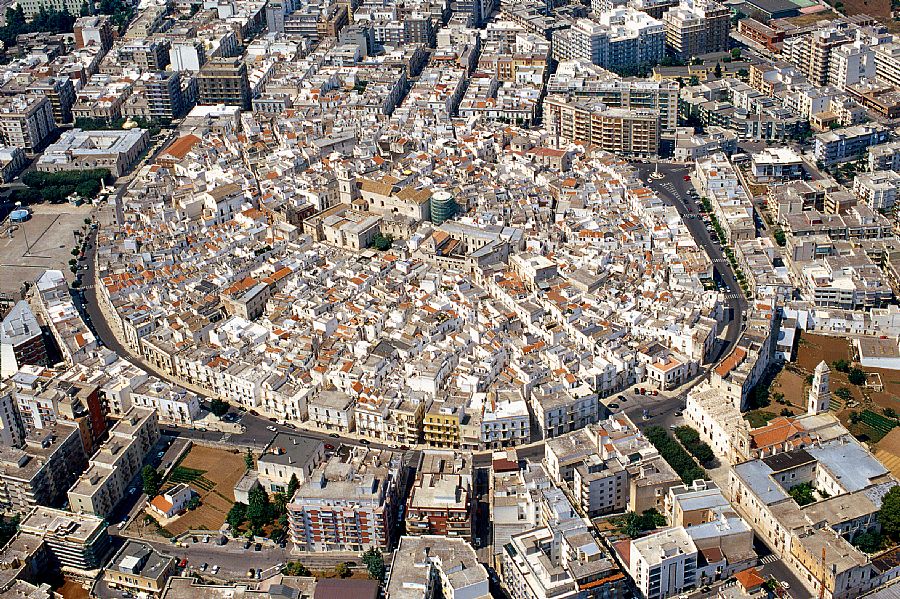
Where to go: Putignano is in the province of Bari, on the edge of the Valle d’Itria.