Historia, the gathering of historical pageants in Gravina in Puglia, reaches its 24th edition and returns to its September slot: Friday 18, Saturday 19 and Sunday 20 September 2026. Three evenings, three tributes — to the Orsini, to Frederick II with Dario Fo, to Charles II of Anjou — and the great procession of every era on Sunday night. Here is the programme day by day, with times and squares, and the history behind it.
Gravina calls itself the “city of historical re-enactment”, and this gathering is the reason. Historia is organised by the Centro Studi e Ricerca Nundinae, founded in 2002, and for three days it brings re-enactment groups from all over Italy and hundreds of costumed performers into the old town: camps, games, drummers, flag-wavers, and a procession that runs through the ages from the Roman Empire to the present.
This year is the twenty-fourth edition, and it marks a return: after a trial year in June, in 2025, the event goes back to its usual September dates. The organisers announced the dates in January, and the full programme is published on their website.
Why Gravina: Frederick II and the Angevins
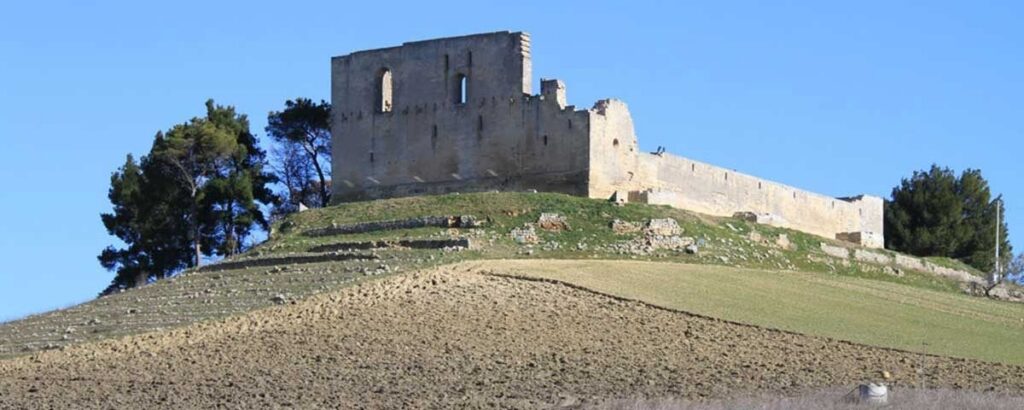
The re-enactment ties two stories together. The first is that of Frederick II of Swabia, who came to Gravina in 1227 and was so taken with it that he called it a “garden of delights”: he had a castle built there to stay in while hunting on the Murgia, and according to the organisers he came back at least three times. It is the castle of Gravina, one of the links in the network we describe in Frederick II’s Puglia.
The second story comes some sixty years later. On 15 August 1289, in a public and solemn ceremony, the county of Gravina acknowledged its allegiance to the Angevin dynasty. The ceremony drew on the Constitutio de Feudis, the imperial constitution of Conrad II, known as the Salian, that governed the succession of minor fiefs. This is the heart of Sunday’s “Angevin ceremony”, which the programme titles Carlo II d’Angiò in Dies Nundinarum: the day of the nundinae, the old trading fairs that gave the study centre its name.
A thread that leads to Lucera. Sunday’s king is Charles II of Anjou, the same ruler who in 1300 put an end to the Saracen colony of Lucera, the town Frederick II had settled with Muslims from Sicily. In Gravina, over three evenings, you move from the Swabian emperor to the Angevin kings who came after him.
The programme, day by day
Friday 18 September — A tribute to the Orsini
- 8 pm, Palazzo Ducale Orsini: the Duke and Duchess present themselves to the town, along Piazza della Repubblica – Via Matteotti – Piazza Benedetto XIII.
- 8.30 pm, cloister of Santa Maria: the Orsini ceremony, the concert “L’eco degli Orsini” and a performing-arts show, with the Emilio Silvestri music association and the Messbrass Ensemble.
Saturday 19 September — The jester and the emperor
The evening is dedicated to Dario Fo, marking the centenary of the Nobel laureate’s birth, meeting Frederick II.
- 8 pm, cloister of San Sebastiano: “the Emperor Frederick II in Urbs Opulenta“, the Frederician ceremony, and the Pueri Historiae gathering of schools with the parade of all eras along Via San Sebastiano and Via Marconi.
- 8.30 pm, Piazza Notar Domenico: the performance “Federico II vs Giullare 2.0” and a fire show.
- 7 to 11 pm, around the old town: the medieval camp in Piazza della Repubblica, the “In Taberna” food area in Largo D’Agostino, birds of prey in Piazza Plebiscito, historical games in Piazza Notar Domenico.
- 9 to 11 pm: drummers and flag-wavers in Piazza Scacchi, jesters in Via Libertà, drums and dances in Piazza Notar Domenico, medieval musicians in Piazza Benedetto XIII, belly dancers in Largo Marconi.
Sunday 20 September — The edict of Charles II of Anjou
- 11 am, the rock habitat of San Michele delle Grotte: a costumed photo shoot for the “Istanti di Historia” competition.
- 11.30 am to 1 pm and 7 to 11 pm, around the old town: camp, food area, birds of prey, historical games, drums and dances.
- 7.30 pm, the Grand Gathering and Historical Procession of All Eras: it sets off from the “San Domenico Savio” primary school in Via Punzi and crosses the town — Via Divagno, Corso Di Vittorio, Viale Regina Margherita, Piazza San Padre Pio in front of the station, Corso Aldo Moro, Via Garibaldi, Piazza Scacchi, Porta San Michele, Via Matteotti.
- 9 to 11 pm: drummers, flag-wavers and harquebusiers in Piazza Scacchi, a fakir show in Piazza Notar Domenico, belly dancers in Largo Marconi.
- 9 pm, Piazza Benedetto XIII: the entrance of the historical groups before the royals, the Angevin ceremony and the grand finale, “Caos”.
The moment not to miss is Sunday night. The procession leaves from the Via Punzi area at 7.30 pm and reaches Piazza Benedetto XIII around 9 pm: if you want to see it go by, find a spot along the route, between the station and Porta San Michele, rather than waiting in the final square.
What to see in Gravina between evenings
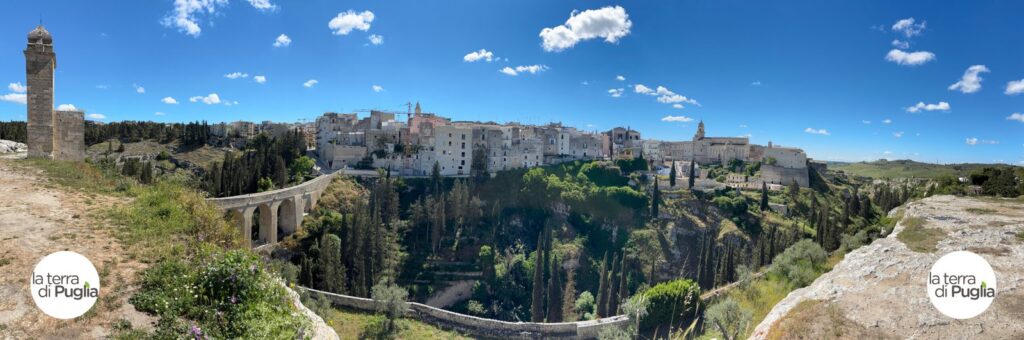
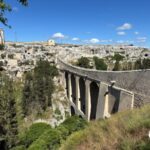
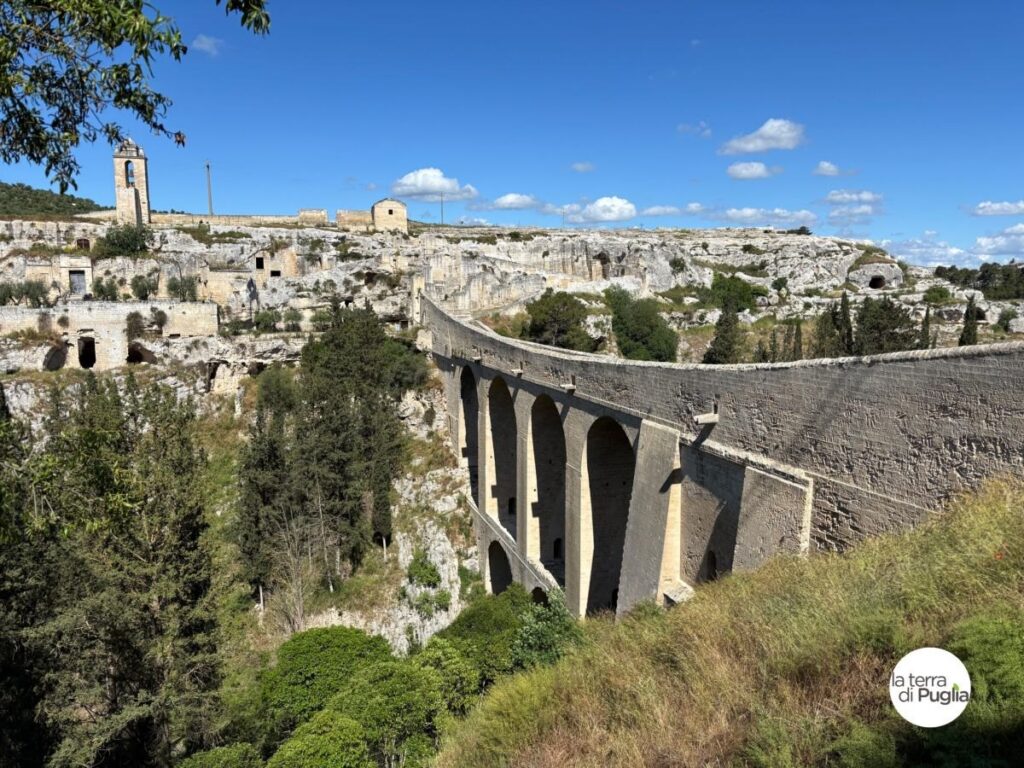
The programme is concentrated in the evenings, which leaves the days free for the town. Gravina sits on the edge of its canyon, the gravina that gives it its name: our page on Gravina in Puglia tells its story, and it pairs naturally with the rest of the Murgia. Do not miss the aqueduct bridge that spans the ravine, or the rock churches such as San Michele delle Grotte, where the Sunday-morning costumed photo shoot takes place.
How to get there
- By car: 65 km from Bari on the SS96, towards Altamura.
- By train: direct connections from Bari Centrale on the Ferrovie Appulo Lucane line. On Sunday the procession passes right in front of the station, in Piazza San Padre Pio.
Where this information comes from. The programme, times and routes are those published by the Centro Studi e Ricerca Nundinae on its website; the dates and the return to September were announced by the organisers and reported by the Gravina local press on 12 January 2026. The story of Frederick II in Gravina and of the 1289 ceremony is the one told by the organisers. Last-minute changes are posted on the study centre’s channels.