In winter the Salento does not close: the beach clubs do. The Baroque churches of Lecce stay open, with an official winter timetable; the mosaic of Otranto is still there, and so is the old town of Gallipoli on its island. Under the town squares lie the underground olive mills, which did their work precisely in winter. Here is what you will find, and what to check before you go.
The Salento is the heel of Italy’s boot, the southern tip of Puglia. In summer you know it from the sea; in winter the towns take centre stage: the pale stone of Lecce, the cathedrals, the lanes of Gallipoli and Otranto without the August queues. We only give opening hours where an official source publishes them; where there is none, we say so.
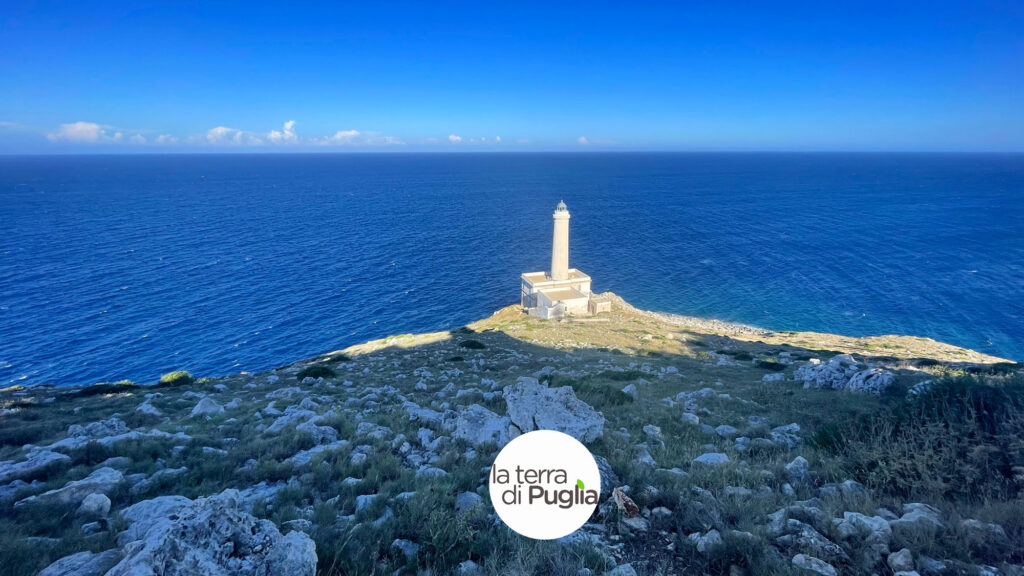
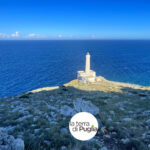
The Punta Palascìa lighthouse near Otranto, the easternmost point of Italy.
What closes: the beach clubs, not the sea
The lidi, Italy’s private beach clubs with rows of umbrellas, sunloungers and a bar, only work in summer: the bathing season in Puglia is set each year by the regional government, and in 2026 it ended in September. The coast itself stays: cliffs, watchtowers and lighthouses are just as good to look at in November, and you will have them to yourself.
Lecce: the Baroque on winter hours
In Lecce the main churches of the centre share a single ticket, from the LeccEcclesiae circuit: the Duomo with its bell tower, the basilica of Santa Croce, Santa Chiara, San Matteo and the Antico Seminario with its museum of sacred art. The circuit’s official website gives winter opening hours of 9 am to 6 pm, last entry a quarter of an hour before closing; during services, entry is for worshippers only. The ticket is valid for fifteen days, with one entry per church; the price, with or without the bell tower, is on the circuit’s website.
At Santa Croce the first stone was laid in 1353 by Walter VI of Brienne, Count of Lecce, but the church you see grew over almost two centuries, through the work of Gabriele Riccardi, Francesco Antonio and Giuseppe Zimbalo and Cesare Penna: it is considered the city’s first Baroque building. The pale, almost golden colour of its façade is that of Lecce stone, the local stone that gives the whole centre its colour. We tell its story in Baroque Lecce and the stone that made it.
In Piazza Sant’Oronzo, the Roman amphitheatre can be seen straight from the square. Excavated from the early twentieth century, it has been a national monument since 1906; about a third of it is visible, and the rest still lies under the square and the buildings around it.
Otranto: the mosaic and the easternmost point
In Otranto the reason to step into the cathedral is on the floor. The pavement of the nave is a great twelfth-century mosaic, made between 1163 and 1165 for Archbishop Gionata; the inscription names the priest Pantaleone, who, scholars believe, most likely ran the project rather than laying the tiles himself. In the same cathedral is the Chapel of the Martyrs, with the cases holding the remains of the townspeople killed by the Turks in 1480.
Just outside town stands the Punta Palascìa lighthouse, on the easternmost point of Italy and the closest to Albania. The lighthouse dates from 1867; abandoned in 1970, it was later restored, and it is one of five Mediterranean lighthouses protected by the European Commission. By nautical convention, it is here, not at Leuca, that the Ionian and the Adriatic meet.
Gallipoli, the old town on its island
In Gallipoli the part to see in winter is the old town: an island of limestone joined to the mainland by a masonry bridge and ringed by bastion walls about two kilometres long. The upper part of the walls was pulled down between 1879 and 1887; along the lower part runs the riviera, the seafront road that goes all the way round the island. Inside are the Angevin castle and, a few steps from one another, the churches: above all the cathedral of Sant’Agata, in Lecce Baroque, and the church of the Purità.
Did you know? The port of Gallipoli was where the Salento’s olive oil set sail. As the town council of Vernole recalls, most of the oil from the inland mills was not used locally: it was sold and shipped from Gallipoli to northern Europe.
The underground mills, which worked in winter
Winter is also the season of the frantoi ipogei, the olive mills dug out beneath the squares, known locally as trappeti. According to the town council of Vernole, every olive mill built in the Salento between 1500 and 1800 is underground, cut into tufa or Lecce stone between 2 and 5 metres deep; the olives were pressed from October to February. The village of Presicce still has more than twenty under its centre, and there is one in Gallipoli too, beneath Palazzo Granafei. Most can only be seen with a guide or on request: ask the Pro Loco, the volunteer-run local tourist office, or the town hall. We have told the story of life inside one in the oil mill of the past: nights in the trappeto.
Oil from the Terra d’Otranto. This is the season of new olive oil. From the Salento, our shop has Olivum PDO Terra d’Otranto, an extra virgin olive oil with Protected Designation of Origin, made by Primoljo in Casarano, in the province of Lecce.
What to check before you go
- The churches of Lecce have official winter hours, 9 am to 6 pm: the only timetable we were able to verify.
- Otranto castle: the official listing only gives hours up to 5 November. For winter, ask locally.
- Gallipoli castle, the Punta Palascìa lighthouse, the underground mills: no winter hours published in the official sources we read. Ask first, either the site managers or the Pro Loco.
Opening hours and prices in this article come from official websites consulted on 3 November 2026: the LeccEcclesiae circuit for the churches of Lecce, Italy’s national tourism portal for Otranto, the Italian Ministry of Culture for the amphitheatre, and the town council of Gallipoli for the walls. They may change over the holidays.