In short. Manduria sits on the border between the provinces of Taranto and Lecce and belongs to both worlds. It has a Messapian archaeological park where the ancient walls still ring part of the town, a spring cut into the rock that Pliny the Elder wrote about, and it gives its name to one of the great red wines of the south: Primitivo di Manduria.
Most people meet Manduria on a wine list without ever registering that it is a town. It is, and a good one — with the Messapians underneath it and the Ionian a few kilometres away.
The Messapian walls and the spring
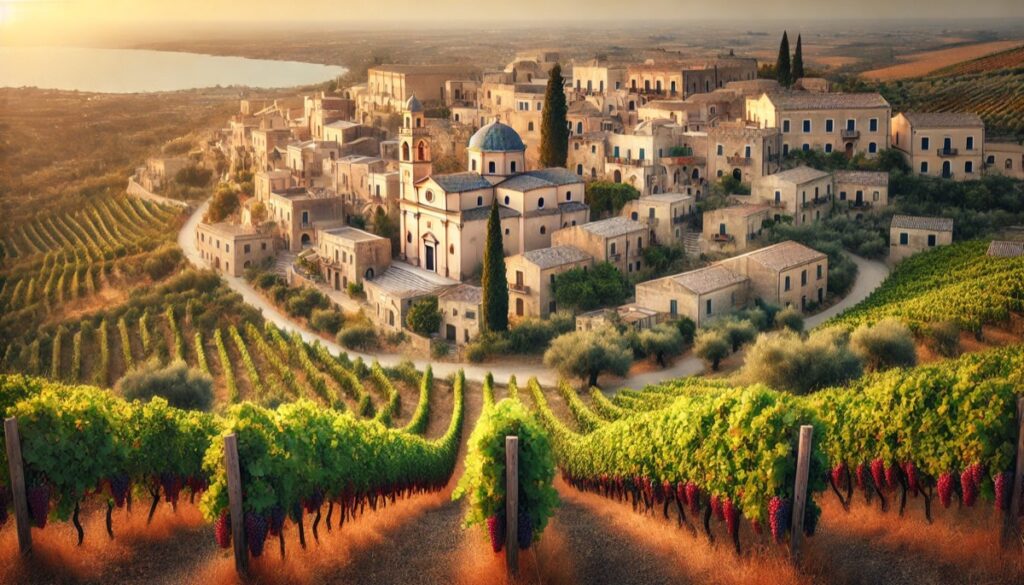
The Archaeological Park of the Messapian Walls is unique in Puglia: the ancient fortifications still enclose part of the present town, and they record what Manduria was — a major centre of the Messapian civilisation, the people who held the Salento and resisted Rome longer than anyone else in the region.
The Fonte Pliniano. Inside the park, surrounded by greenery, is a spring cut into the rock that Pliny the Elder described — which means it has been a known and named place for two thousand years. It has always been the symbol of the town, and it is the one stop here that everybody makes.
Primitivo
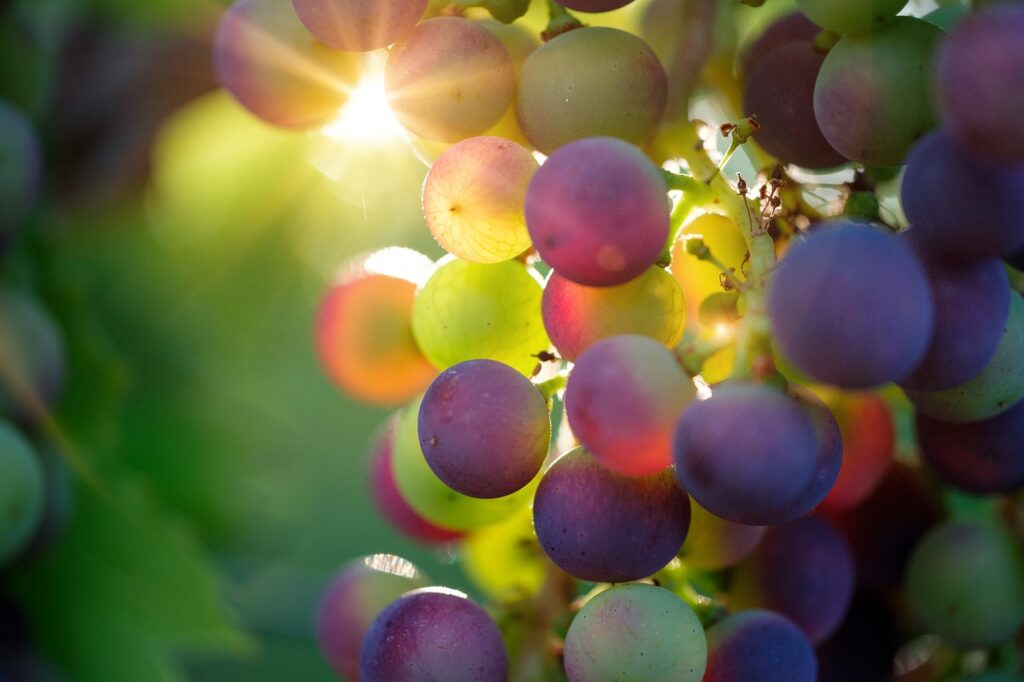
The wine has been made in this territory since antiquity and is now recognised internationally under the DOC and, for the Riserva, the DOCG. It is full-bodied, deep and aromatic, and it tastes of the red earth it comes out of.
The Cantina Sociale and the Consorzio Produttori Vini are the historic operations here, and visiting a cellar, tasting and seeing how it is made is the obvious reason to come. There is also a Museum of the Civilisation of Primitivo, which is less odd than it sounds: this is a town that organised itself around one grape.
The wine travels. Primitivo, and the rest of what this land produces, ships from Puglia directly: see the shop.
The town, and the sea
The historic centre is worth the walk: stone lanes, baroque churches, noble palaces, courtyards and old portals. The Chiesa Madre and the old Jewish quarter are the two things to look for.
The Ionian is a few kilometres south, and the nearest beach is Campomarino di Manduria — which is why the town works as a base as well as a stop.
Around it
Manduria straddles the line between the Ionian arc and the Salento, which makes it a natural bridge: Taranto is to the west, and Lecce about an hour east.
Manduria is the wine town of the Ionian coast, and the place where Puglia starts turning into the Salento.