Pettole, little balls of soft leavened dough fried in oil, are eaten all year round in Puglia, but they have a calendar of their own: in Taranto the first batch is fried on the night of Saint Cecilia, 22 November, in Rutigliano on the 25th for Saint Catherine, and in the Valle d’Itria on 7 December, the eve of the Immaculate Conception. This is the story of those few weeks.
Between late November and early December, in many homes across Puglia, the pan of frying oil goes back on the stove. It is not Christmas yet, but the very soft pettole dough is rising again under a cloth, and the right day to fry it depends on which town you are in.
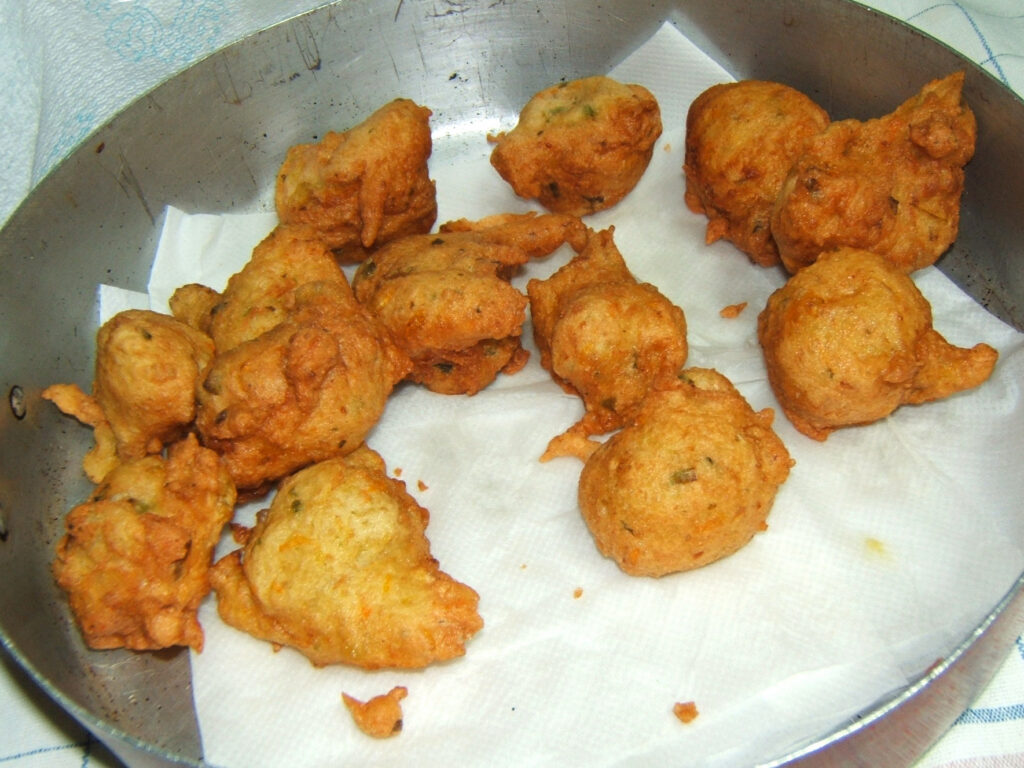
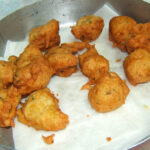
Pittule with vegetables in the dough, just out of the oil: one of the savoury versions, alongside the sweet ones rolled in sugar or covered in vincotto.
What pettole are, and their many names
The Puglia Region’s record of traditional food products, which has listed them nationally since 2001, describes them as balls of very soft leavened dough fried in boiling oil. They can be sweet, rolled in sugar or covered in honey or vincotto, the slowly cooked grape or fig must of southern Italy, or savoury, with a piece of boiled salt cod, a salted anchovy or a half cooked sprig of cauliflower or broccoli inside. Some versions add mashed boiled potato to the dough.
The name changes almost from one province to the next. The same record lists seven: pèttëlë in Taranto, pittule in Lecce, pèttuli in Brindisi, popizze in Bari, pəttəlècchjə in Altamura, scorpelle in San Severo and sfringioli in Torremaggiore.
Saint Cecilia’s night in Taranto
In Taranto, the regional record says, the first pettole are fried on the night of 22 November, the feast of Saint Cecilia, as a gift for the band musicians who that night, during the saint’s procession, and then all day long, walk the streets playing the pastorali, the Christmas tunes of Taranto. Saint Cecilia is the patron saint of musicians and, as the Gazzetta del Gusto points out, for the people of Taranto the date also marks the start of the Christmas preparations.
The town’s bands go back a long way: according to a motion passed by the city council in 2017, the Paisiello band has been playing since the middle of the nineteenth century and the Santa Cecilia band since 1946, and at Christmas they keep the tradition of the pastorali alive. In 2026, 22 November falls on a Sunday. This year’s programme has not been published yet: for times and routes, check the notices of the city council and of San Cataldo Cathedral closer to the day.
The legend of the distracted woman
According to a legend told in the regional record, pettole were born in Taranto itself, on Saint Cecilia’s night. A woman was making bread when the music of the bagpipers playing in the lanes of the old town drew her out of the house. When she came back, the dough had risen too much to make bread. She divided it into little balls and dropped them into boiling oil, where they puffed up and turned golden. When her children asked what they were called, she said pèttëlë, thinking of a small pitta, the Taranto dialect word for flatbread. In another version it was Saint Francis of Assisi, passing beneath her window, who distracted her.
The Gazzetta del Gusto adds a detail: the bagpipers were shepherds from the Abruzzo who moved with their flocks at that time of year and played in exchange for food, and once the woman had finished frying, she went down to the street to offer them some too. Away from the legend, the regional record links the origin of pettole to the Albanian exiles who settled in southern Italy in the fifteenth century.
Did you know? In the version of the legend recorded by the Gazzetta del Gusto, the children are not happy with just a name and ask again what these things are. Seeing how soft and light they are, their mother replies: “I cuscin’ du Bambinell”, the pillows of the Baby Jesus.
Dough at two in the morning
The same Gazzetta describes how Saint Cecilia’s pettole were once made in Taranto. Women got hold of ‘u luat, a piece of already risen dough used as a starter, which neighbours used to swap with each other, and at about two in the morning they got up to knead a large amount of flour in a glazed earthenware basin, ‘u limm. The dough rose under a wool blanket, next to the wood stove or, more often, the fireplace. Those pettole were lunch and dinner for large families, which is why so much flour went into them.
From Saint Cecilia to the Immaculate Conception
According to the regional record, around Lecce the first frying happens as early as 11 November, on Saint Martin’s day; in some towns south east of Bari, such as Rutigliano, pettole are made on 25 November, Saint Catherine’s day, and some people still make them while reciting prayers; in the Valle d’Itria, the trulli country, they are fried together with salt cod on 7 December, the eve of the feast of the Immaculate Conception on 8 December.
Not everyone agrees on the starting date, though. The Gazzetta del Gusto quotes a proverb from the Salento, the heel of the Italian boot, that puts the first frying at the Immaculate Conception and the last at Candlemas, on 2 February: “Ti la Mmaculata la prima ffrizzulata, ti la Cannilora l’ultima frizzola”. In between comes the whole Christmas season, when pettole return to the table every time the family gets together. We first met them among Puglia’s autumn sweets.
To go with them. For the sweet version, our page on Italian fig syrup (vincotto) explains what it is, and our shop sells an artisan fig vincotto.
How this piece was written. Names, areas, dates and the legend come from the pettole record in the Puglia Region’s list of traditional food products; the rest of the legend, the Salento proverb and the night time dough of Taranto come from the Gazzetta del Gusto; the history of the bands comes from the Taranto city council motion reported by Tarantini Time in 2017. We have not given times or a programme for Saint Cecilia 2026, which have not been published yet. If pettole have another name or another day where you come from, write to us and we will add it.