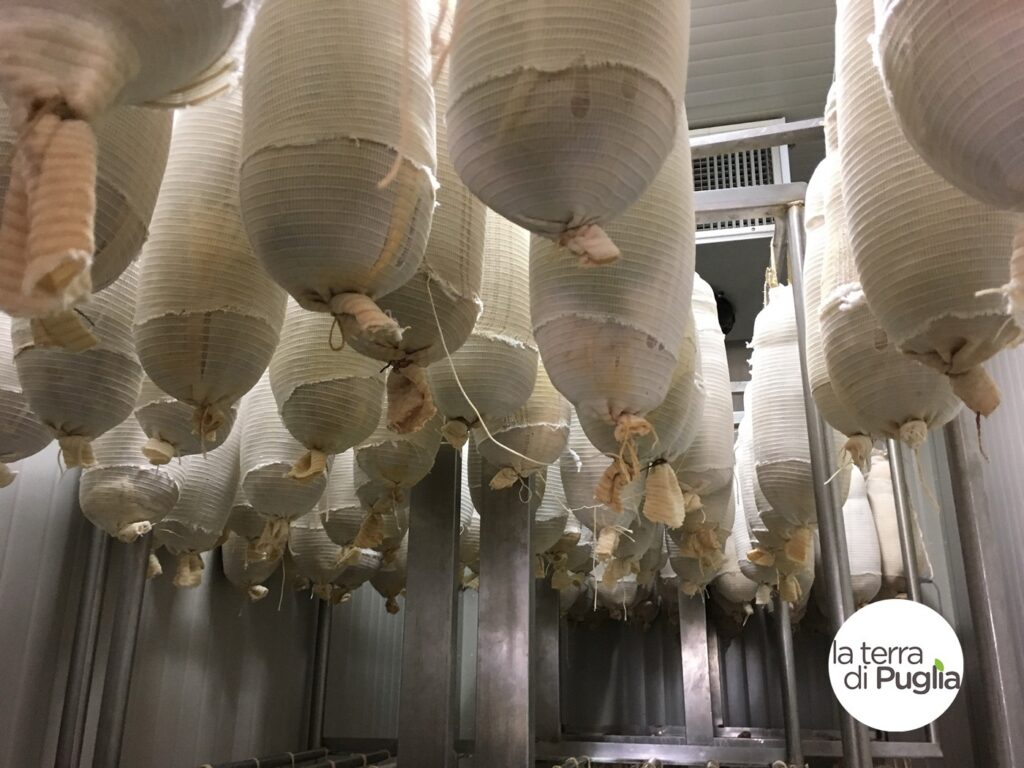
In short. Cured pork neck, made in and around Martina Franca in the Valle d’Itria: salted, massaged with local herbs and vincotto, smoked over vallonea oak bark and aged at least three or four months — traditionally inside a trullo. It is a Slow Food presidium and the one cured meat Puglia is genuinely known for.
Every region of Italy has a capocollo. This one is different, and the difference is not marketing: it is the climate of the Murgia, the artisan curing, and the spices used here and nowhere else.
🐖 What it actually is
Capocollo is made from the upper part of the pig’s neck — a cut with the fat marbled through the lean rather than sitting around it, which is why it stays tender through a long cure.
🧂 How it is made
- Selection of the meat, cut by cut — from pigs reared outdoors, in the traditional way
- Salting, then black pepper, garlic and local herbs
- The vincotto. After salting, the meat is massaged with vincotto — the cooked grape must of Puglia. This is the step almost nobody outside the region knows about, and it is where the colour and a good part of the flavour come from
- The smoke. Not any smoke: the bark of the vallonea oak, the tree of this plateau
- Ageing for at least three to four months, historically inside a trullo — dry stone, thick walls, a temperature that barely moves
A Slow Food presidium. Capocollo di Martina Franca is on the list of Italian products Slow Food set out to protect — a hundred of them — which in practice means a defence of the method rather than of the name. What is being protected is the vincotto, the oak smoke and the trullo, not a logo.
👅 What it tastes like
Delicate but at the same time rich and aromatic. The spices are present without covering the meat, the vincotto leaves a faint sweetness behind the salt, and the oak smoke sits underneath rather than on top. Sliced thin, at room temperature.
The classic pairing. Capocollo with fresh figs, when both are in season — late summer. It is a combination people here take entirely for granted and visitors remember for years.
Why Martina Franca, and nowhere else. There is one place in Puglia where cured meat ages well, and this is it. Martina Franca sits high in the Valle d’Itria: the air is fresher, drier and carries the smell of the oak woods, while the rest of the region is too hot and too humid to do this at all. Curing is mostly a question of what the air does to the meat over months — which is why the same recipe made elsewhere is a different product.
More on the food: what to eat in Puglia.
Taking one home? Read what to bring back from Puglia first — including the rule on cured meat and cheese if you are flying back to Great Britain.