In short. Martina Franca is the largest town in the Valle d’Itria — 49,000 people at 431 metres — and has the most complete baroque centre in Puglia after Lecce, which almost nobody outside Italy knows about. It is also where the capocollo comes from: a cured pork that tastes of smoked almond, and does so for a reason.
Two things distinguish this town from its neighbours. The first is that it is a real town rather than a picturesque one. The second is the oak woods around it, which set the climate, feed the pigs and, in the end, explain the food.
The name, which is two unrelated things
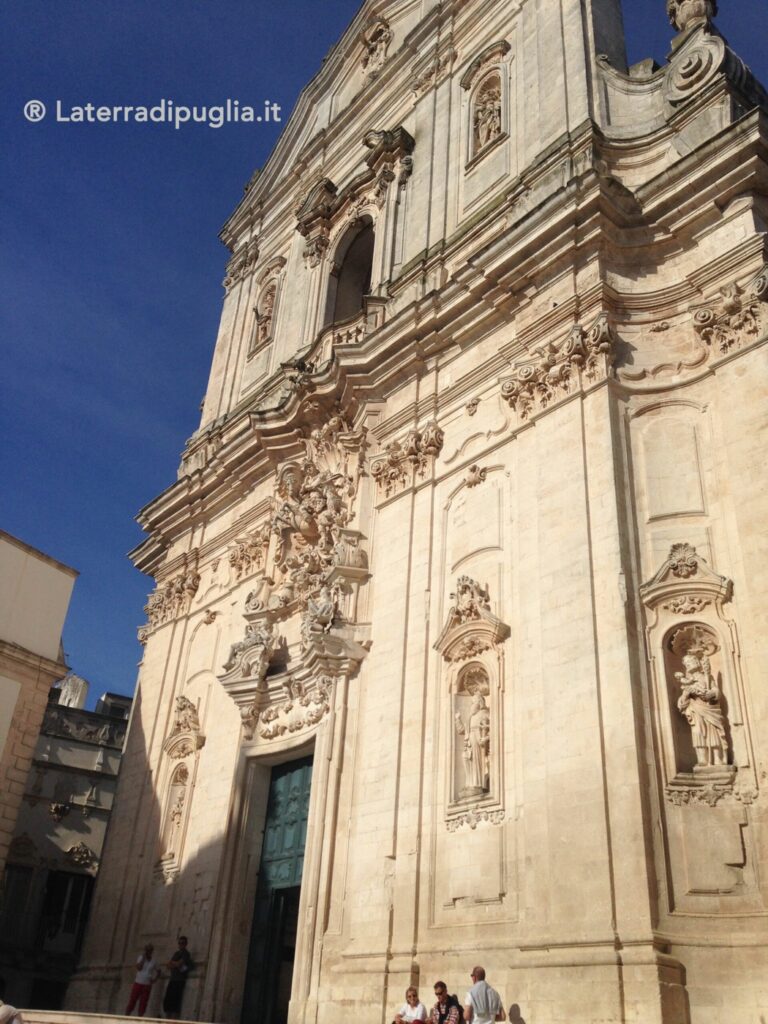
A saint and a tax break. Martina comes from the devotion to Saint Martin of Tours, the patron. Franca comes from the franchigie — the tax exemptions granted in 1314 by Philip I of Anjou to anyone who agreed to settle here. The town grew because it was financially worth living in, and the name still says so.
The baroque
The most northerly baroque in Puglia. Martina Franca has one of the finest and most intact baroque centres in the region — less famous than Lecce, and no less remarkable. The Basilica of San Martino and the Palazzo Ducale are the set pieces: elaborate façades, wrought-iron balconies with carved masks beneath them, portals cut in the local stone. Its baroque has its own accent, closer to Naples than to Lecce, and it sits directly against the blinding white of the ordinary houses — an architectural combination you will not find anywhere else, and one that reminds some visitors of the Greek islands.
There are at least fifteen churches in the old town, many of them with pitched pignon roofs built on much the same principle as a trullo. The civil architecture is worth as much attention: streets of noble palaces with flowered courtyards behind their gates. And if you have come across the valley admiring trulli, there is one in the public gardens in the middle of town.
The oak woods, and what they do
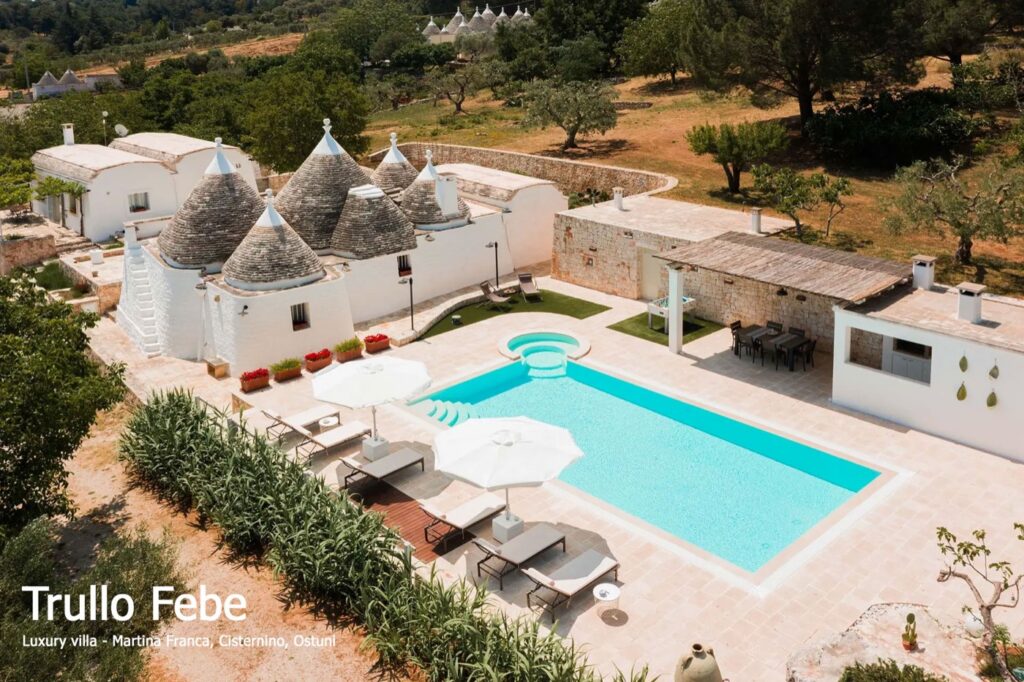
Martina Franca sits just south of the Murgia in green country, and the woods here are oak — mixed with Mediterranean scrub, olives and prickly pear. The result is a place that stays cool when the rest of Puglia does not, smells of wild herbs all year, and supports hares, foxes, hawks, robins and bats. It also produces cardoncelli mushrooms, which turn up on every menu in autumn.
The capocollo
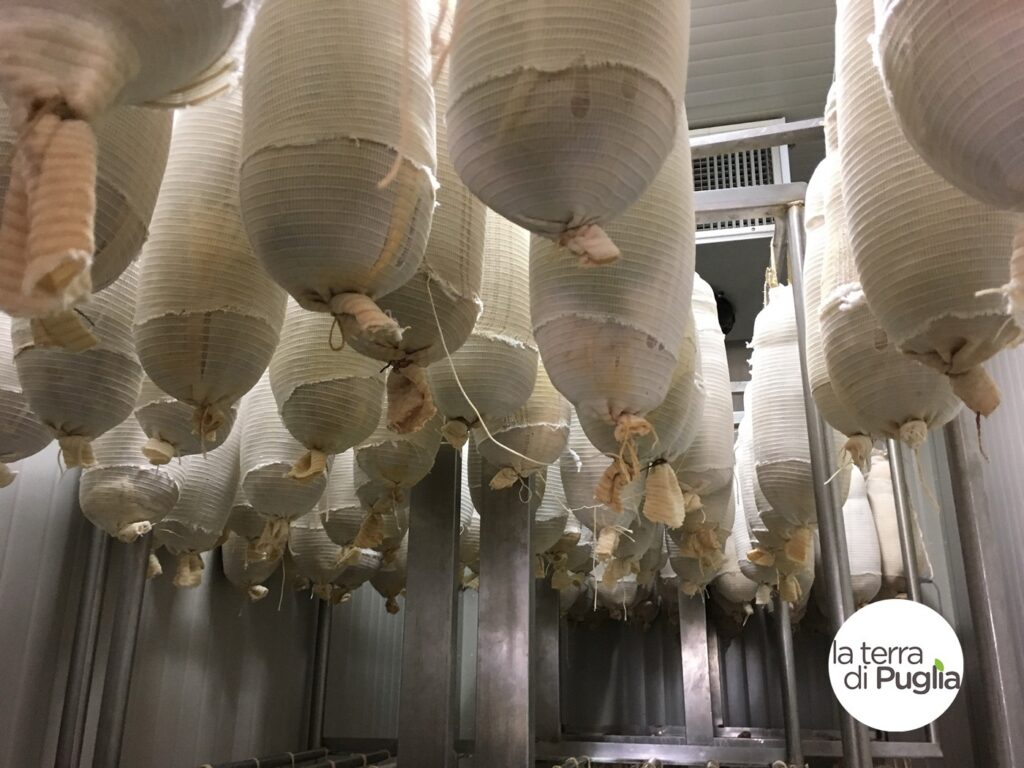
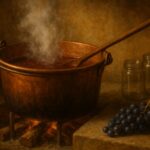
Why it tastes of almond. The capocollo of Martina Franca is protected by a consortium and is a Slow Food Presidium, and its distinguishing flavour is not an added spice. The meat is first cured in vino cotto — cooked wine — with pepper, bay and local aromatics, then dried, then smoked over the bark of the fragno, an oak native to these hills, together with almond husks. The smoked-almond note you get at the first slice comes directly from the wood. It is the reason no other Italian capocollo tastes like it, and the reason the consortium insists it can only be made here.
Eat it with bread from Altamura and a glass of Primitivo. There is more on it here: capocollo of Martina Franca.
The rest of the table: bombette, the grilled meat rolls that tradition says were born here, eaten at the fornelli pronti — butchers who cook what you have just chosen; strascinate di grano arso, pasta made from burnt-wheat flour, a dish that came out of real hardship and stayed on the menu; and bocconotti for dessert.
The climate that suits the curing also suits the vines. The local varieties are Primitivo Tarantino, Verdeca and Bianco d’Alessano, and Martina Franca has its own DOC.
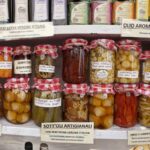
Taking it home. The capocollo, the oil and the preserves of the valley travel, and we send them out from Puglia: see the shop.
Practical
Administratively Martina Franca is in the province of Taranto, right where the provinces of Bari and Brindisi meet it. It is 9 kilometres from Locorotondo and much the same from Cisternino, on the SS172 that runs the length of the valley. The Ferrovie del Sud Est reach it directly from Bari and Taranto; Brindisi is the nearer airport.
Martina Franca is the largest town of the Valle d’Itria, and the one to come to if you want a baroque town that is still getting on with its own life.