Pancotto, literally “cooked bread”, is the simplest dish of Puglia’s peasant cooking: stale bread cooked in water and dressed with olive oil, with whatever greens, potatoes or pulses were in the house. Since 2017 it has been recognised as a traditional food product of the whole region, and its written history goes back to the 1700s. Here are its variations, from Foggia to the Gargano, a basic recipe and the other dishes born from yesterday’s bread.
In Puglia’s farmhouses, bread was never thrown away. Whatever was left and went hard became another meal: soaked and dressed raw in summer, cooked in the water of the greens in winter. Pancotto is the hot version of that idea, and for centuries it was the everyday meal of the region’s countryside.
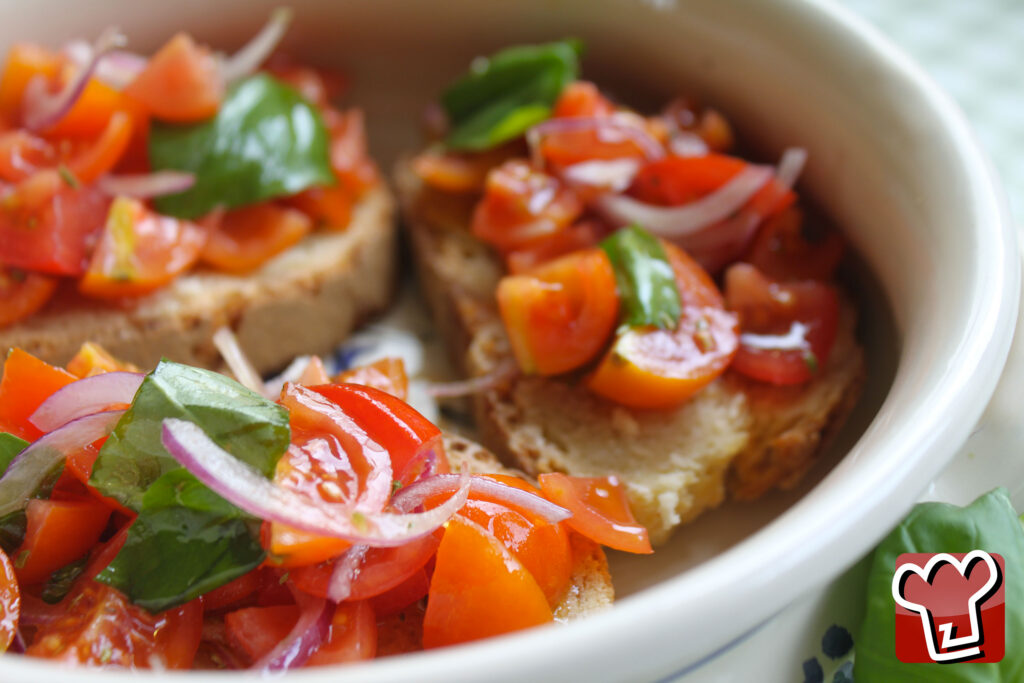
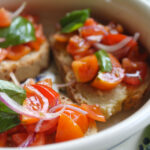
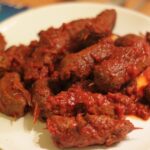
Cialledda, stale bread soaked and dressed raw: the summer version of the same cooking that makes pancotto in winter.
What pancotto is
The entry in the atlas of Puglia’s traditional food products describes it like this: stale bread cooked in water and dressed with oil, eaten as it is or with garlic and salt, with greens or with pulses. In its poorest form that is all it is: bread cooked in boiling water. It has been on Italy’s national list of traditional food products (the “PAT”, a register kept by the State together with the regions) since 2017, for the whole region, and it is made above all in winter and during Holy Week. Every area has its own dialect name: panecotte, péncutte, pan’ cott, and in Manfredonia panicuetto, as a 1931 dictionary of the local dialect records.
Three centuries on paper
The sources gathered by the regional atlas follow it for centuries. In 1725, the biography of a Carmelite nun from Nardò tells that Sister Teresa of Jesus sometimes ate “pancotto with no dressing”. In 1763 it appears among the meals of the seminary of Gravina. In 1909 a survey of farm workers noted that the peasant of the Bari area often ate pancotto, “simple bread cooked in water and dressed with oil”, and mentioned it as a wage supplement paid in kind. In 1944 a weekly paper from Lucera wrote that in the Capitanata, the plain around Foggia, pancotto, bread and oil, was the most common food.
Did you know? In 1857 the botanist Achille Bruni, describing the countryside around Barletta, noted that the workers on the masserie, the big farm estates, boiled wild rocket “together with country bread” and dressed it with oil and salt: a dish called “pan cotto e ruca”, which in his view people enjoyed not only out of hunger but thanks to the dark, gluten-rich bread they called perruozzo.
The variations, from Foggia to the Gargano
Being a poor dish, pancotto changes with whatever the vegetable plot, the fields or the larder had to offer. It is in the province of Foggia, in the north of Puglia, that it has the most documented versions:
- in Foggia the most popular is the one with foggj ammìskë, “mixed leaves”: potatoes and bay leaf in the water, then a mix of field herbs such as wild rocket, borage, wild chard and chicory, wild fennel and sow thistle;
- in San Nicandro Garganico it is made with courgette shoots, the tender leaves and stems, cooked with potatoes, onion, garlic and chilli before the bread goes in;
- in Monte Sant’Angelo there is péncutte with dried broad beans and mixed wild greens;
- a collection of Apulian recipes also gives a Gargano pancotto with wild mustard and borage, dressed with oil and chilli;
- in Mattinata, according to a book from 1955, pancotto was traditionally eaten on the feast of Saint Anthony the Abbot, made with the bread from Christmas Day.
The basic recipe: pancotto with rocket and potatoes
In 1967 Anna Gosetti della Salda, in her book of Italian regional recipes, recorded for Puglia “pancotto with rocket and potatoes”. The ingredients: 8 slices of stale bread, 500 g potatoes, 500 g rocket, 100 g olive oil, a clove of garlic, chilli and salt.
- Peel the potatoes, slice them and boil them in plenty of salted water, starting from cold.
- Halfway through, add the rocket, trimmed and washed.
- When the potatoes are cooked, add the slices of bread, drain everything at once and tip it into a tureen.
- Dress with the oil, warmed for a minute or two with the garlic and a piece of chilli, mix well and serve.
“A very modest but tasty dish”, the recipe ends. And that is how it should be eaten: hot, with the good oil added at the end.
The other stale-bread dishes
Pancotto has close relatives, which the regional atlas lists as traditional products in their own right:
- acquasale (“water and salt”): in the regional entry it is a broth of water, tomatoes, parsley and oil, brought to the boil and poured over bread broken into pieces; on the Gargano coast, fishermen’s families made it with an egg;
- cialledda, or cialda: the summer dish, cold and made without lighting the stove, with soaked bread, tomatoes, oil and oregano. In the villages the two names often overlap, and in Torre Santa Susanna cialda is called precisely “water and salt”;
- bread balls, made with stale crumb, eggs, cheese and parsley, fried or cooked in tomato sauce, like the sciuscelle or pittule all’acqua of the Salento.
For bread balls, the regional entry says, the best bread is country bread, from Altamura or something similar. Puglia’s breads and what is done with them are gathered in our guide to bread, wheat and frise.
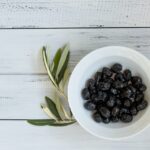
The last touch is the oil. In pancotto, extra virgin olive oil is not a detail: it is the dressing, and often the only one. In our online shop you will find organic PGI Puglia olive oil, in a 500 ml bottle, with a velvety taste and light bitter notes.