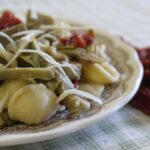
Apulian caponata is a dish of fried vegetables (aubergine, carrot, celery, courgette, pepper and tomato) tossed with capers, vinegar, sugar and wild mint. It is not the Sicilian caponata: no olives, no raisins, no pine nuts. Simpler, fresher and closer to the countryside, it keeps for two days in the fridge, and it is even better the day after.
Caponata the Apulian way comes from the farming world, where people needed food that gave them energy and could only use humble, tasty ingredients. Fresh seasonal vegetables, extra virgin olive oil, capers and a touch of vinegar: the result is a complete dish that goes perfectly with Apulian bread.
Think of it as a sweet-and-sour cousin of ratatouille, but cooked the other way round: the vegetables are not stewed together, they are fried one kind after another and only then brought together in the pan with the dressing.
Where does the name come from? Nobody knows for sure, and there are at least three theories. The most curious says it comes from capone, a local name for the dolphinfish (lampuga), which was originally served with this sweet-and-sour dressing on meatless days. Poorer families, who could not afford the fish, used vegetables instead, and the dressing stayed. Another theory traces it to the caupona, the Roman tavern that served ready food to travellers: a sort of takeaway of antiquity. The third, and simplest, points straight at the caper, capparo in dialect, as the dish’s signature ingredient.
The sweet-and-sour touch. The pairing of vinegar and sugar that marks caponata is usually traced back to the Arabs who ruled Sicily, and who brought sugar cane and sweet-and-sour cooking to the Mediterranean. That sweet-sharp note, which sets caponata apart from a plain dish of fried vegetables, has stayed in the cooking of southern Italy ever since.
Apulian and Sicilian caponata: the differences
The two caponatas share a name but they are different dishes. The Sicilian one is richer and more baroque: it has black olives, raisins, toasted pine nuts and a concentrated tomato sauce that makes it thick and dark. Its sweet-and-sour flavour is strong and lingering.
The Apulian version is more essential: no olives, no raisins, no pine nuts. The vegetables are fried in sequence, not stewed. The balance of vinegar and sugar is there, but light. And it has an ingredient that the Sicilian version lacks: wild mint, mentuccia, which in Puglia grows wild along field edges and in the lame, the shallow limestone ravines that cut across the countryside. It gives Apulian caponata its fresh, green scent, the thing that makes it recognisable among all the other versions.
The Apulian caper: wild and different. The caper is another ingredient that changes everything. In Puglia it grows wild on limestone rock: on the walls of the trulli, on the sides of the ravines, along the edges of the masserie, the old fortified farmhouses. Capers picked straight from the rock and kept in salt have a more intense and less salty flavour than shop-bought ones. If you find some, and in a Puglia summer that is not hard, use them in the caponata: the difference is surprising.
Caponata as a way of preserving vegetables
What is now a dish to enjoy was originally a practical solution: caponata was born as a way of keeping summer vegetables. Vinegar and salt held back bacteria, so the fried vegetables could last for days even without a fridge. Farming families in Puglia made large batches during the harvest and kept them in clay terrines for up to a week. That is why caponata is better the next day: the ingredients settle, the flavours blend, the vinegar soaks into the fried vegetables. The fridge has replaced the clay terrine, but the logic is the same.
Want Apulian caponata on the table without cooking it? You can buy it ready-made: try the Big Appetizer from the Salento, mixed vegetables from our shop.
Apulian caponata recipe
Ingredients
- 1 large aubergine, with few seeds
- 2 carrots
- a few sticks of green celery
- 1 medium onion
- 1 or more small round red chillies
- 1 large courgette or 2 to 3 small ones
- 1 red or yellow pepper
- 2 San Marzano tomatoes (a long, fleshy plum tomato)
- 1 tablespoon of capers
- fresh wild mint
- dried oregano
- 1 tablespoon of sugar
- vinegar
- unfiltered extra virgin olive oil
- salt and pepper to taste
Method
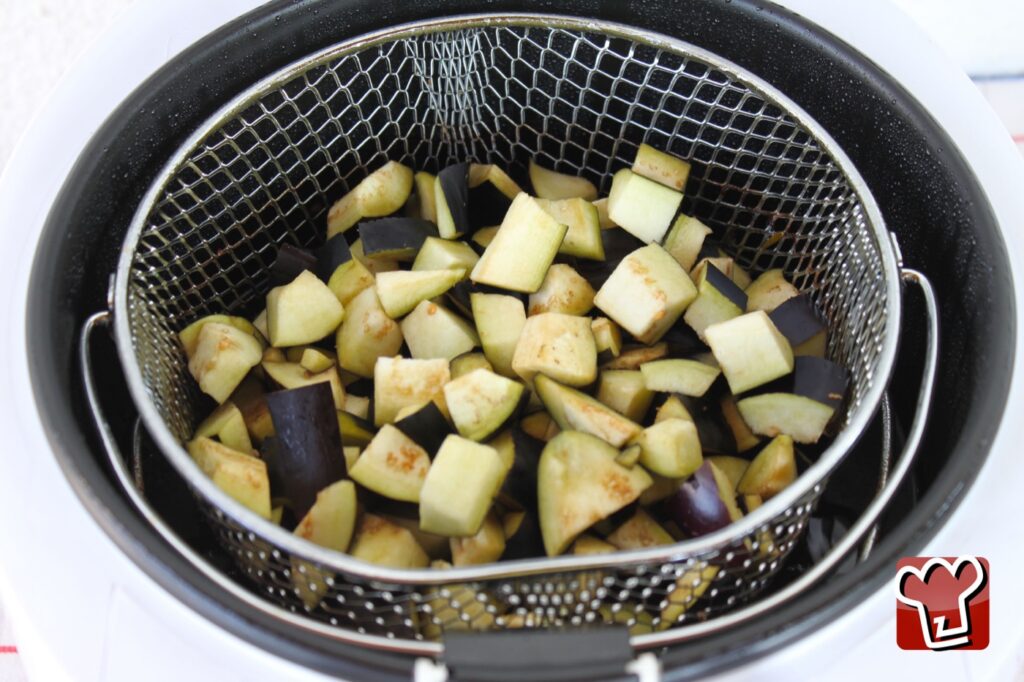
Wash and trim all the vegetables and cut them into small dice, keeping each kind separate. Heat the oil in a wide non-stick frying pan and fry the vegetables in this order: first the aubergine (because it darkens quickly as it oxidises), then the carrots, the celery, the courgette and finally the pepper. Let them brown well until they darken and turn almost crisp. Drain each batch and lay it in a wide, shallow dish as you go.
When the frying is done, soften the thinly sliced onion in the oil left in the pan, then add the diced San Marzano tomatoes (skins on), the capers and the hot chilli. Tip all the fried vegetables back in. Add the tablespoon of sugar, splash in vinegar to taste, then the salt, the mint and the pepper. Let it all take on flavour for a few minutes, put everything back in the dish, sprinkle with oregano and leave to cool.
Tips and variations
Apulian caponata follows the seasons: some local versions add diced potato or slices of pumpkin, which soak up the dressing well. Served with slices of toasted Apulian bread, it becomes a complete meal. For more vegetable dishes from the region, see our Apulian vegetable recipes, and for the bread to go with it, the recipes in bread and pizza. Caponata is also one of the dishes in our short guide to what to eat in Puglia.
Oven-baked version. For a lighter version, spread the cut vegetables on a baking tray, dress them with oil, salt and the same herbs, and bake at 180°C for 35 to 40 minutes. Add the sweet-and-sour touch at the end with a tablespoon of vinegar and one of sugar dissolved in it. The result is less crisp than the fried version, but it has the same scent.