In short. Bread is the centre of the Apulian table, and what is done with it — focaccia, panzerotti, frise — is some of the best food in the region. Almost all of it involves potato in the dough or olive oil in the pan.
The bread of Altamura is protected by a DOP and known across Italy. But the everyday genius here is in the things made around bread rather than the loaf itself.
Why the bread here is different
Two things set Apulian bread apart, and they are both agricultural rather than culinary.
The first is durum wheat. The Tavoliere has been called the breadbasket of Italy for centuries, and durum semolina — not the soft wheat used further north — gives a dense yellow crumb, a thick crust and a loaf that keeps for days rather than hours.
The second is the size. Bread was baked in communal ovens, once or twice a week, in loaves of several kilos. A loaf that has to last until the next baking day is engineered differently from one you buy every morning — and everything on this page follows from that.
What happens to it afterwards
Nothing is thrown away, and the recipes prove it:
- Day one — bread with oil and salt, or under a tomato crushed over it by hand
- Day three — cialledda, wetted with water and dressed with what the garden has
- Stale — bread balls, or ground into the mollica that tops half the dishes in Puglia
- Baked twice on purpose — frise, which keep for months
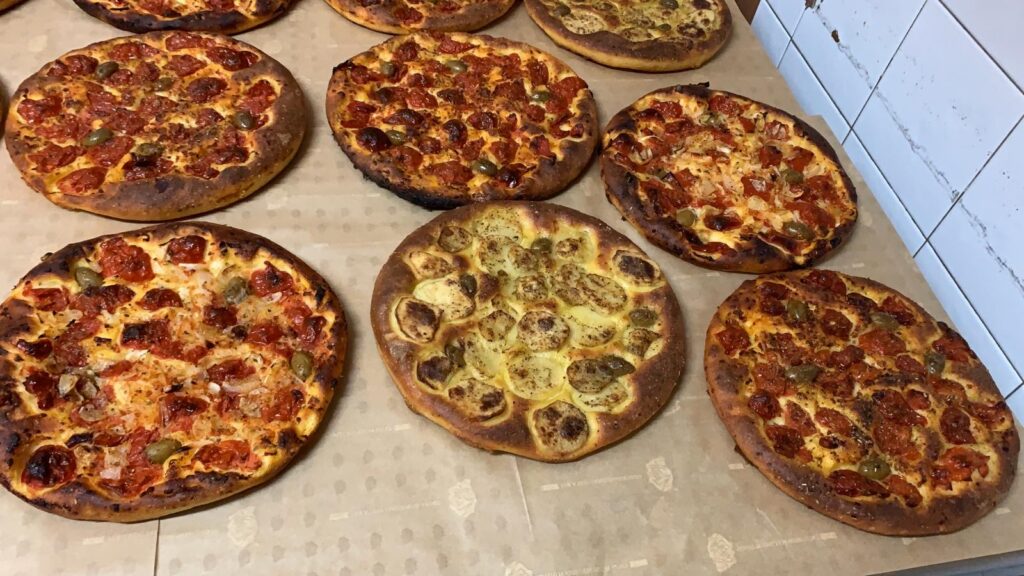
Potato in the dough. Apulian focaccia and much of the local pizza carry boiled potato worked into the flour. It holds moisture, which is why a focaccia bought at eight in the morning is still good at four in the afternoon — and why the version made without it, elsewhere, goes leathery by lunchtime.
Where to eat it. A panificio is not a bakery in the English sense: it sells bread, focaccia by weight cut with scissors, and often panzerotti fried to order. It is the cheapest good lunch in Puglia, and there is one on every other street.
The recipes
- Apulian focaccia — with boiled potato in the dough
- Panzerotti — fried, filled with mozzarella and tomato
- Pizza dough — thick Neapolitan style
- Seasoned frise — twice-baked bread rings, and Aeneas allegedly ate them
On the frisella and why a bread designed to keep for months became the thing everybody eats in August: the summer bread of Puglia.
The whole collection is on the Apulian recipes page.
The frisella from scratch, with the double baking that makes it keep for weeks: how to make friselle from the Salento.