The cycling season in Puglia is not summer: it is September and October. The difficulty here is not gradient — the region is flat almost everywhere — it is heat, and there is no shade. From mid-September the coast roads empty out, the sea is still warm and you ride at twenty degrees. In this piece: why now is the moment, which cycling tracks actually exist as against the ones still on paper, and the thing almost nobody knows — across Italy bikes cost extra on regional trains, but not in Puglia.
It happens every year: in August Puglia is full of people and nobody is cycling, in October it is empty and almost the only riders are locals. Which is a shame, because the cycling calendar here runs exactly opposite to the holiday one — and the two best months start now.
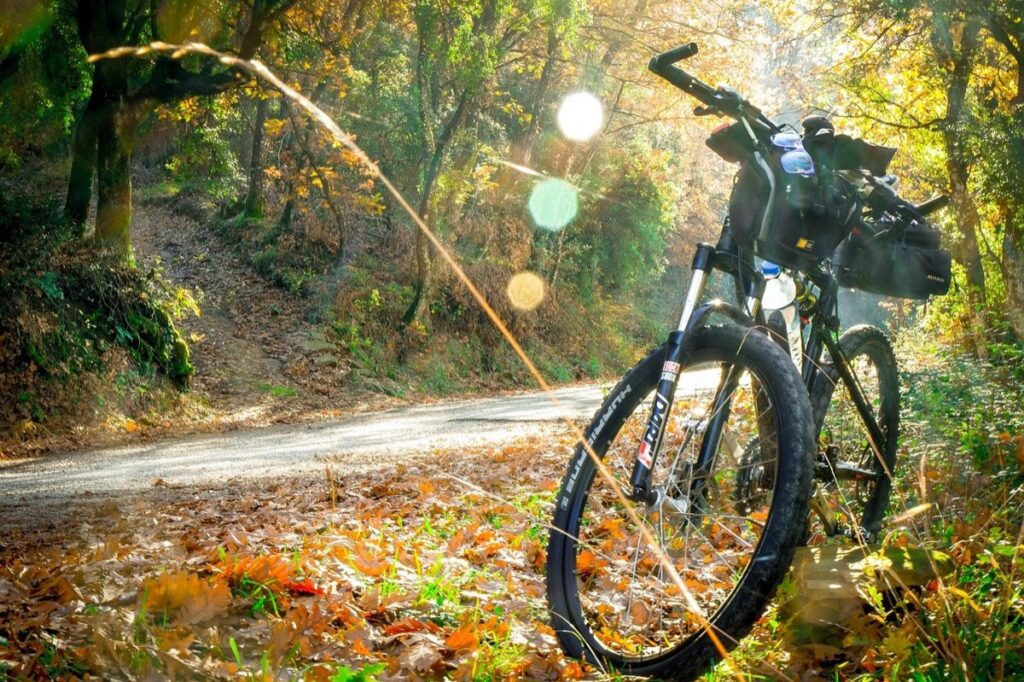
The problem in Puglia is not the climbing, it is the sun
Look at a map, see four hundred kilometres of region, and you might expect hard work. The opposite is true: Puglia is the flattest region in southern Italy. The only real climbs are on the Gargano, a mountainous promontory, and the Murgia, which rises gently inland. Everything else is touring-bike country, manageable even with children.
What hurts, from June to September, is something else. The interior regularly passes thirty-five degrees and there is no shade — olive trees give none, dry stone walls give none. Anyone who has tried it in August knows the routine: ride from six to eleven, then stop. Which is why the good season is also the cheap one.
Why September and October. Around the middle of September the heat breaks, the sea is still August-warm and the coast roads — queues of cars in summer — empty out overnight. October is the olive harvest: you ride past working mills, which is worth the trip on its own. April and May are the other window, with green countryside, which here does not last long.
Bikes on trains: the Apulian exception
Across Italy, taking an assembled bicycle on a regional train normally costs a supplement. In Puglia it does not. Trenitalia says so on its regional page: on Regionale trains marked with the bicycle pictogram, bike carriage is free.
It comes from an agreement between the regional government, the regional transport agency and the five operators running the services — Trenitalia, Ferrovie Sud Est, Ferrovie del Gargano, Ferrovie Appulo Lucane and Ferrotramviaria. Present yourself to the on-board staff before boarding and the guard issues a zero-cost supplement. Two caveats: it applies only to trains carrying the pictogram, and the spaces on board are few.
It changes how you plan a trip: fly into Bari or Brindisi, take a regional train with the bike, ride one stage and come back in the evening. No car, no transfers, no hire desk.
Which cycling tracks exist, and which are still a plan
Worth being clear about, because online the two get mixed up constantly. In 2020 the region adopted a plan identifying sixteen cycle routes for some 2,300 kilometres. That is a map of intentions. The genuinely built, continuous routes are still few.
The furthest along is the Apulian Aqueduct Cycle Route, which follows the service road of the canal that has carried water into the region since 1915: finished, it will run from Caposele, in Irpinia, to Santa Maria di Leuca — about five hundred kilometres. Today more than two hundred of them are rideable white road, continuously from Spinazzola to Cisternino and on to Grottaglie.
Along the coast runs the Adriatic Cycle Route, arriving from Trieste after 1,700 kilometres and seven regions. In Puglia it splits into four official sections, and two of them start in the same village and end in the same village: going round the Gargano instead of cutting across the Tavoliere costs 63 kilometres and 1,469 metres of climbing more. That is the choice you make on entering the region, and it finally has numbers.
In the Salento there is no traffic-free greenway: the southern section is still being designed. But there is now an official, signposted route — the Ciclonica, a 304-kilometre loop on the Ionian side created by the local councils with recovery-plan funding. Everything else runs on minor roads and coast roads with very little traffic, which given how Puglia is made is often better than a cycle path.
How hard it is, area by area
This is the first question anyone asks and the hardest to get answered, because no authority publishes elevation gain. Measured on GPS tracks, here is the picture.
- Gargano — the only area where you need legs: the classic loop from Peschici to the Foresta Umbra is 61 kilometres with 1,714 metres of climbing, from sea level to eight hundred. It is also the only one rideable in summer, because up there is shade.
- Salento — flat, with one exception: the high coast between Otranto and Leuca gives 681 metres over 58 kilometres with no climb topping 132. Not a mountain stage; a stage that never lets you sit flat.
- Valle d’Itria and the Murgia — long, gentle plateau climbs and a village every few kilometres. The two Aqueduct stages crossing this area are the least demanding of the whole route between Caposele and Leuca.
- Ofanto valley — the curious one: Rocchetta Sant’Antonio to Barletta is 96 kilometres with 332 metres of climbing and 952 of descent. You start at 662 metres and finish at the sea: the only long route in the region ridden almost entirely downhill.
Where to start
We have put all of this into one section: Cycling in Puglia, with a page per area and elevation profiles drawn from the tracks.
- The Apulian Aqueduct Cycle Route — the nine stages, what is open and what is missing
- Cycling in Salento — the Ciclonica, the loop from Lecce and the gravel option
- Cycling in the Gargano — the National Park’s twelve marked sections
- Cycling in the Valle d’Itria and the Murgia — trulli, the Alta Murgia and a Roman road
- The Adriatic Cycle Route in Puglia — the four sections along the sea, and the Gargano choice in two profiles
What we are not promising. Puglia’s cycling network is under construction, and under construction means some announced sections are not open yet and some open sections are interrupted. On our pages you will find the kilometres somebody declared and the date they declared them, kept separate from the ones that have actually been ridden. Where we could not find a reliable source, we have not written a number.
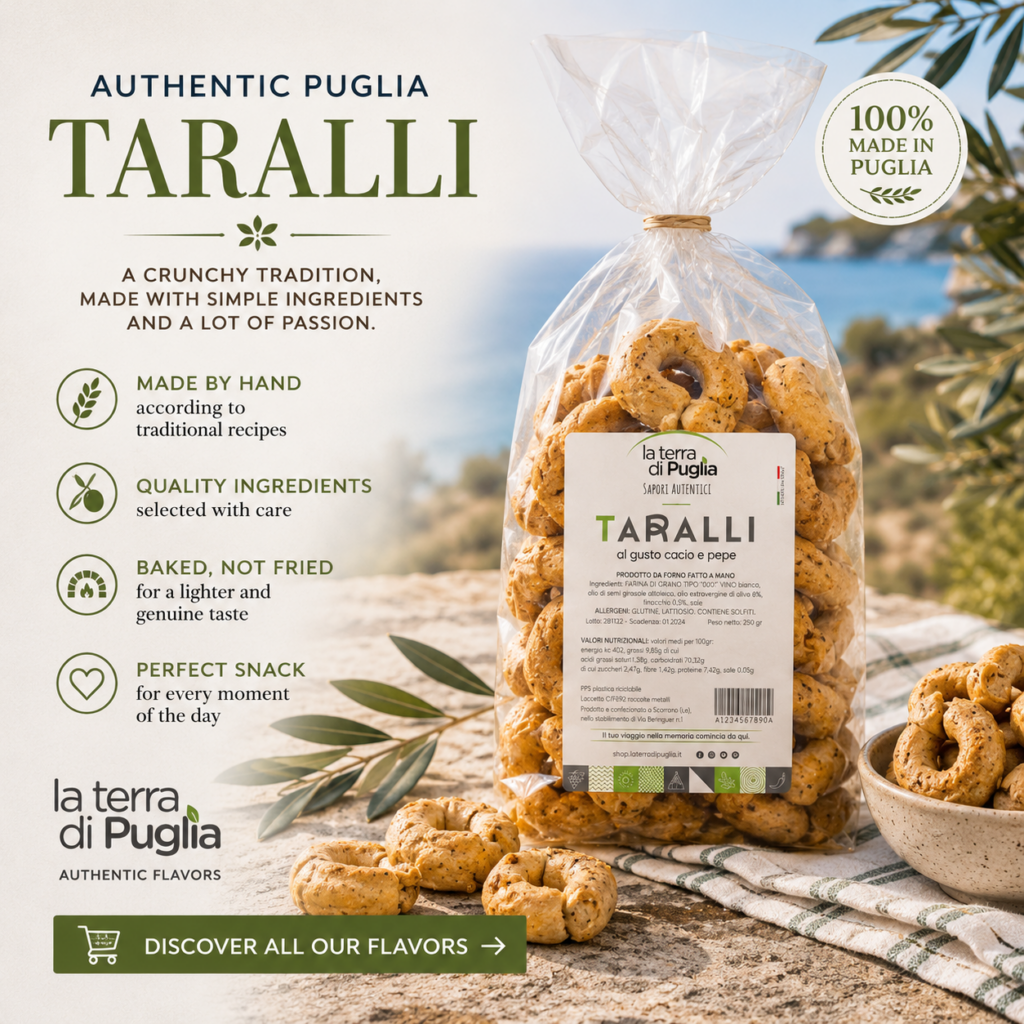
And if you do go, two things for your pockets: taralli and frise. They do not crumble, they do not melt, and they survive hours of heat — food invented for work in the fields, which turns out to be the same thing a long ride needs.