
Muscisca is a speciality of the Gargano and the Monti Dauni in northern Puglia: strips of salted, dried meat, once goat or sheep, that shepherds carried with them on long days with their flocks. Here is what it is, where the name comes from and how it was made.
Today we meet muscisca, an Apulian speciality from the Gargano, the mountainous promontory in the north of the region, with roots in a distant past of shepherding and simple living. A closer look, for anyone who has never heard of it.
What muscisca is
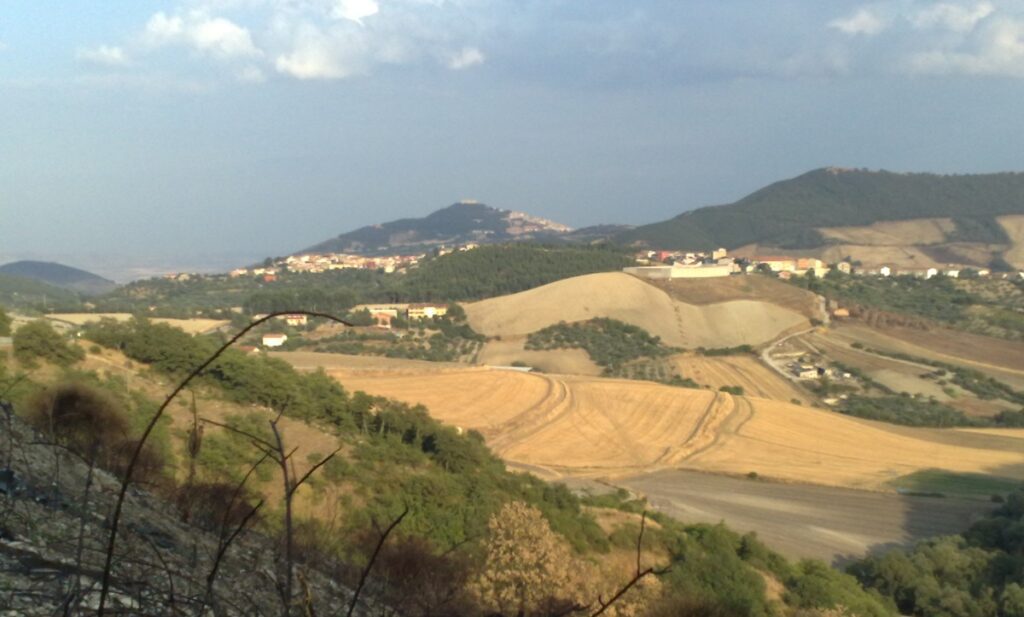
Muscisca is an Apulian food that comes from the Gargano and the Monti Dauni, the hills of inland northern Puglia. It is meat, dried or fresh, cut into strips, to be eaten as it is or cooked over embers. It is mountain food, and it takes us straight back to the farming traditions of Puglia, which is exactly where it was born. Like other typical Apulian products (think of the Salento’s frisa, for instance), muscisca was a food that kept for a long time: shepherds carried it with them during the long days spent in the countryside with their flocks. Muscisca still exists today, and it is a genuine Apulian excellence.
The name may sound odd. It is said to come from the Arabic musammed, which literally means “hard thing”, and that is a good description: these are strips of salted, dried meat, originally sheep or goat, although today you will also find it made from pork.
A tasty food made to last
As we said, this typical product was a sort of “meat on the go” for shepherds who, following their flocks, often had to spend several nights away from home. It was a food that did not spoil.
There is another reason behind it. In the days when transport was slow and inadequate and there were no refrigerators, the only quick way to keep a slaughtered animal from going to waste was to dry its meat.
It all began with the native goat of the Monti Dauni
Originally, muscisca was made from the native goat of the Monti Dauni and the Gargano, of which very few animals remain today: modern farming has all but replaced it, because it produced little, with crossbred breeds. In the past, when these goats were common, one would sometimes break a leg while grazing. What to do? The only answer was to slaughter it on the spot and dry the meat, so that nothing was thrown away.
How muscisca was made
The method depended, naturally, on the season. In the warm months the meat was hung on a cotton thread from the branches of a wild pear or a blackthorn. Before hanging the strips, they were seasoned with garlic, wild fennel and salt. Once dry, the meat was stored in cloth bags in the country buildings scattered along the shepherds’ usual routes.
In the cold months a fire had to be lit. Everything was done inside a small rural house, where the fire was kept going for two or three days and the room had to reach between 25 and 30°C. After those three days the embers were left to die out, and the drying was completed over about another ten days, with the natural ventilation of the room.
Nothing was wasted. The whole goat went into muscisca: no cut or part of the animal was discarded. The goat was boned and salted whole, and then the meat was cut into strips.
Today pork and beef are also used, though that is not part of the tradition. Muscisca is now sold in supermarkets too: you can eat it as it is, or cook it over embers, in a frying pan or in the oven. For more food from this corner of Puglia, see the typical products of Puglia.


You must be logged in to post a comment Login