Capocollo di Martina Franca, the cured pork neck salume from the hills of Puglia, is now a PGI product: the European Commission entered it in the register of geographical indications with Implementing Regulation 2026/2293 of 8 October, published on 15 October 2026. The name is now reserved for producers in Martina Franca, Cisternino and Locorotondo, above 350 metres, who follow the official specification: pork, cooked wine, smoke from local oak. Here is what that text says and what it means for anyone buying it.
After Altamura bread, Burrata di Andria and Zampina di Sammichele, Puglia has one more geographical indication. On 8 October 2026 the European Commission adopted Implementing Regulation (EU) 2026/2293, which appeared in the Official Journal of the EU on 15 October: “Capocollo di Martina Franca” enters the register as a Protected Geographical Indication (PGI). A PGI is an EU label that reserves a product’s name for those who make it inside a defined area, following a registered production specification. The application had been published in June, and nobody objected to it.
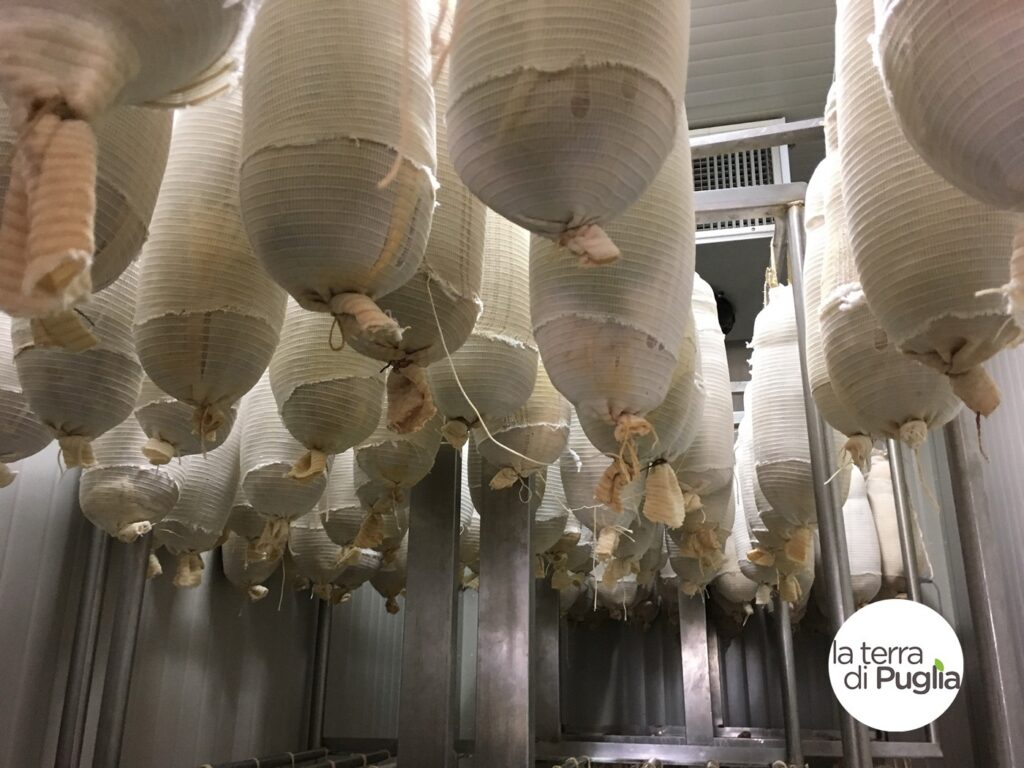
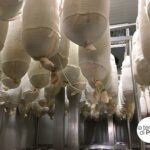
Capocolli hanging to cure: for the PGI, salting, smoking and maturing must all take place inside the production area.
Where it can be made
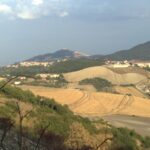
Capocollo is the upper part of the pig’s neck, salted, marinated, smoked and matured: a close cousin of coppa. The PGI area is small and high: the towns of Martina Franca (province of Taranto), Cisternino (province of Brindisi) and Locorotondo (province of Bari), and only above 350 metres above sea level. This is the hill country of the Valle d’Itria, the cool, breezy upland where the provinces of Bari, Brindisi and Taranto meet, between the Ionian and the Adriatic seas. The official application document points precisely to the alternating mistral and scirocco winds as the condition that airs the curing rooms.
Every stage has to happen within that area: trimming and salting, marinating, casing and drying, smoking, maturing.
What the specification requires
- The cut. The muscles of the upper part of the pig’s neck, between the occipital bone and the fifth dorsal vertebra; the boned piece weighs between 2.5 and 4 kilos.
- The pig. Large White, Landrace and Duroc pigs or crosses compatible with the Italian herd book, or native breeds; boars and sows are excluded.
- The cure. Salt, black pepper and mire cutte: half wine and half cooked grape must, both from the white grapes Verdeca and Bianco d’Alessano of the Martina and Locorotondo DOC wine areas. Chopped rosemary and juniper berries are also allowed.
- The casing. Natural pork casing, the section called “cieco” or muletta: it lets the smoke reach the heart of the salume.
- The smoke. Wood and dry leaves of fragno, the Macedonian oak typical of the area.
- The shape. Cylindrical, 10 to 15 centimetres across, 1.5 to 2.5 kilos, with the head tied tight with string.
When sliced, it should be soft and compact, wine-red in colour, with a smoky aroma and the slightly sour note of the cooked wine. The specification also insists on handwork: dry salting without mechanical tumblers, casing without a press, tying only at the head.
A name more than two centuries old. Among the proofs of the product’s reputation, the application cites an expense note written in Alberobello on 30 May 1797, where “capocollo di Martina Franca” already appears. In the local Martina Franca dialect it is chépecùdde.
What changes for buyers
The regulation comes into force on the twentieth day after publication, that is on 4 November 2026. From then on, the name “Capocollo di Martina Franca” belongs only to the salume made to the specification, and the label must carry the logo of the designation. The regulation grants a five-year transition period to two companies that had long used the name but work outside the defined area.
In practice, if you are looking for it: the town’s name on the label no longer tells you on its own where it comes from; the PGI logo does. To get to know it better, read our piece on Capocollo of Martina Franca.
In our shop. You can also find Capocollo di Martina Franca in our online shop, delivered to your door.
Where this information comes from. From Commission Implementing Regulation (EU) 2026/2293 of 8 October 2026 (Official Journal of the EU, L series, 15 October 2026) and from the single document of the registration application (OJ C/2026/3344 of 22 June 2026), which sums up the specification filed by the Italian Ministry of Agriculture.