In short. Alberobello holds the greatest concentration of trulli anywhere — conical dry-stone houses packed into two districts of a small town in the Valle d’Itria. It has been a UNESCO World Heritage Site since 1996. Leave the car outside, walk, and go early or late: the middle of the day belongs to the coaches.
Everyone has seen a trullo, if only on a postcard. Alberobello is where there are more than a thousand of them in one place, roofs closing to a point one after another down whole streets, and the effect on children in particular is immediate — it looks like a town built for somebody smaller.
The two districts
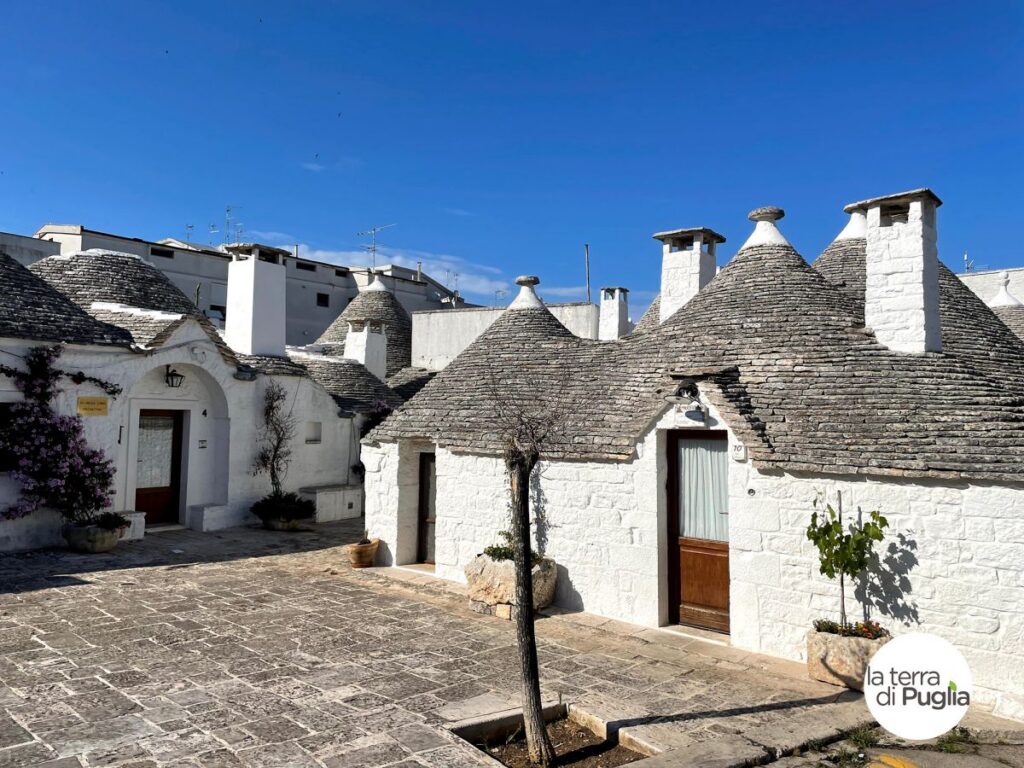
The trulli are not scattered across the town, they are concentrated in two quarters, and knowing the difference is the difference between a good visit and a disappointing one.
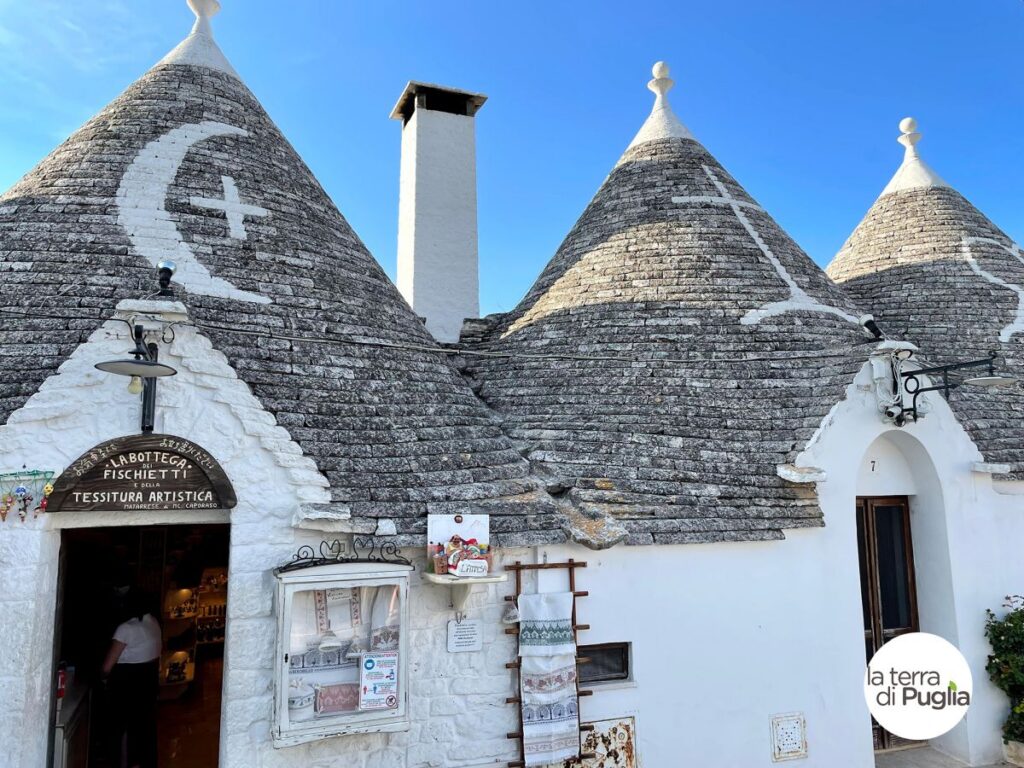
- Rione Monti — the larger and the busier, sloping up the hill. Most of the trulli here are now shops.
- Aia Piccola — smaller, quieter and still lived in. This is what the town actually looks like when nobody is buying anything.
How they are built, and why
No mortar, on purpose. A trullo is dry limestone: slabs laid in rings that narrow until they meet, holding by weight alone. That was not a craft preference, it was a defence. Under Bourbon rule permanent dwellings were taxed, so the roofs were built to come apart — remove the keystone at the top of the cone and the whole thing collapses, leaving something that could not be assessed as a house. The tradition holds that this is why Alberobello was refused the status of an autonomous town until 1797. What began as tax resistance became a World Heritage Site in 1996.
Two things reward a closer look once you are among them: the whitewashed symbols painted on the cones — religious, magical or simply owners’ marks — and the pinnacles at the top, no two quite alike. We have gone into both: the symbols on the trulli, and the town itself in Alberobello and the trulli.
The patron saints, and the one week to come
Cosmas and Damian, the doctors who took no money. The patrons of Alberobello were two Syrian brothers, both physicians, martyred under Diocletian in the third century. What made them remarkable was that they practised medicine for free — hence their Greek name, Anargyroi, “the silverless”. They were the doctors of the poor. Their cult is strong across southern Italy and nowhere stronger than here: the feast on 26, 27 and 28 September draws pilgrims from across the region and abroad, with processions, illuminations, fireworks and a traditional fair through the streets. If you have never seen an Apulian patronal feast, come for that week.
Getting there, and what to do next
Leave the motorway at Bari and head inland into the Murgia; the drive itself is part of it, through low hills planted with olives, almonds, citrus and old oaks. Once in town, park and walk — the old quarters are not for driving.
Alberobello is not a full day on its own, and the valley around it is the point. Martina Franca for the capocollo, Cisternino for the bombette, Locorotondo for an ice cream and the view — each of them nine kilometres away. Ten kilometres in the other direction are the caves of Castellana, and combining Alberobello above ground with Castellana below is one of the fullest days you can have in Puglia. The nearest beach is at Ostuni.
Eating
Apulian cooking here is domestic rather than refined — the produce is whatever grows within a few kilometres, and the cooks are not apologetic about it. Orecchiette or fricelli with local vegetables or a meat sauce, lamb cutlets, pork capocollo, stuffed focaccia and the local bread. And the wine: this region used to send its wine north to be blended into somebody else’s, and has spent the last decades learning to sell it under its own name instead.
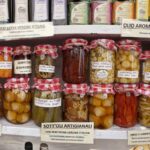
Some of it travels. The oil, the taralli, the preserves and the capocollo of the valley are what we ship: see the shop.
Alberobello is the best-known town of the Valle d’Itria, and the one place in Puglia most visitors have already seen a picture of before they arrive.