In short. Otranto is the easternmost town in Italy, looking across 72 kilometres of water at Albania. It has a cathedral with a twelfth-century floor mosaic covering the entire nave, a fortress built as a direct answer to the Ottoman siege of 1480, and a white old town above a clear sea. It is small, and it holds more history per square metre than anywhere else in the Salento.
This is where Italy faces east, and has done for three thousand years. The strait in front of the town — the Channel of Otranto — was the door to the eastern Mediterranean: Greek traders, Byzantine fleets, crusaders bound for the Holy Land, Venetian merchants. On a clear day you can see the Albanian coast from the walls, and the closeness is not only geographical.
Behind the town stretches the Terra d’Otranto, the name of an old administrative division of the Kingdom of Naples that people here still use for the whole area.
Where the two seas meet — and where you can see it. By nautical convention the Adriatic meets the Ionian in front of Punta Palascia. To actually see the two waters meet, though, you need to go further south, off Santa Maria di Leuca, where the difference is often visible to the naked eye.
The town at the edge of the country
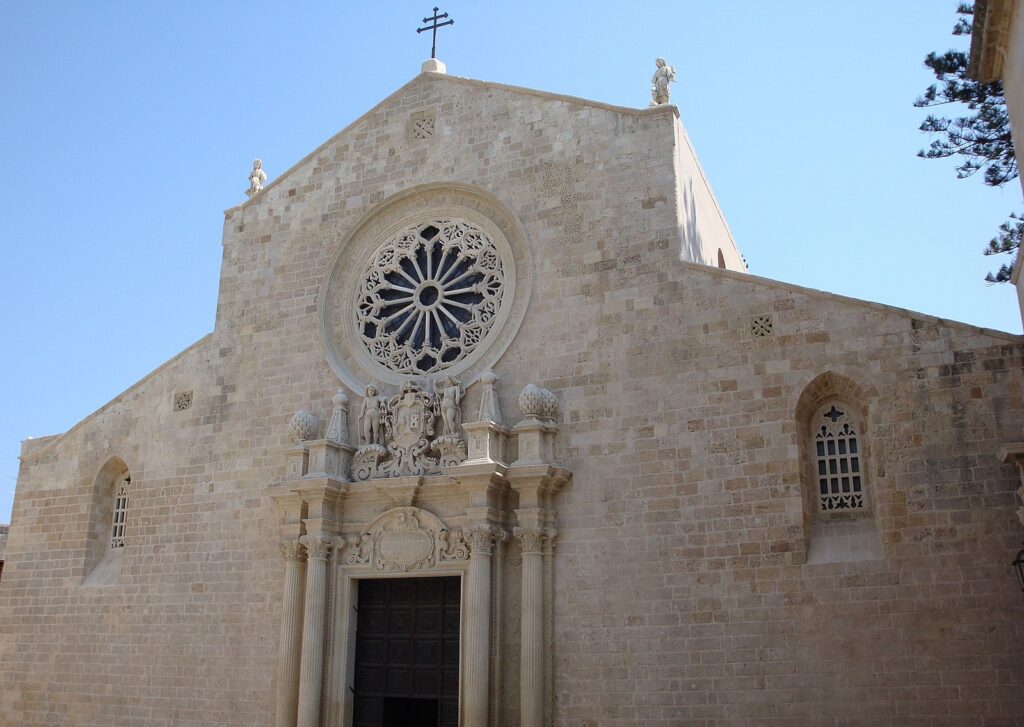
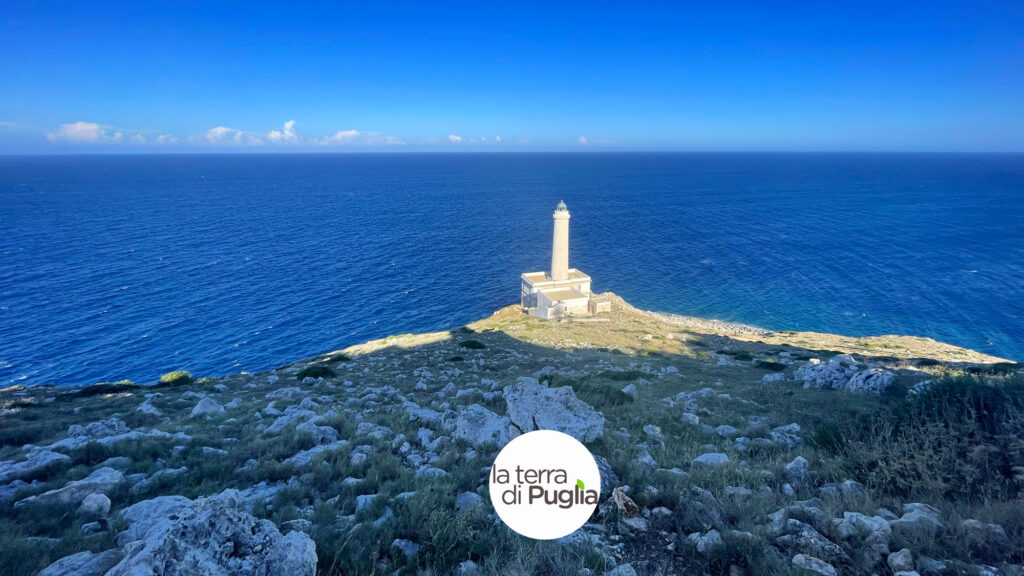
Otranto is in the province of Lecce, on the Adriatic. A few kilometres south of the town, Punta Palascia is the easternmost geographical point of Italy, marked by a lighthouse. Every year people gather there for the Alba dei Popoli — the dawn of the peoples — to watch the first sunrise in the country. The town is an archbishop’s seat and lives almost entirely on tourism — which, once you have walked the old town, needs no explaining: clear water, narrow lanes between white houses, small shops with an eastern look to them, family restaurants, a mild climate that stretches the season at both ends, and the castle above it all.
The mosaic floor
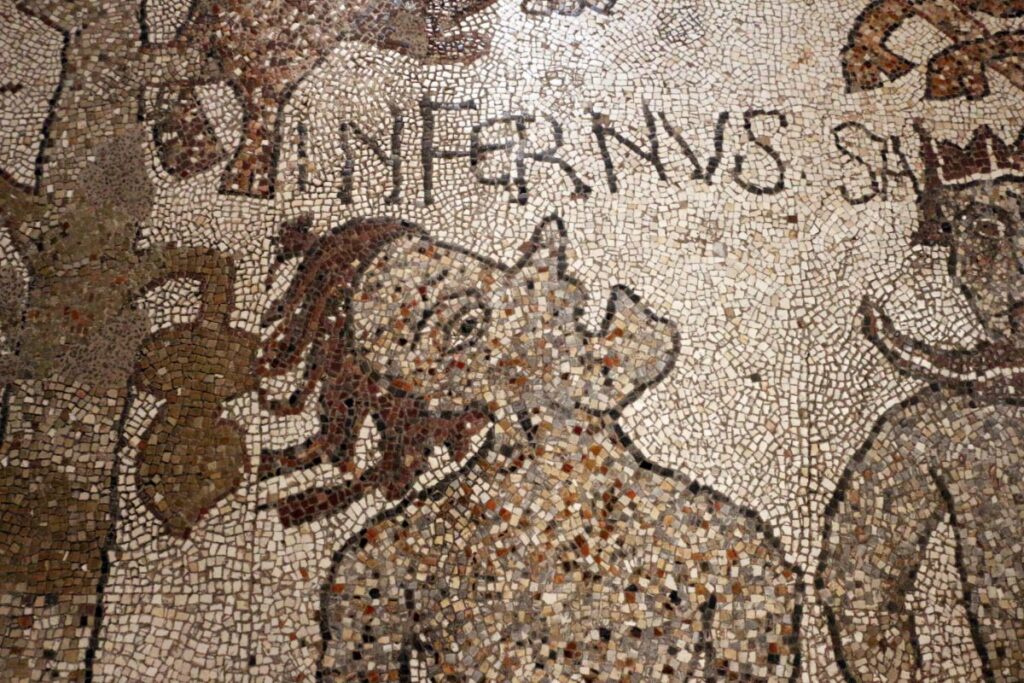
The largest surviving mosaic of the medieval world. The cathedral floor was laid by a monk named Pantaleone between 1163 and 1165, and it covers the entire nave — around 600 square metres of mosaic. It shows a tree of life carrying biblical stories, the seasons, the signs of the zodiac, hunting scenes and mythological figures: King Arthur, Alexander the Great, Adam and Eve, all in the same scheme. It is the most extraordinary piece of medieval iconography in Italy, and one of the largest and most complete floor mosaics anywhere. Most visitors come in expecting a church, and end up looking at the ground for an hour.
The 800 martyrs
What happened here on 14 August 1480. After fifteen days of resistance, Otranto fell to the Ottoman fleet. Of 22,000 inhabitants, 12,000 were killed during the siege. The 800 surviving adult men were taken to the Hill of Minerva and given a choice: convert to Islam, or die. None converted, and they were beheaded that day. Their spokesman, a weaver called Antonio Primaldo, was the last to be executed. Their remains — all 800 — are kept in glass cases in the Chapel of the Martyrs inside the cathedral. Pope Francis canonised them in 2013, and the town marks the day every 14 August.
The Aragonese castle
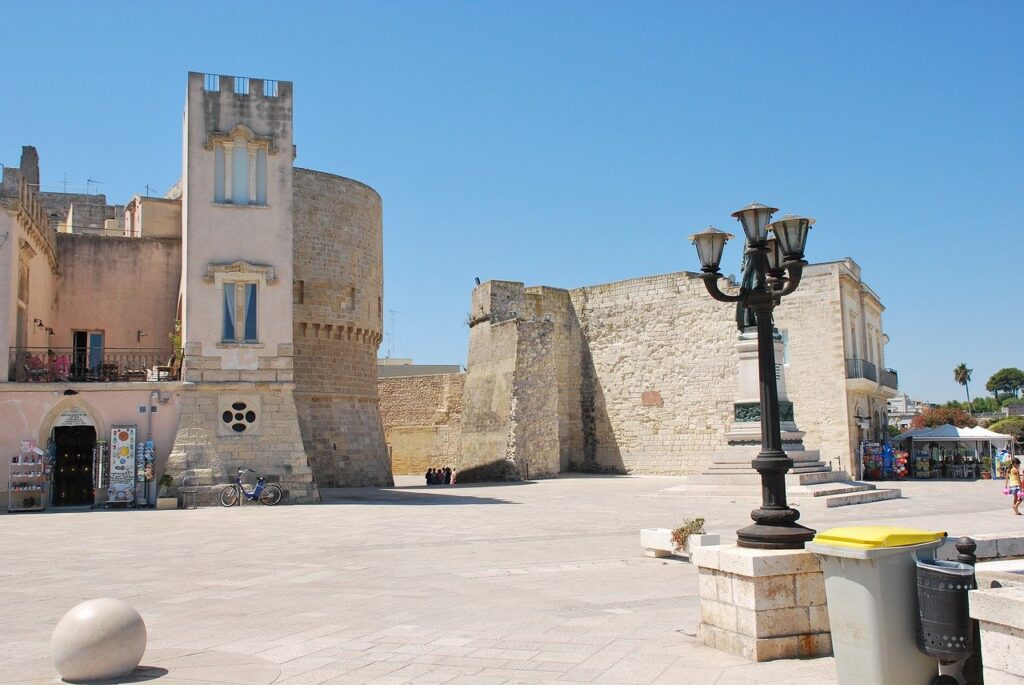
Not just a defence — a textbook of military engineering. The castle was built between 1485 and 1498, five years after the siege: Ferdinand II of Aragon’s direct answer to how easily the town had fallen. Everything about it is calculated. The bastions are angled to deflect artillery, there is a perimeter moat, and the walls are over six metres thick. The pentagonal plan is not decorative — it lets defensive fire cover every blind spot. It now holds exhibitions and events, but walk the walls and the arithmetic is still legible in the stonework.
Around the town
North of Otranto are the Alimini lakes, two connected coastal lakes backed by pine woods and long sandy beaches — the softest stretch of coast in this part of the Salento. South of it, the shoreline changes completely: cliffs and grottoes run all the way down towards Santa Cesarea Terme and Castro. If you want one drive that shows what the Adriatic side of the Salento is, it is that one.
Otranto is the kind of place people return to rather than tick off. It suits travellers who would rather not spend their evenings in the middle of a crowd — and unlike much of the coast, it stays open and inhabited well outside August.
It sits on the eastern edge of the Salento, about halfway between Lecce and the point of the peninsula at Santa Maria di Leuca.
Just up the coast, at Roca Vecchia, is the Grotta della Poesia — the collapsed sea cave with three thousand ancient inscriptions on its walls. Swimming there has been banned since 2019, so go for the archaeology and swim elsewhere.