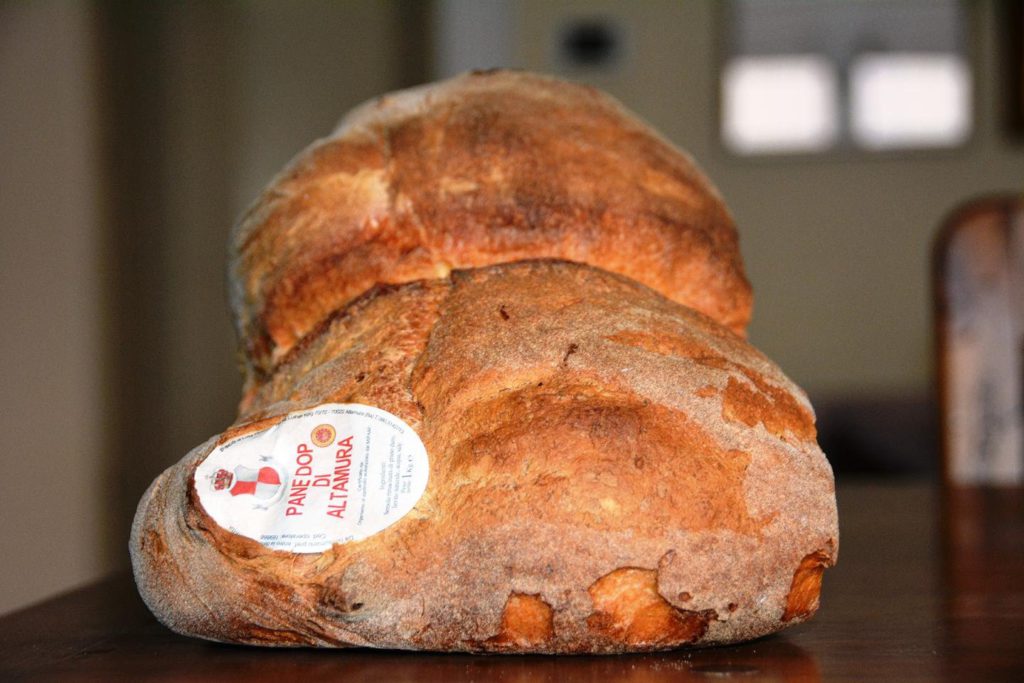
In short. The first bread in Europe to be given a DOP, in 2003, with one of the strictest rulebooks in Italy — it even specifies the water. Remilled durum wheat semolina, natural sourdough, a wood-fired oven, a thick dark crust and a dense yellow crumb. It keeps for days, and it was built to.
If you think bread is bread, the people of Altamura would like a word. This is bread with a capital B, and the reason it works is that the rules leave nothing to chance.
🌾 Why it is special
It is made with sound ingredients from the Altamura area itself, and a disciplinare — a production rulebook — governs every phase: the wheat, the natural leavening, the wood-fired oven, and even the water. The result is a loaf with a crust thick enough to protect the crumb, which is why it lasts.
The flour is remilled durum wheat semolina, unusually rich in gluten — the figure quoted is around 14% — which is what gives the crumb its structure and that deep yellow colour. It is not a soft bread and it is not meant to be.
2003, and a first. Altamura bread was the first bread in Europe to receive a protected designation of origin. Given how many breads Europe has, that is a fair measure of how seriously this one is taken — and of how old the method being protected is.
🍽️ Three ways to eat it
1. With oil and salt, and nothing else. Fresh bread, good extra virgin olive oil, a pinch of salt. This is the test: if the bread is good you need nothing more.
2. Toasted, with tomato. A ripe tomato crushed over toasted bread with oil and oregano — the Apulian ancestor of every bruschetta on every menu abroad.
3. The day after, and the day after that. This bread was engineered to last, and stale it becomes bread balls, breadcrumbs for arraganato dishes, or cialledda. Nothing here is thrown away.
Where the town is. Altamura sits on the Murgia, inland from Bari. It is also where the Man of Altamura was found — a Neanderthal skeleton fused into the rock of a cave, one of the most complete ever discovered.
⚖️ Why we do not sell it
A note, because it is an honest one. We used to carry Altamura bread in our shop, and we stopped. The idea had been to give a shop window to the small bakeries of Altamura — the ones that have made this bread for generations, with the same hands and much the same recipe — including those without DOP certification.
The rules around the designation restrict who may use the name commercially, and certification carries costs and paperwork that a village bakery can rarely take on. The effect is the reverse of the intention: a protection designed to defend a tradition ends up keeping out of the online market the people who live that tradition every day, behind the counter.
The bread is excellent, and a rulebook protecting a centuries-old method makes sense. We simply decided we would rather write about it than sell it.
More on the food: what to eat in Puglia.