Where to swim in the Salento? It is the question we are asked most. The Salento, the tip of Italy’s heel, is not large, but its coastline is long and varied: the Ionian Sea on one side, the Adriatic on the other, and between them sandy beaches, coves in the pine woods and natural pools cut into the rock. Here is how to choose, and the beaches we have described one by one.
Ionian or Adriatic: the choice that changes everything. The Salento has two completely different coasts. The Ionian coast, from Gallipoli towards Leuca, has sandy beaches, shallow water and calm turquoise sea — ideal for families and for the postcard kind of seaside. The Adriatic coast, from Otranto down to Leuca, is made of cliffs, rocky coves and deep water right from the shore — perfect for snorkelling, diving and anyone who likes wilder scenery.
The beaches, by type
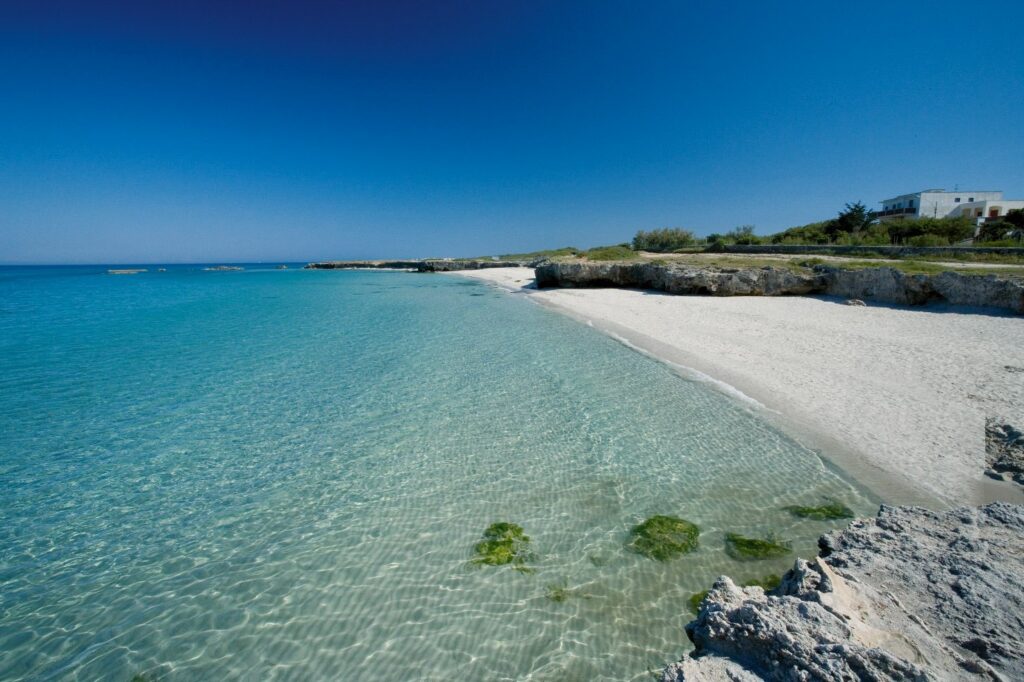
Fine sand and shallow water
- Torre Lapillo, Porto Cesareo — white sand, shallow water for tens of metres, services close at hand
- Punta Prosciutto, Porto Cesareo — ideal for children
- The “Maldives of the Salento”, Marina di Pescoluse — fine sand and very shallow water
- Torre Mozza, Torre San Giovanni and Lido Marini, Ugento — long sandy beaches, shallow and safe for families
Coves, pine woods and wild nature
- Punta Pizzo and Punta della Suina, Gallipoli — low rocks, pine woods and clear water
- Porto Badisco, Otranto — the cove where, legend says, Aeneas landed
- Cala dell’Acquaviva — an inlet of crystal-clear water on the Adriatic coast
Natural pools, cliffs and archaeological sites
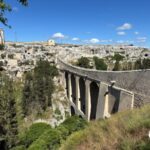
- The Ponte del Ciolo, Gagliano del Capo — the inlet between two cliffs under the bridge, and the steps down to the sea
- Marina Serra, Tricase — a natural pool among the rocks, with calm water
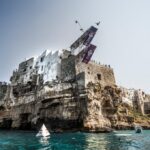
- The Grotta della Poesia, Roca Vecchia (Melendugno) — a natural pool inside an archaeological site: swimming is not allowed, and entry has cost €5 since 2026
The beaches the Salentini love (not the tourists). People who live here have their own habits, often away from the well-known circuits. Lido Conchiglie and the Punta della Suina area near Gallipoli draw locals escaping the crowds of Baia Verde. On the Adriatic side, the stretch between Roca Vecchia and Torre dell’Orso is loved for its sea floor and relative quiet. For real solitude, the beaches around Torre Vado and Pescoluse remain among the least crowded even in August — as long as you get there early in the morning.
The Salento sea and the wind
In the Salento, the wind decides your day at the sea. Because the two coasts face opposite ways, when one is rough the other is often calm:
- Tramontana (north wind) — the Adriatic from Lecce to Otranto is rough; the Ionian is calm.
- Grecale (north-east) — the Adriatic is rough as far as Otranto, quieter between Otranto and Leuca; the Ionian is calm.
- Levante (east) — the Adriatic is rough, the Ionian quiet.
- Scirocco (south) — the Ionian is rough, the Adriatic quiet.
- Libeccio (south-west) and ponente (west) — the Adriatic is calm, the Ionian rough.
The rule to remember: wind from the north or east, go to the Ionian; wind from the south or west, go to the Adriatic. For the rest of the Salento — towns, villages and routes — see our page on the Salento.