In November the olives turn black, and the ones that don’t go to the mill take different roads: brine, salt, or the oven. Puglia’s oven-dried black olives first lose their bitterness and their water, then dry until the skin wrinkles, and end up in olive oil with garlic, chilli and orange zest.
After October’s green olives, the ones that get cracked open, the trees still carry the olives that ripen late. In November they change colour, turning dark and soft, and many of them go to the mill. A share of them, though, never does: it stays at home, and one of the roads it takes leads through the oven.
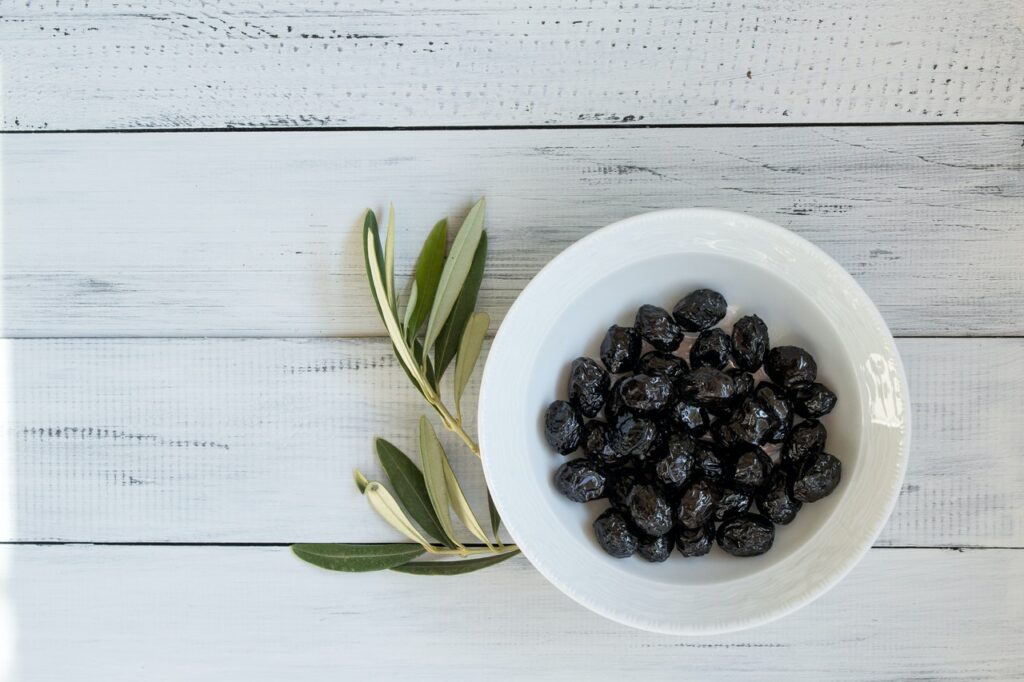
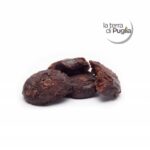
Wrinkled black olives: this is how they look once they lose their water, in salt or in the oven.
November, when the olives turn black
In the Salento, the heel of Italy, the black olive above all others is the Cellina di Nardò. Every Italian region keeps an official list of its traditional food products: foods made the same way for at least twenty-five years. Puglia’s entry says the Cellina is picked fully ripe, around the first ten days of December, and recalls it with a dialect saying: “te la ‘Mmaculata, l’ulia è maturata”, by the feast of the Immaculate Conception (8 December), the olive is ripe.
To keep these late-autumn olives, Puglia has three ways.
Three roads for a black olive
The first is brine. Celline olives cured the old way spend a couple of days in water changed daily, then go into a saturated brine with myrtle, wild fennel, citrus peel or lemon slices, inside capàse, large glazed earthenware jars. According to the regional entry, the bitterness is gone after about six months, and the olives keep for at least three years.
The second is dry salt: the guidelines on home preserving from Italy’s National Institute of Health (ISS) describe, for olives, layers of salt alternating with layers of olives, with the salt not weighed precisely. It is the same idea as our salted olives.
The third is the oven, and that is the one this article is about.
The oven: first the bitterness, then the water
A freshly picked olive cannot be eaten: it is bitter because of oleuropein, a substance in the flesh. That is how the blog of an olive oil mill in Torremaggiore, in the province of Foggia in northern Puglia, puts it, and for its Apulian version of oven-dried olives it gives these steps:
- Cut each olive in two places.
- Salt them with coarse salt in a colander and leave them for about a week, so they lose their water.
- Rinse them with white vinegar.
- Bake them at 150 degrees Celsius until they wrinkle.
- Put them in a glass jar under extra virgin olive oil, tightly closed and kept in the fridge.
There is no single method. The same blog gives another, with the olives soaked in cold water for eight to ten days before baking; a recipe from the Italian food site Cookist, which calls the dish olive infornate (“baked olives”) and describes it as typical of southern Italy, especially of Sicilian and Apulian tradition, uses water and bicarbonate of soda, a quick blanching and a hotter oven instead. The sign that they are ready is the same everywhere: wrinkled skin. And the olives to choose are very ripe ones, even those already fallen from the tree, as long as they are sound.
Did you know? The best-documented case lies just over Puglia’s border, in Basilicata: the oliva infornata di Ferrandina, in the province of Matera, is a Slow Food Presidium, a product the association protects because it is at risk of disappearing. It is made only from the majatica variety: a dip in water at 90 degrees Celsius, a short dry salting, then racks in hot-air drying rooms at about 50 degrees. Wood-fired ovens were abandoned from 1910 onwards, and the earliest written records go back to the eighteenth century.
How they are eaten
A farming cooperative in Scorrano, in the Salento, sells its Salento-style oven-dried black olives as “a typical Salento recipe”, flavoured with oregano, garlic, basil, chilli, rosemary and lemon juice, and suggests them as a starter, to dress bread and pucce, and to add flavour to roasts and salads. The Torremaggiore blog adds that in the Salento they are often livened up with chilli and orange zest.
The link with bread is an old one. Puglia’s entry for pucce, the round bread rolls of the Salento, describes uliate, small loaves kneaded with whole black olives, stones and all, and olive oil; the entry for celline olives calls them a long-standing ingredient of the Salento’s breads and stuffed pies.
The jar, with caution
Oven-dried olives almost always end up under oil, and this is where care matters. The ISS guidelines point out that oil does not kill bacteria, and that home-made vegetable preserves in oil are the ones most often involved in cases of botulism, twenty to thirty a year in Italy. That is why we give no quantities here: anyone making them should follow those guidelines and keep the jar in the fridge.
For October’s green olives, read our story of grandma’s cracked olives, and for the season as a whole, our piece on the olive harvest.
Celline olives, ready to eat. If you don’t have an olive tree of your own, our online pantry has celline olives with myrtle: black olives from the Salento in water and salt, with wild myrtle, one of the aromatics the regional entry lists for the traditional cure.
How this article was written. The harvest of the celline, the Immaculate Conception saying, the brine cure and the uliate come from Puglia’s official entries for traditional foods; salt in layers and the risks of preserves in oil from the guidelines of Italy’s National Institute of Health; Ferrandina from the Slow Food Presidium page. The oven method and the ways of eating them come from an oil mill in Torremaggiore, a cooperative in Scorrano and the Cookist site: oven-dried black olives have no official entry in Puglia. They are a home preserve, and every family makes them its own way.