Three days between Lecce, Galatina, Soleto and the villages of the Grecìa Salentina (Corigliano d’Otranto, Sternatia, Martano, Carpignano Salentino and Melpignano), in search of Griko, the pizzica and the tarantate. It starts and ends in Lecce.
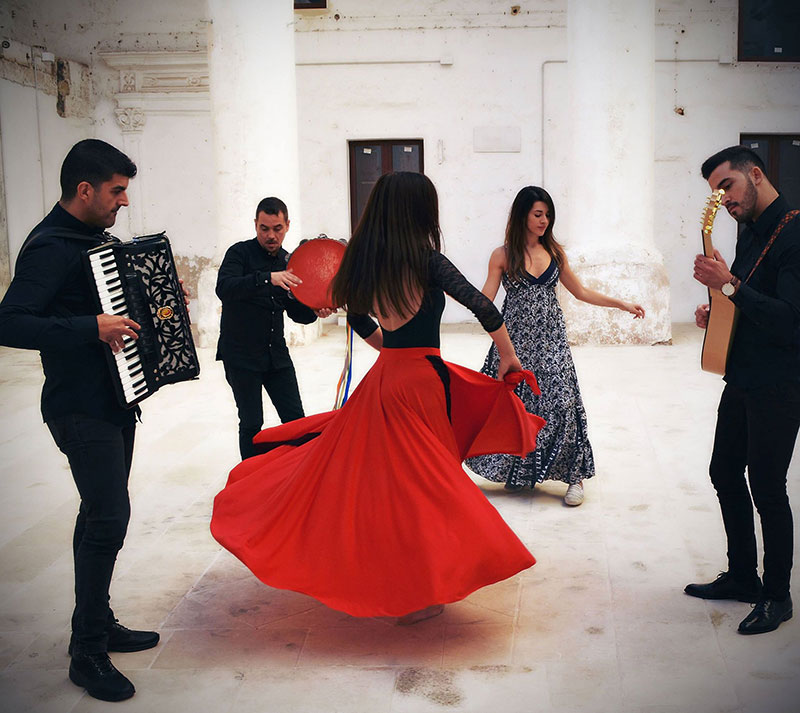
If you have ever read about Puglia, you have probably heard the sound of the Salento: the tambourine-driven rhythm of the pizzica. This tour takes you to where it comes from. In the heart of the Salento a handful of villages still speak Griko, a dialect of Greek origin: this is the Grecìa Salentina. It is also the land of the tarantate, the women who were believed to have been bitten by the tarantula and whom the music of the pizzica was meant to heal. From Baroque Lecce to Melpignano, this is a journey into the traditions and culture of one of the most fascinating corners of Italy.
Day 1: the Baroque of Lecce
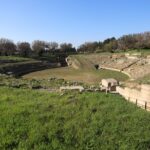
The first day begins at the hotel in Lecce, the capital of the Baroque. Lecce is famous for its churches covered in sculpture carved from the local stone and for its fine palazzi, the grand town houses that open onto the courtyards of the old centre. The visit includes Piazza del Duomo, with the decorated front of the seminary, the Bishop’s Palace and the bell tower. Next comes the square named after the city’s patron saint, Sant’Oronzo, with its Roman amphitheatre, the Palazzo del Sedile and the small church of San Marco dei Veneziani. The day ends with the church of Santa Croce, the most eloquent monument of the Baroque period. After a day full of history and art, back to the hotel for dinner and the night.
Day 2: Galatina and Soleto
The second day goes to Galatina, the town of the tarantate, because of the small chapel of San Paolo: according to legend, this is where the apostle Paul gave healing powers to the water of the nearby well. Galatina is a town of courtyard houses, typical of the Salento, and of the Basilica of Santa Caterina d’Alessandria, built in the Middle Ages and one of the great works of art of the region. The whole story is told in our article on tarantism and Galatina.
After lunch, the afternoon is spent in Soleto, a village of the Grecìa Salentina rich in traces of its Greek past, such as the famous small Byzantine church of Santo Stefano. Above the village rises the Orsini bell tower, belonging to the mother church dedicated to the Assumption. Back to the hotel for dinner and the night.
Day 3: in the heart of the Grecìa Salentina
The third day starts with breakfast at the hotel, a good coffee with slices of bread and red berry jam, before leaving for Corigliano d’Otranto. This village of the Grecìa is known for its imposing 15th-century castle. In the village you can visit an underground olive mill, dug into the rock, and admire some handsome palazzi. The tour continues to Sternatia, a small village explored on foot, and then to Martano, to see the Convent of Santa Maria della Consolazione of the Cistercian Fathers.
After lunch, the afternoon is given to Carpignano Salentino, with its Basilian crypt, an underground chapel of the Greek-rite monks, and to Melpignano, home of the famous Notte della Taranta, the great summer festival of the pizzica. Return to Lecce, where the tour ends.
A detail worth noting. In Martano stands the Convent of Santa Maria della Consolazione, historically run by the Cistercian Fathers. It is not to be confused with the far better known Augustinian convent, which is in Melpignano, the last stop of the day and the setting of the big Notte della Taranta concert.
A tour of culture and tradition
From the Baroque of Lecce to the traces of the Greek past, this tour is a deep dive into the culture and traditions of the Grecìa Salentina. Galatina, Soleto, Corigliano d’Otranto, Sternatia, Martano, Carpignano Salentino and Melpignano put you in touch with the most authentic roots of this region. Between Griko, the pizzica and the stories of the tarantate, it shows a side of Puglia you may not know yet. To learn more about the language, read our article on Griko and the Grecìa Salentina, or browse all our multi-day itineraries in Puglia.