
The dry stone walls of Puglia, built from stones alone without a drop of mortar, are the signature of its countryside, and the art of building them is on UNESCO’s heritage list. What they were for, who built them, how to read them, and the craftsman of the Salento who made them his trade.
The dry stone walls of Puglia, the muretti a secco, are the signature of a landscape that charms the visitors who arrive every day, and above all every summer, looking for a few days of real rest and holiday. Not everyone knows, though, that these walls are also part of UNESCO’s heritage. Now that you do, look at them more closely as you drive through the Apulian countryside: they seem to have been put there almost by chance, on the spur of the moment. And fall in love all over again with the landscape around you. But first, let us get to know them.
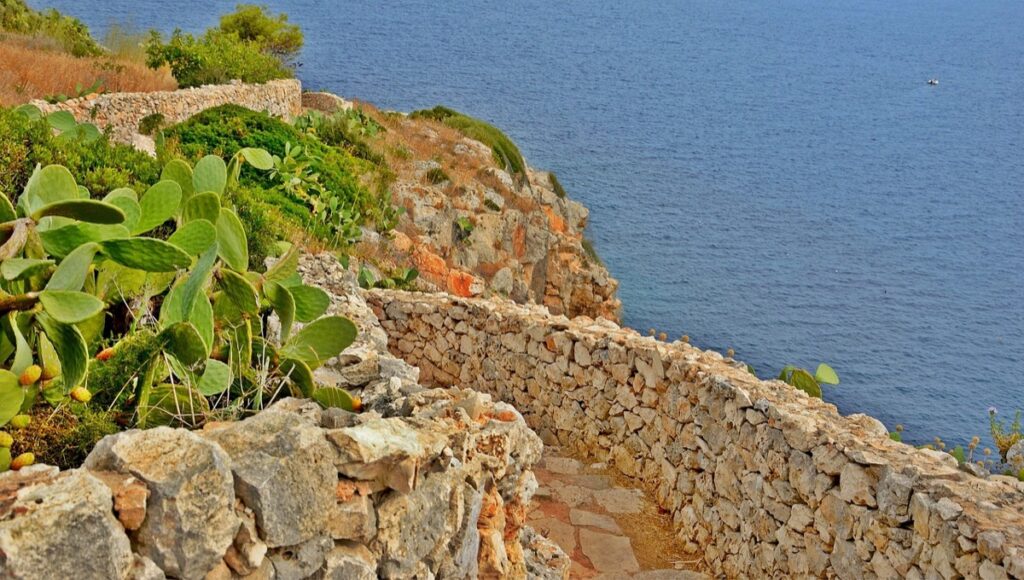
You can see them more or less all over Puglia, and perhaps most of all in the Salento, the heel of Italy. The dry stone walls are a genuine work of art and architecture: they do a practical job, and they have an extraordinary beauty too. It is no accident that they are on the UNESCO list. According to some experts, the first to build them were the Messapians, the ancient people who lived in this land before the Romans. That would be no surprise, since the very first structures people ever built, the dolmens for example, were raised without lime, simply by piling up and stacking stones of different shapes and sizes.
What the walls were for
Dry stone walls belong to the great traditions handed down by the farmers of Puglia. As we said, they are beautiful buildings, simple and elegant at once, made of nothing but blocks of stone, and yet they stand up to the weather and the years. The farmers of Puglia and of the Salento used them:
- to mark the edges of fields and properties;
- to shelter crops from wind and weather, especially along the coast, close to the sea;
- to separate the land kept for grazing animals from the land kept for crops;
- to protect the fields from wolves, which can still be met now and then, though far less often than in the past: these are the muri paralupi, the wolf walls.
Then there are the paretoni, special dry stone walls built with large stones that are flat on the outer face, also meant to keep out wild animals.
The paritaru, the master builder of the Salento’s walls
If the first dry stone walls were more or less improvised, over the centuries the farmers of Puglia became more and more skilled at building them. So skilled that a trade was born: the paritaru, from parite, which means wall in the Salento dialect.
Little by little, as the craft became more specialised, the walls first raised by the Messapians grew more and more precise and refined. Look at a dry stone wall for yourself: at the bottom you will easily spot two rows of particularly thick, heavy stones, and as the wall rises the smaller stones are fitted in between.
How to read a wall. Two rows of big stones at the base, smaller ones wedged in as it rises, and nothing holding it together but the weight and the fit of each stone. If you are cycling the back roads, as on our cycling routes in the Salento, you will ride between them for kilometres.
Useful, and beautiful too
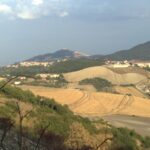
Today the dry stone walls adorn and divide the Apulian countryside with the delicacy and grace of a piece of chiacchierino, the fine knotted lace known in English as tatting. Startlingly white against a background of blue sky, red earth and the deep, dark green of the olive trees, they are the frame that every visitor’s holiday photo was missing, the one nobody forgets to take before heading home.
Stone is a craft here in more than one way: read about the soft golden pietra leccese in Baroque Lecce and the stone that made it.

You must be logged in to post a comment Login