In short. Puglia’s cheeses come mostly from sheep’s milk, with cow’s milk behind the fresh stretched-curd cheeses — mozzarella, burrata, stracciatella — and the milk of the Podolica cow behind the prized caciocavallo of the Gargano. Two of them carry a PDO, the European protected designation of origin: Canestrato Pugliese and Mozzarella di Gioia del Colle. Here is what each one is, and how to get them home in good shape.
Apulian cheeses: what the farms of Puglia make
Puglia is dotted with masserie — the fortified farmhouses of the southern countryside, many of them still working farms — and in a great many of them you can buy cheese made on the spot. What they produce is knowledge handed down from fathers to sons: livestock farming and cheesemaking are among the things that most clearly define this land, and its cheeses are a heritage worth tasting one by one.
Three milks, three families of cheese
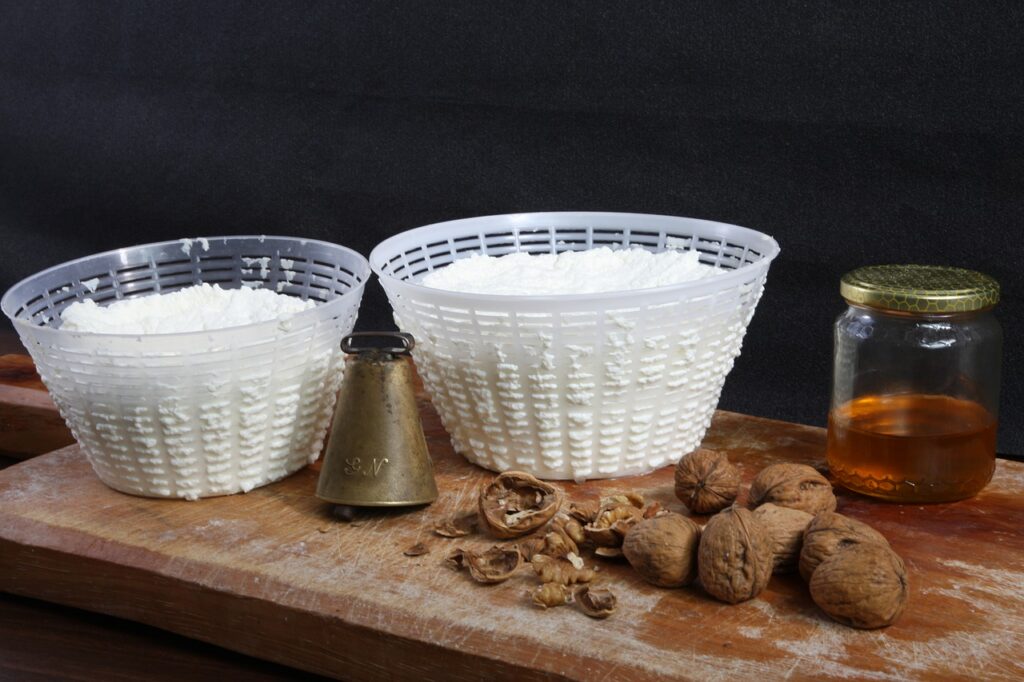
Most Apulian cheese is made from sheep’s milk. Even today, driving the length of this long region, it is easy to come across flocks grazing by the road, or a flock on the move from one pasture to another. The milk decides the cheese:
- Sheep’s milk gives ricotta, primo sale, ricotta salata, ricotta forte, caciotta and canestrato.
- Cow’s milk gives the stretched-curd cheeses — mozzarella, nodini (small knots), trecce (plaits), filled rolls, stracciatella, burrata and scamorza.
- The milk of the Podolica cow, an old southern breed, is richer and fattier: it gives the prized caciocavallo podolico of the Gargano.
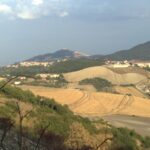
The transhumance: why Puglia became cheese country. For centuries, between October and May, thousands of sheep came down from the mountains of the central Apennines to winter on the Tavoliere delle Puglie, the largest plain in southern Italy. This seasonal droving, the transumanza, shaped the economy and the food of the whole region for centuries. The shepherds brought the cheesemaking methods of their home valleys and mixed them with local ones: Canestrato Pugliese PDO, the pallone of Gravina, ricotta forte and many other cheeses are direct descendants of that tradition. In parts of the Daunian Sub-Apennine and the Gargano the transhumance still goes on today, smaller but alive, and in 2019 UNESCO recognised it as intangible cultural heritage of humanity.
The cheeses one by one
Burrata
The most famous of them abroad: a pouch of stretched mozzarella curd filled with cream and shreds of curd. We tell its story, and how to eat it, in our article on burrata.
Stracciatella
The filling of burrata on its own: shreds of stretched curd soaked in fresh cream. Much loved inside and outside Puglia, perfect on bread and a starring ingredient in many dishes.
Mozzarella di Gioia del Colle PDO
The mozzarella of Gioia del Colle, a town on the Murgia south of Bari, has PDO status thanks to the quality of its milk and the work of the local dairies. It is made under strict production rules that protect that quality, and its reputation keeps growing well beyond the region.
Caciocavallo, and the Podolico of the Gargano
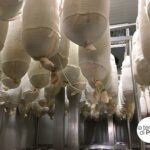
Caciocavallo is the great stretched-curd cheese of the South, shaped like a pear and hung in pairs to mature. Its most prized Apulian version is the one made from Podolica milk in the Gargano and the Daunia, the northern corner of Puglia.
Canestrato Pugliese PDO
One of Puglia’s PDO cheeses, with a very old history tied to the transhumance. It is made from raw sheep’s milk from two milkings, warmed and curdled with liquid rennet, and pressed into the reed baskets — canestri — that give it its name and the pattern on its rind. Maturing can last up to ten months, which gives it a sharp flavour that makes it ideal for grating.
Ricotta
Very versatile and delicately flavoured, Apulian ricotta is a favourite with children and works in both savoury and sweet dishes. It is made every day by reheating the whey left over from cheesemaking — ri-cotta means “cooked again” — and comes from cow’s milk, sheep’s milk or a mix of the two. Puglia also has ricotta marzotica, the spring ricotta salted and dried so that it keeps and can be grated.
Ricotta forte
Ricotta forte, also called “schianta” or “scanta”, is a creamy fermented ricotta with a strong, pungent taste — an acquired taste, and an unforgettable one. It is spread on slices of bread with desalted anchovies, or stirred into the tomato sauce for the fresh pasta of Sunday lunch, as in our orecchiette with ricotta forte.
Cacioricotta
A typical regional cheese that sits halfway between a cheese and a ricotta, good both at the table and grated — grated over pasta it is the heart of orecchiette with cacioricotta.
Primo sale
A delicate sheep’s milk cheese, lightly salted and aged for only a few days. The name means “first salting”. A good choice for anyone who wants to eat light without giving up flavour.
Giuncata
A fresh, light cheese typical of the province of Lecce, sold in small rush baskets — giunchi — which give it its name. Made without added salt, it is very delicate, and is often flavoured with rocket, walnuts or spices.
Scamorza
A stretched-curd cheese made from cow’s or sheep’s milk, white or smoked, small or large. Excellent as a table cheese and as an ingredient in a great many recipes.
Manteca and burgonza
Two unusual ones. Manteca is a ball of butter wrapped in the stretched curd of scamorza. Burgonza is a recent marriage of North and South: the pouch of a burrata filled with shreds of curd and gorgonzola, the blue cheese of northern Italy.
Pecorino and the pallone of Gravina
Apulian pecorino, made from sheep’s milk, is never missing from the tables of Puglia. The pallone of Gravina, from Gravina in Puglia on the Murgia, deserves a mention for its character and its long tradition, made from sheep’s milk or mixed milk: a perfect example of how rich Apulian cheesemaking is.
Where to buy Apulian cheese: at the farm or online? If you are in Puglia, go straight to the masserie and the local dairies: the best products often never reach the supermarket. From further away you can buy online. Ricotta forte and aged canestrato travel far better than fresh cheeses such as burrata — but even burrata arrives in very good condition if you order it on a Monday or Tuesday, so that it does not sit in a depot over the weekend. Our shop has a selection of Apulian cheeses for sale online. For the rest of the region’s larder, see Apulian food.