
Puglia’s tourist season no longer ends with August. Put two official surveys side by side and almost a quarter of the year’s overnight stays fall between September and December. It is not an accident: the regional government has written it down as a goal. Here are the real 2025 figures, and what they mean for anyone arriving after the summer crowds.
In Puglia, 31 August is a date you can feel. The beach clubs start taking down their umbrellas, the ferries to Greece empty out, and the queues at the motorway toll booths vanish within forty-eight hours. For generations it was the signal that the season was over: back to school, and the sea left to get on with things on its own.
The numbers, though, have been telling a different story for a few years now. The Apulian season no longer ends on 31 August. It has stretched at both ends, and the tail of September and October has become a part of the year that no hotel or restaurant owner would still call a bonus.
The official figures for 2025
The picture comes from the Tourism Observatory of the Puglia Region, which processes data from the regional SPOT system and from Istat, the Italian national statistics institute, together with Questlab. It is the source the Region itself uses for its planning documents, and this is what it says:
- 6.7 million arrivals in 2025, up 13% on 2024.
- 22.7 million overnight stays, up 10%.
- 13.9 billion euros: the value of the whole tourism supply chain, 16.3% of the regional total.
- 200,000 people working in it.
The difference between arrivals and overnight stays is not a technicality: arrivals are people, overnight stays are nights. Six point seven million people staying a little over three and a half nights each, on average: that is how you reach twenty-two point seven million.
Growth has not been the same for everyone. Foreign visitors grew five times faster than Italians: up 25% in arrivals and 23% in overnight stays, against 5% and 4% for domestic tourism. And they spend: foreign visitors’ spending in Puglia passed 1.8 billion euros, almost three times the 2019 figure.
There is also one indicator that cannot be fudged, because the town councils collect it: the tourist tax reached 26.3 million euros, up 14% in a year.
How much of the year comes after August
This needs a sum that you will not find in the press releases, but that can be worked out by putting two surveys from the same source together.
The sum, step by step. In October 2025 the Region announced that from January to August Puglia had recorded 4.8 million arrivals and 17.5 million overnight stays. The final figures for the whole of 2025, presented at the BIT international tourism fair, came to 22.7 million overnight stays.
The difference is about 5.2 million overnight stays between September and December: almost a quarter of Puglia’s tourist year. For arrivals the share is even higher, around 28%.
An honest caveat, because the sum is ours and not the Region’s: the two figures come from surveys taken at different moments, and the 2025 data are declared partial and provisional. The order of magnitude holds; the second decimal place does not.
A quarter of the year, in four months that hardly anyone calls “the season”. And within those four months, September and October are the two that still feel like summer.
It did not happen by chance
The interesting part is that this is not a spontaneous drift. In the document in which the Region set out its challenges for 2026 to 2030, one of the stated shifts is, in our translation, the move “from a strong concentration in the summer months (July and August) to growth in the shoulder months (April to June and September to October)”.
In other words, lengthening the season is a policy, not a side effect of the climate. And the figures say it is working: in 2025 growth was stronger in spring than at the height of summer, where it settled at more modest percentages.
Why it matters to the people who live here. An economy that lives on two months is a fragile one: very short seasonal contracts, places closed for ten months of the year, prices that have to recover a whole year’s turnover in sixty days. Spreading the same demand over six months instead of two does not bring in more money overall. It brings longer work and saner prices. It is the difference between a region that hosts visitors and one that lives off them.
What this means if you come in September
Percentages aside, anyone arriving in Puglia in September finds a different region from the August one. Not better or worse: different.
- The sea stays warm. The Adriatic and the Ionian store heat all summer and give it back slowly: in September the water is typically warmer than in June, when the bathing season has only just begun. That goes for the cliffs of the Gargano as much as for the coves of the Salento.
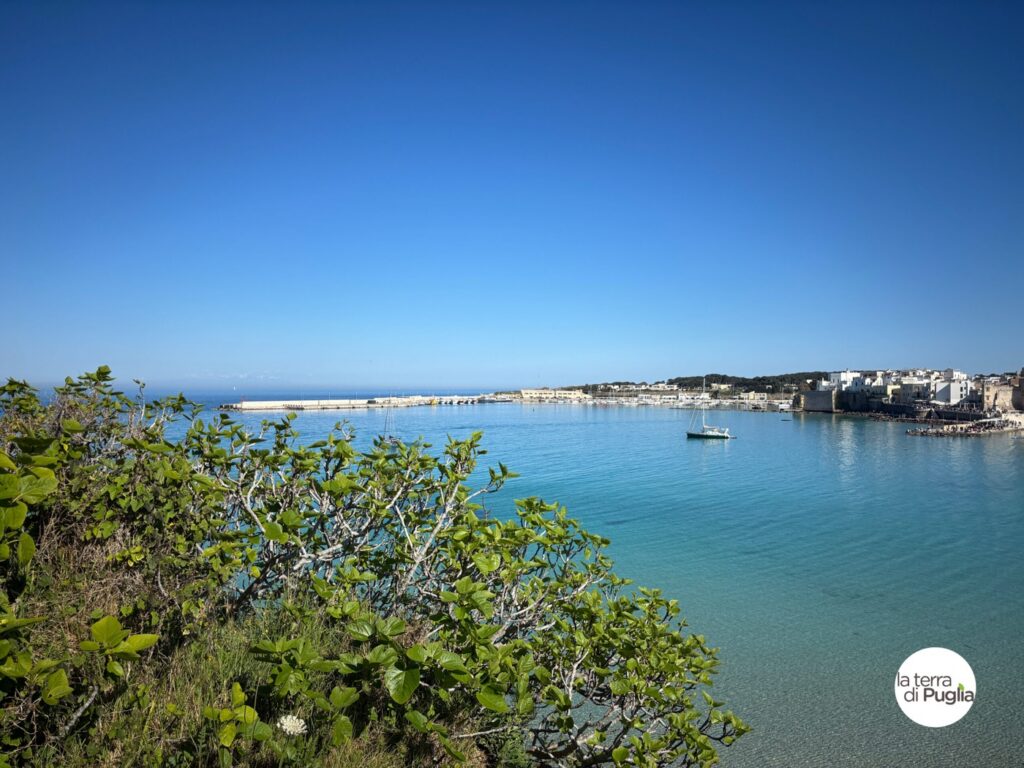
- The beaches empty but the services stay. Many beach clubs (the lidi, where you rent a sunbed and umbrella) stay open until the end of the month, except that now you find an umbrella without booking. And the free stretches, the ones below Otranto to name one, go back to being beaches rather than a patchwork of towels.
- It is the month of village festivals. Once the big summer events are over, September is when the towns celebrate for themselves: patron saints, local produce, traditions. Many of them are sagre, food festivals built around a single dish or product. We have gathered them in our guide to Apulian food festivals in September.
- It is grape harvest season, and then the olives. Between September and October the countryside is at work: this is when the Puglia you eat and drink can be seen being produced, not just bought.
- The inland comes back into play. At thirty degrees rather than forty, the interior stops being a second choice. It is no coincidence that for cyclists September and October are the right months, not the consolation prize for those who could not get away in August.
So 31 August is still a date you can feel. But for some years now it has marked the end of just one thing: the most crowded Puglia of the year. Everything else starts on the first of September.


You must be logged in to post a comment Login