In short. Gallipoli fish soup — zuppa di pesce alla gallipolina — is a seafood dish of very old origins, perhaps going back to ancient Greece. Mixed fish, octopus, cuttlefish, shellfish, tomato and country bread meet in a single pot, added in a precise order. Here is the authentic recipe, and what to know before you start.
Where Gallipoli fish soup comes from
Our tour of Apulian cooking takes us to Gallipoli, the fishing town on the Ionian coast of the Salento, to note down a dish whose origins are lost in the mists of history. That is not unusual in a land like ours: centuries of foreign rulers left influences from everywhere, and they brought with them recipes and eating habits often very different from the local ones.
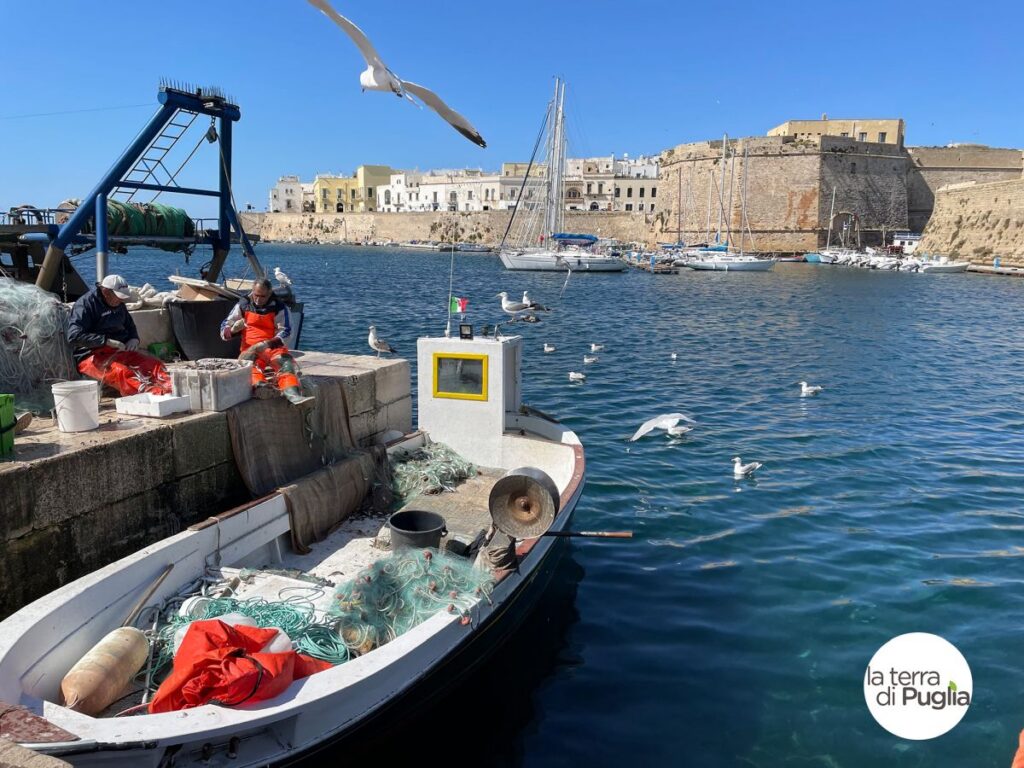
Gallipoli fish soup has a very long history behind it. Some historians believe it may have come to us straight from ancient Greece; others think it far more likely that it was born right here, among the fishermen themselves, who put shellfish and humble fish together into a tasty, restoring meal. Some of its ingredients are the stars of other Apulian fish dishes: octopus, here cooked together with everything else instead of stewed on its own, and small cuttlefish, which elsewhere in Puglia become the protagonists, stuffed.
Ingredients
- 2 medium scorpionfish
- 4 langoustines (scampi)
- 2 octopus
- 4 small cuttlefish
- 4 slices of monkfish
- 4 prawns
- 1 kg of mixed shellfish (mussels and clams)
- 150 g of tomato fillets
- 1 onion
- garlic
- 1 glass of dry white wine
- 4 slices of country bread
- extra virgin olive oil
- a small bunch of parsley
- salt and pepper
Never date mussels, ever. Some versions of this recipe include date mussels (Lithophaga lithophaga, in Italian datteri di mare) among the shellfish. Fishing, keeping, transporting, selling and eating them has been a crime in Italy since 1998, and they have been banned across the European Union since 2006, because the only way to extract them from the limestone they live in is to smash the rock itself — a practice that destroys coastal habitats for good. We have left them out of the recipe, and we urge you to refuse them if you are ever offered them, even “under the counter”, in any restaurant: besides being illegal, it is real and lasting damage to the sea. In this soup, mussels and clams are more than enough to give body and the taste of the sea.
Method, step by step
The soup comes out well only if you follow the recipe step by step.
- Clean the shellfish. Pull the beards off the mussels and throw away at once any with a broken shell, or any that are open and do not close when tapped. Leave the clams in salted water for a couple of hours to purge them of sand.
- Soften the onion. Fry the onion gently in a fairly wide pan.
- Layer the fish. Put in the octopus and cuttlefish first, then the scorpionfish, the monkfish, the langoustines, the prawns and, last of all, the mussels and clams.
- Add the wine. Pour in the wine, let it bubble off, and cook everything over a low heat.
- The tomato. About halfway through, add a light sauce made separately in another pan: garlic fried in oil, then the tomato fillets and a pinch of salt.
- Finish slowly. Finish cooking over a low heat. At the end, throw away any mussels that have not opened: they are not safe to eat.
- Serve. Season with pepper, scatter with parsley and serve with slices of country bread, toasted or fried.
Respect the order. The fish goes in by stages — what needs the longest goes in first — precisely so that the most delicate flesh, such as monkfish or prawns, does not fall apart or turn rubbery. If you are short of fresh fish you can use frozen: the result will not be the same, but it is a practical alternative that keeps most of the flavour.
One recipe, many fish soups
Gallipoli fish soup is not an isolated invention: almost every coastal region of Italy and of Europe has its own version. The fish soups of Sicily and Liguria show how the same basic idea — mixed fish, slow cooking, bread alongside — changes with local ingredients and techniques. Beyond Italy, the most famous is probably the French bouillabaisse of Marseille, now a classic of Mediterranean cooking worldwide. Among the versions signed by great chefs, Antonino Cannavacciuolo’s — published on his website and in his book Il Meglio di Antonino — is longer and more elaborate, with a fish stock made separately and a carefully staged cooking order for scorpionfish, red mullet, squid, langoustines, prawns, octopus, clams and mussels. Puglia has a simpler one too: our fish soup, made with the fish that did not sell.
Gallipoli is not only the home of this soup: it is also the birthplace of scapece of Gallipoli, small fried fish marinated in vinegar and saffron, another chapter of the town’s seafaring cooking. For more fish dishes from the Apulian tradition, see our Apulian recipes.