The Notte della Taranta is Italy’s largest festival of traditional music: twenty free evenings across the villages of the Salento, and then one final night — the Concertone — in Melpignano. The 2026 edition, the 29th, took place on 22 August under the direction of Ermal Meta, on the theme of the routes of the Mediterranean. Here is what the festival is, how it works, and what to know before going.
Every summer a village of two thousand people becomes, for one night, the centre of Italian folk music. The Notte della Taranta is not a concert: it is a travelling festival that crosses some twenty towns of the Salento through August, ending with a final night broadcast on national television. What is played there is called pizzica — and before it was stage music, it was a cure.
The 2026 edition: Ermal Meta and the routes of the Mediterranean
The 29th edition closed on Saturday 22 August 2026 in Melpignano, in the province of Lecce. The maestro concertatore — the musical director chosen each year by the Foundation — was Ermal Meta, for the first time. The theme, “the routes of the Mediterranean”, was not decorative: born in Fier, Albania, and brought to Puglia at thirteen, Ermal Meta built the show around his own crossing.
According to reports the following day, the square held around 150,000 people. The night went out live on Rai 3 and Radio 2, and for the first time on the Eurovision network. The choreography was by Fredy Franzutti.
What the maestro concertatore does. Each year the Foundation hands the musical direction to a different artist, who reads the traditional repertoire through their own grammar. Joe Zawinul, Stewart Copeland, Daniele Sepe, Vittorio Cosma and Shablo have all done it. That is why no two editions sound alike, even though the tunes themselves have not changed in generations.
Pizzica and tarantismo: where this comes from
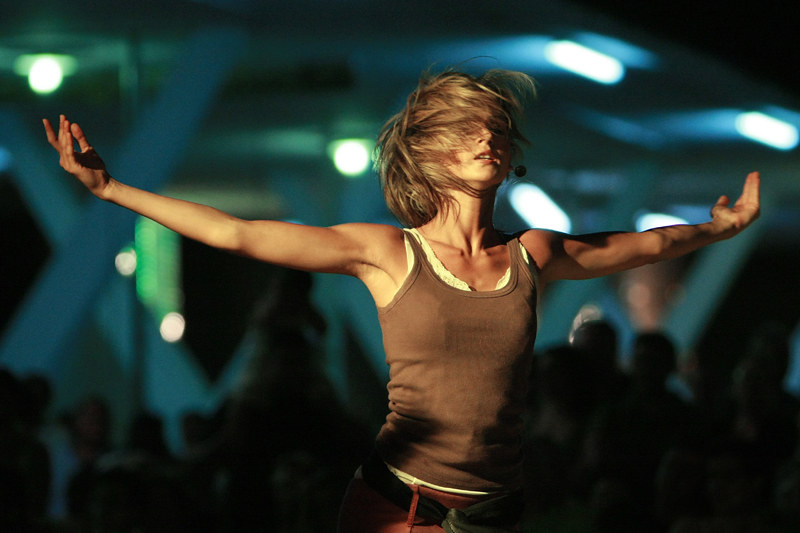
The pizzica is the music of tarantismo, a phenomenon that ran through the Salento countryside for centuries. The bite of the taranta, the field spider, was said to cause a state of possession that only music and dance could undo. The tarantate — almost always women — danced for hours, sometimes days, to the tambourine, the violin and the button accordion, with the whole village around them.
The anthropologist Ernesto de Martino studied it on the ground in the late 1950s; his book La terra del rimorso appeared in 1961. Tarantismo has gone as a living practice. What remains is the music, the dance, and a festival that puts the Salento back on the map every August. There is more on this in our piece on tarantismo and the chapel at Galatina.
Griko, a Greek language spoken near Lecce. Most of the festival’s stops are in the Grecìa Salentina, a pocket of nine towns where griko survives — a dialect of Greek origin still spoken by part of the population. It is not a legacy of modern Greece: it is a linguistic island unique in Italy, and the festival is one of the things keeping it audible.
The twenty evenings before the final night
The Concertone is only the end of the run. In 2026 the festival crossed some twenty squares between 30 July and 19 August — almost always free to enter: Corigliano d’Otranto, Zollino, Cursi, Carpignano Salentino, Calimera, Sogliano Cavour, Nardò, Alessano, Galatone, Cutrofiano, Sternatia, Sant’Andrea-Marina di Melendugno, Ugento, Muro Leccese, Martignano, Lecce, Soleto, Galatina, Castrignano de’ Greci, Martano and Melpignano.
That is where the festival is closest to what it used to be: on a village square, with two thousand people instead of forty thousand, the pizzica is heard up close.
The Orchestra Popolare
At the centre of it is the Orchestra Popolare della Notte della Taranta: some sixty traditional musicians — tambourines, button accordions, chitarre battenti, violins, flutes — who work each year with whoever is directing. It is not a permanent ensemble: it gathers for the festival, after weeks of rehearsal. In May 2026 it returned to the stage of the May Day concert in Rome, twenty-two years after its first appearance there with Stewart Copeland.
Going: what to know
The Concertone is free, and so are most of the stops. It is the logistics that decide the evening: forty thousand people and more in a village of two thousand, gates opening in the afternoon, car parks sometimes a kilometre and a half from the stage, and patience needed on the way out. The Ferrovie del Sud Est run extra trains and shuttles from several towns in Puglia.
One piece of advice worth the trip: the pre-Concertone starts around 7 pm, and it is not a warm-up. Arriving near midnight for the headline act means missing the part where the music is still a village affair.
The other side of the success. Every year, once the broadcast ends, the same argument returns in the Salento: few local people on the staff, decisions taken elsewhere, and part of the audience turning away from the stage to dance on its own. We have written our view of it, and it is not the one you would expect: the spider in the Taranta’s web is not television — it is us.
Frequently asked questions
When is the Notte della Taranta held?
The festival runs every year through August, with around twenty stops in the villages of the Salento and a final night — the Concertone — on the last Saturday of the month in Melpignano. In 2026 the Concertone was held on 22 August.
Where does it take place?
In Puglia, in the Salento, mostly in the towns of the Grecìa Salentina. The final night is in Melpignano, province of Lecce.
Do you need a ticket?
No. The Concertone in Melpignano is free, as are most of the festival’s stops. Some side events may charge.
Who directed the 2026 edition?
Ermal Meta, for the first time. The singer, born in Albania and raised in Bari, was chosen by the Foundation in keeping with the Mediterranean theme of the year.
What is pizzica?
It is the traditional dance and music of the Salento, tied to the ritual of tarantismo: fast tambourine, danced in a circle or in pairs. Its origin was not festive — the pizzica was a remedy before it was a show. See also our guide to pizzica and the Notte della Taranta.