In short. You made your own tomato passata, and when you opened the jars the pulp had separated from the water. Nothing has gone wrong: it is almost always a question of cooking. Here is why it happens, how the double boil prevents it, and how to strain the pulp if you insist on bottling raw.
Last season you gave yourself over to making organic tomato passata at home, for your own family to eat through the winter. Now the moment has come to use it, and you find it is watery: the pulp has settled and the liquid has risen. Why does that happen, and what can be done about it? Let us go through it.
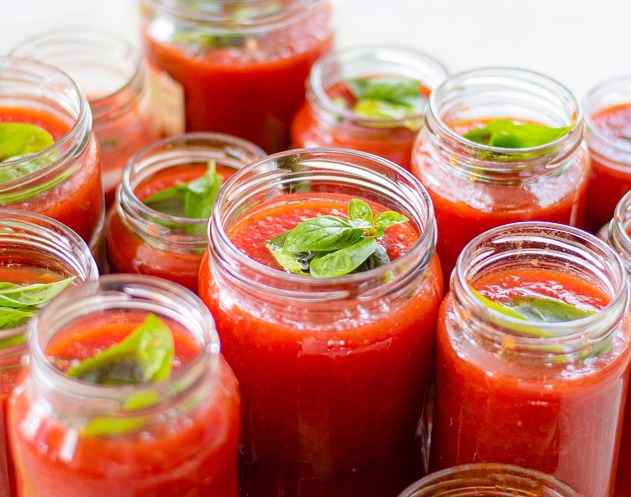
💧 Watery passata is a real problem
So: you made your organic passata, you poured it into jars, and then it split into tomato and water. You did everything carefully, by hand, and you boiled the glass jars for a proper final sterilisation. Perhaps you even have a smallholding and thought you might sell a few — but with all that liquid showing, they look like anything but a good product. So what now? How is the excess water avoided, and where does it come from in the first place?
Do not bottle raw
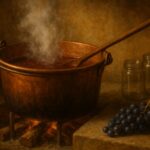
If you choose to pass the tomatoes through a mill or a hand food mill and bottle them raw, without boiling, you get two problems at once: they are less safe, and they throw off far more water. Boiling the tomatoes matters because it lets the water evaporate. The correct sequence is to boil the tomatoes once with their skins on, then to boil them again after milling. Most of the excess water goes that way.
Two boils, in this order: the first with the skins on, the second after milling. That is the whole difference between a passata that holds together and one that separates in the jar.
If you would rather bottle raw and keep that fresh tomato taste, here is how to get rid of the extra water. First, bear in mind that some years the tomatoes carry more water than others: it depends on the summer and on how much the plants were irrigated. That said, to make raw passata without ending up with liquid in the jars you can simply strain the pulp — through a perfectly clean linen cloth, or a sieve.
And if the jars are already sealed?
Nothing is lost: a passata that has separated is perfectly good. Shake it before opening, or let the sauce reduce a few minutes longer in the pan. The water goes off with the heat, and the taste does not change.
The one thing never to improvise is safety. Separated water is a cosmetic problem and nothing more. Sterilisation is not: home-made tomato preserves have to be sterilised by the book, and any jar that looks or smells wrong when you open it goes in the bin without being tasted. That rule costs you one jar; the alternative is not worth discussing.
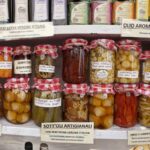
If the year has been a poor one — or if you have neither the time nor the crates — our Apulian tomato passata is made exactly this way, with the double cooking. There are also ready passate and sauces for anyone who wants to skip the step. We ship from Puglia.
Read next: the rest of the Apulian preserves, and the Apulian recipes that start from a jar of passata.
And the day all those jars came from, back when nobody bought them: the day of the sauce, with the slow cooling under blankets that stops the bottles cracking.