In short. Barletta sits at the mouth of the Ofanto, on the northern Adriatic coast of Puglia. It has a castle built by Frederick II, a Romanesque cathedral, a five-metre Roman bronze standing in the street, and the memory of a duel fought in 1503 that the town has never stopped commemorating.
Barletta is a city that has been fought over and built on by everybody who passed — Roman, Norman, Swabian, Angevin — and it has kept something from each of them. It is also, unusually for this coast, still mostly a working town rather than a destination.
The castle and the cathedral
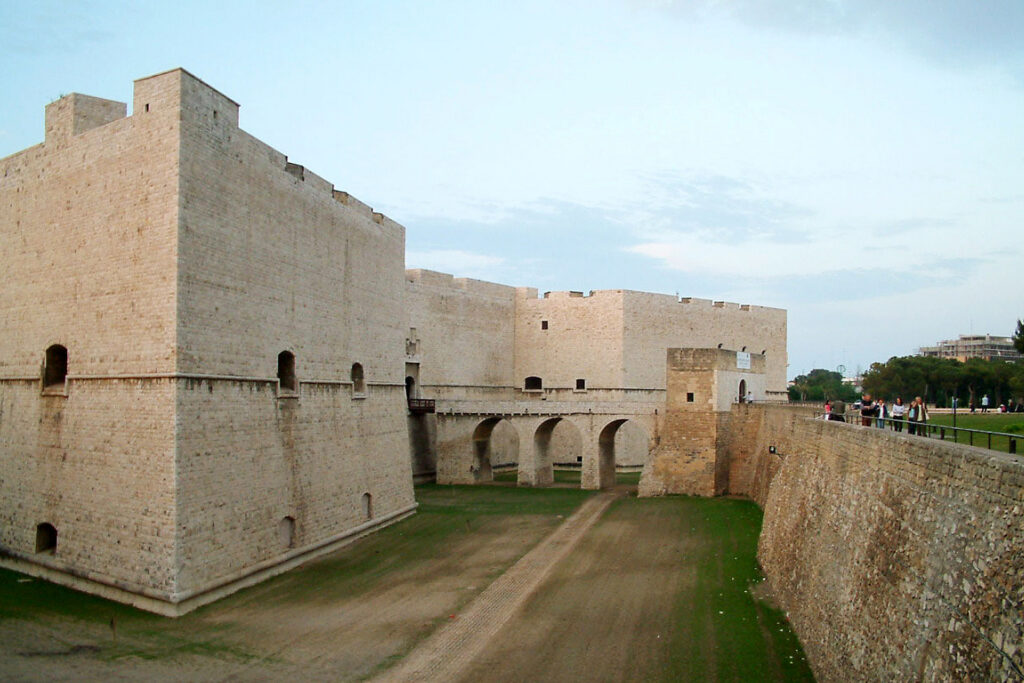
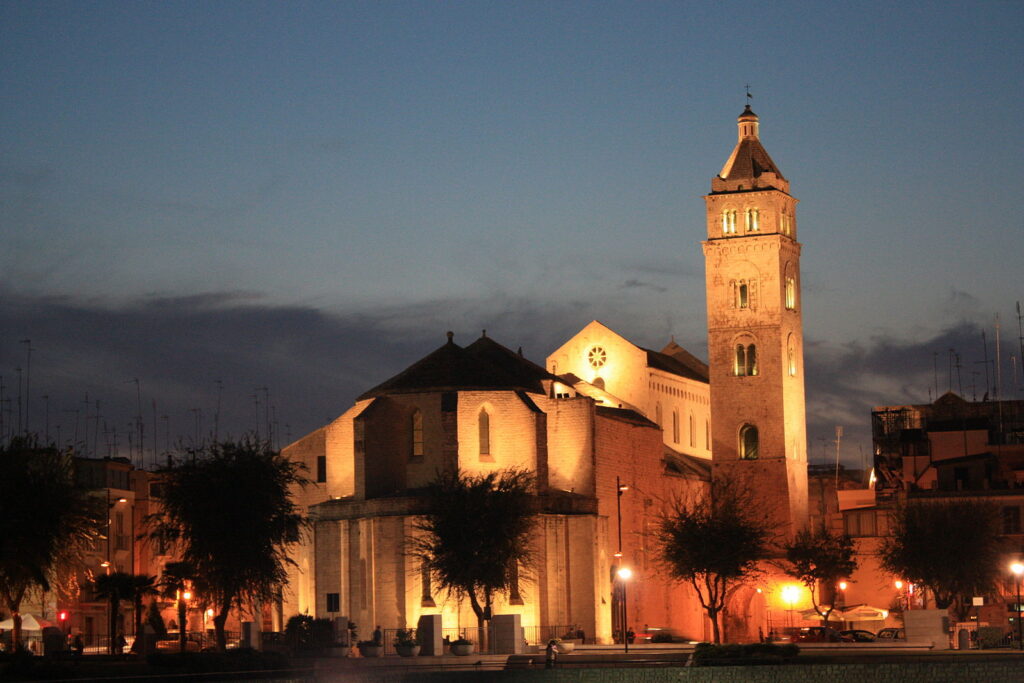
The Swabian castle is Frederick II’s, square and heavy on the seaward edge of the old town. The Cathedral of Santa Maria Maggiore is a fine example of Apulian Romanesque, and between the two the old centre is compact enough to walk in an afternoon.
The Challenge
The Disfida di Barletta, 1503. Thirteen Italian knights fought thirteen French knights in a tournament here, and the Italians won. In a period when the peninsula was largely being fought over by foreign armies, that result took on a significance far beyond the event, and it has stayed part of the town’s identity ever since. Barletta re-enacts it every year, in costume, and the commemorations draw visitors from across Italy.
The Colossus
A Roman emperor standing on a street corner. The Colossus of Barletta is a bronze statue over five metres high, representing the emperor Heraclius, and it stands in the open in the middle of the town. It is the most recognisable thing here and one of the largest surviving bronzes of late antiquity — and the ordinariness of the setting is half the effect: no barrier, no rotunda, just an emperor at the end of a street.
Two more worth the walk
- The Basilica of the Holy Sepulchre — with a Gothic portal, and a direct connection to the crusaders who passed through here on their way to the Holy Land. Inside there are paintings, frescoes and sculpture of real value.
- Palazzo della Marra — home to the De Nittis gallery, dedicated to Giuseppe De Nittis, the impressionist painter who was born in Barletta.
The country around it
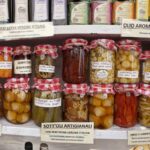
Barletta stands in the valley of the Ofanto, one of the two major rivers of the region, which runs across the northern end of the Tavoliere and forms the natural boundary with Margherita di Savoia. This is farming country, and two things come off it worth carrying home: the Nero di Troia, a native grape making robust, deeply flavoured reds, and an extra virgin olive oil from local varieties.
Both of them travel. The oil and the other things this country produces ship directly from Puglia: see the shop.
The town keeps a busy calendar, and the biggest date is the fair of San Ruggiero, the patron saint: processions, fireworks and markets, and thousands of people.
Around it
Barletta is one of the three towns — with Andria and Trani — that make up the BAT province. Inland stands Castel del Monte, and the coast road and railway run straight down to Bari.
Barletta is the northern end of the Adriatic coast in this guide.