In short. Puglia is the leading olive-growing region of Italy, and the oil pressed here is overwhelmingly extra virgin. This page covers where the olive tree came from, why it took so well to this land, and what actually separates one grade of oil from another.
The olive has been here a very long time. Finds in Puglia — at Torre a Mare near Bari, and at Fasano in the province of Brindisi — go back to the Neolithic, and they tell us olives were already an important food for the people living here.
Where the olive tree comes from
The wild ancestor of the cultivated olive is the oleaster. The first cultivated groves appear south of the Caucasus and spread gradually to Rhodes, Cyprus and Crete, and from there through the whole Mediterranean.
The Greeks considered the olive a sacred plant — a symbol of strength, faith and peace — and anyone who damaged or uprooted one could be sent into exile. In their mythology it was Athena who planted the first olive tree, whose fruit would give people a marvellous juice.
Not only for eating. Greeks and Romans alike used oil on the body: rubbed into the skin before and after bathing, as a cleanser and as an ointment, enriched with scents drawn from flowers and plants. It also fed the oil lamps — which is why wrecks of oil ships turn up across the Mediterranean.
Why it grows so well here
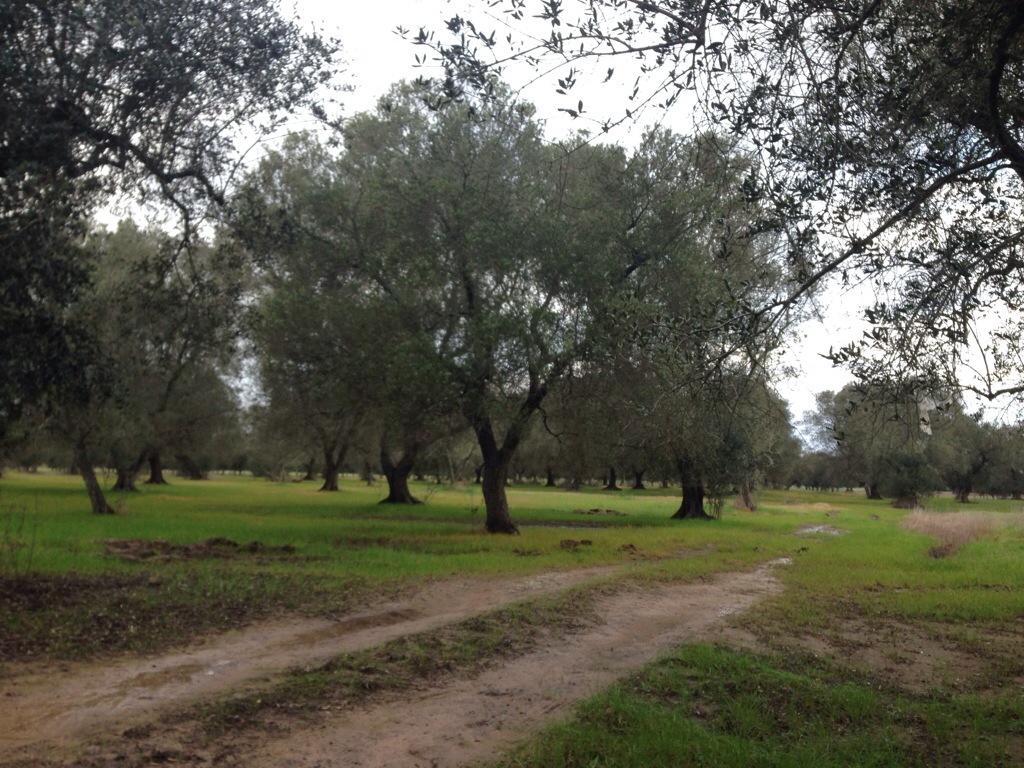
The olive is an evergreen that likes hill country, an indirect sea climate and dry ground, and is untroubled by poor soil. It is extraordinarily long-lived, and it will grow in limestone and in clay alike — which describes a great deal of Puglia.
The result is that this is the first region of Italy for olives and for oil, and that what comes out of the presses here is strictly extra virgin.
The grades, in plain words
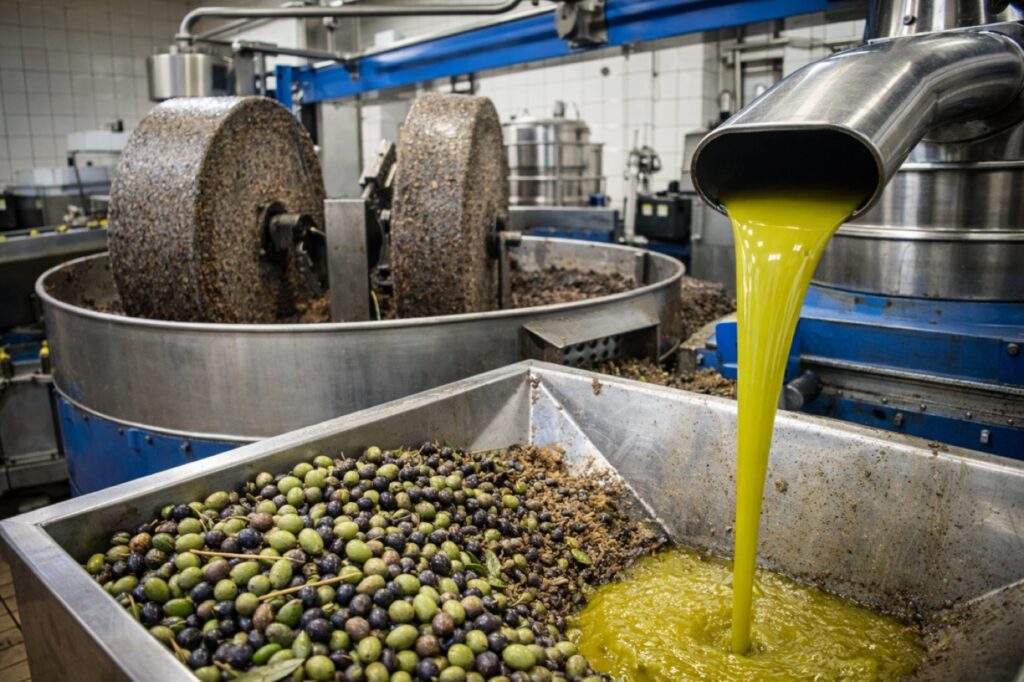
There is no such thing as a fatter or leaner oil: every olive oil is about 99% fat, and the remaining 1% is what carries the taste and the rest. What separates the grades is free acidity — the percentage of oleic acid.
- Extra virgin olive oil — obtained from the first pressing by mechanical means only, with free acidity no higher than 1%
- Virgin olive oil — same process, higher acidity
- Olive oil — refined oil blended with a share of virgin oil, up to about 1.5% acidity
- Olive pomace oil (olio di sansa) — extracted with solvents from what is left after pressing, then refined and blended
Why extra virgin is worth the difference. Beyond taste, the composition is the point: oleic acid, vitamin E and phenolic compounds. They are what make a good oil part of a healthy diet rather than simply a fat.
Questions people actually ask
What causes acidity, and can you taste it? What is the best way to harvest? Why is lampante oil called that? We put the answers on a page of their own:
Apulian olive oil: questions and answers — acidity, harvesting methods, storage, and how to read what is on the label.
The eleven production areas — why two Apulian oils taste nothing alike: the cultivar changes every fifty kilometres, and so does everything else.
Olive oil from the Gargano — the Dauno PDO with the Gargano mention: at least 70% Ogliarola Garganica, medium fruity with an almond aftertaste, and a promontory with a beech forest over its groves.
Cooking with it. Nearly every dish in our collection of Apulian recipes starts with olive oil — including the ones where it is used raw, which is where the difference between a good oil and an ordinary one is most obvious.
And where it starts: the olive harvest, which in Puglia runs from October and is still, in a great many groves, done by hand.