On the Gargano the sea and the mountain meet within a few kilometres, and the olive tree grows in between. It is a promontory that stands on its own, detached from the rest of Puglia, with a beech forest on top and the Adriatic all around: a set of conditions that occurs nowhere else in the region, and you can taste it in the oil.
“Gargano PDO oil” does not exist. It is Dauno PDO, Gargano mention
This is the first thing to clear up, because it is nearly always written wrongly — and for anyone buying, the difference is concrete: the label is where the exact name matters.
The production specification filed with the Ministry establishes that the protected designation of origin “Dauno” must always be accompanied by one of four geographical mentions: Alto Tavoliere, Basso Tavoliere, Gargano, Sub-Appennino. The Gargano is therefore one of the four souls of a single denomination, not a denomination in itself.
What to look for on the label: the correct wording is “Dauno PDO – Gargano”, or an equivalent form that keeps the two words together. If a label promises a “Gargano PDO” and nothing else, that denomination does not exist: not necessarily a deception, but a sign that whoever wrote it was going from memory.
Ogliarola Garganica: the cultivar is the reason for the taste
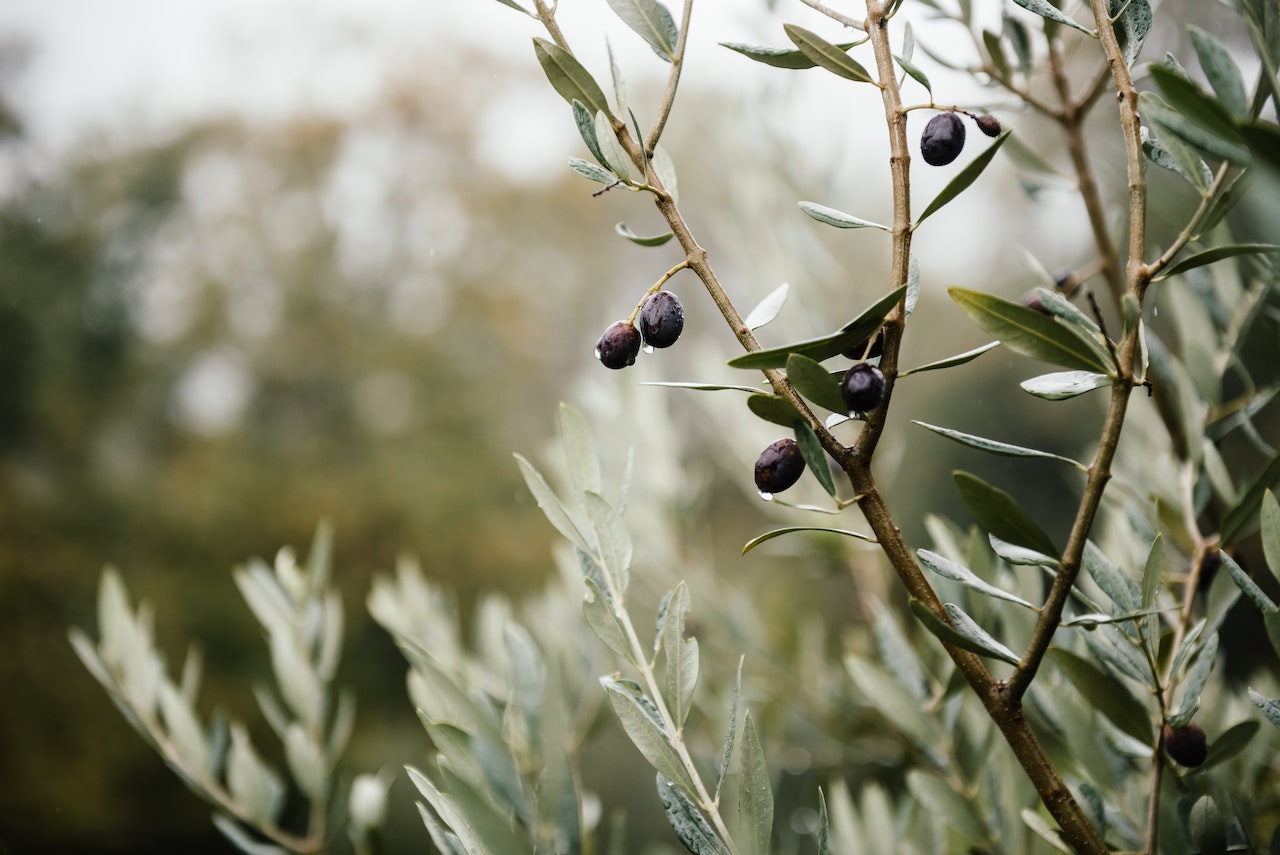
The difference between one Apulian oil and another is almost always the olive variety. In the Salento you hear about Cellina and Leccina, around Bari about Coratina, in the north of the region about Peranzana. On the Gargano the variety is Ogliarola Garganica, and it is not a preference of the growers: the specification requires it. To carry the Gargano mention, the oil must come from groves where Ogliarola Garganica accounts for no less than 70%. The remaining 30% may come from other varieties.
It is a large tree, which can exceed five metres, with leaves of two different greens above and below. It grows from sea level up into the hills, and on the Gargano there are groves handed down in families for generations, with trees nobody can date any more. It is also a hardy tree, little troubled by pests or by the olive fly, helped by the dry climate of the promontory.
The microclimate: sea air and forest air
The Gargano promontory has the Foresta Umbra on top of it, a beech wood reaching almost eight hundred metres. From one side comes the mild air off the sea, from the other the cooler, drier air of the inland heights: the two meet exactly on the band where the olive groves are. That is the physical reason why the oil from here does not resemble the oil of the Tavoliere, a few dozen kilometres away but out on the open plain.
⚠️ The Foresta Umbra is the forest of the Gargano. The name has nothing to do with Umbria, which is four hundred kilometres away — a confusion that turns up in a lot of places.
What Ogliarola Garganica produces
Ogliarola Garganica does not give table olives: it is used almost entirely for oil. Each olive is oval, asymmetrical, and weighs about two grams; it can be green or dark purple verging on black, with dark red flesh. The oil yield is good, possibly one of the best in Puglia — though not every year is the same, the variety having more productive seasons than others.
How to recognise a Gargano oil made to the rule
The specification does not only say where the oil comes from: it describes what it is like in the glass. These are measurable parameters, and they are the most honest yardstick there is for judging an oil without having to trust the advertising.
And the sensory profile, which the specification describes as: colour from green to yellow; medium fruity odour with a herbaceous note; fruity flavour with an almond aftertaste. Peroxides must not exceed 12 MeqO2/kg.
Tasting it you also find freshly cut grass, yellow apple, green banana and carob. It is an oil with a pronounced but not overbearing taste, round and full-bodied.
How to use it
A medium fruity oil with an almond finish does not flatten what it goes on, which is what makes it useful. It works on fish and shellfish, on cooked vegetables, on the great cheeses of the Apulian tradition, and raw over grilled meat. On bruschetta it makes itself felt without covering the tomato.
Buying without getting it wrong. The label is the only place where oil cannot lie, and buying as close to the producer as possible is still the best rule. We have written elsewhere about the production areas of Apulian oil and about the questions people ask before buying. Our own oil we ship directly from Puglia: see the shop.
Where it sits
The Gargano is one of the production areas of Apulian olive oil, and by some way the most particular: it is the only one with a mountain and a forest standing over its groves.