In short. DOC since 1983, red and rosé, built on Negroamaro from the strip of land behind Gallipoli. The red becomes riserva after two years at 12.5% or more; the rosé is one of the reference points for what a Salento rosé should taste like.
A Salento DOC from the Ionian side, between Gallipoli and the sea — small, unshowy, and a good way to understand Negroamaro without paying for a famous label.
The zone and the grapes
The grapes come from Alezio and Sannicola, with parts of Galatina and Tuglie. Negroamaro must make up at least 80%; the rest may be Malvasia Nera, Sangiovese or Montepulciano, alone or blended.
This is flat, hot country a few kilometres inland from Gallipoli, and the wine tastes of it: warm, dry, with the bitter edge that gives the grape its name. If you want the background on the grape itself, it is here: Primitivo and Negroamaro.
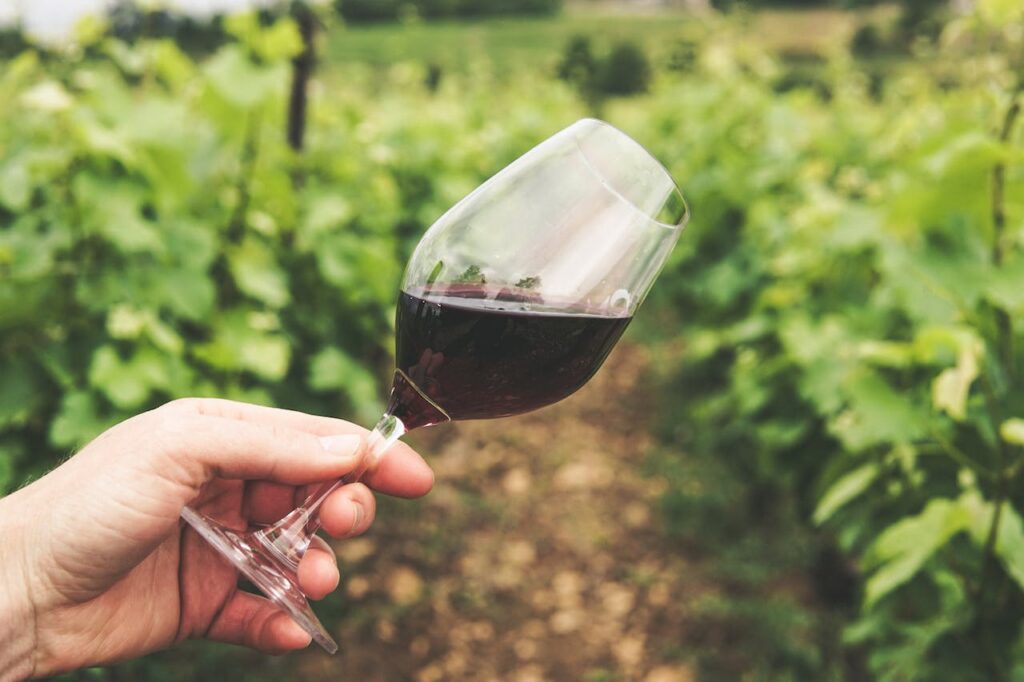
Alezio Rosso
- Colour: ruby red, deepening with age
- Nose: simply vinous when young, opening into a bouquet with age
- Palate: dry and tannic, with a pleasant aftertaste
- Alcohol: at least 12%
- Serve at: 18–20 °C, in a medium tulip glass
At the table: pasta with tomato sauce, light meats, chicken, rabbit. The riserva — two years, at least 12.5% — goes with roast meat and stewed kid.
Alezio Rosato
- Colour: deep coral pink
- Palate: velvety, dry and harmonious with a light bitter finish
- Alcohol: minimum 12%
- Serve at: 14–15 °C, in a medium tulip glass
At the table: right through a meal — cured pork, eggs, offal.
Order the rosé, not the red, in August. In the Salento the rosé is not an aperitif wine that gets abandoned at the first course: it is drunk all the way through, and at 14 °C it handles fried fish and tomato better than a warm red will at thirty-five degrees outside.
More on the wines of Puglia.