Fried lampascioni are one of the great Apulian antipasti: wild hyacinth bulbs, soaked overnight to tame their bitterness, cut into four and fried in very hot olive oil until they open like a flower. Here is the traditional recipe, why the bulbs bloom in the pan, and the variations, from batter to vincotto.
How to make fried lampascioni
If you grew up in Puglia, you know fried lampascioni. If you did not, they are worth discovering: small bulbs that look like onions but are the bulbs of a wild plant, Muscari comosum, the tassel hyacinth, which grows wild on the Murge plateau, in the Salento and sometimes over the border in Basilicata. In Puglia they are considered a real delicacy, and once you have tasted them fried you will understand why. Everything else about the bulb, from its names to the other ways to cook it, is on our lampascioni page.
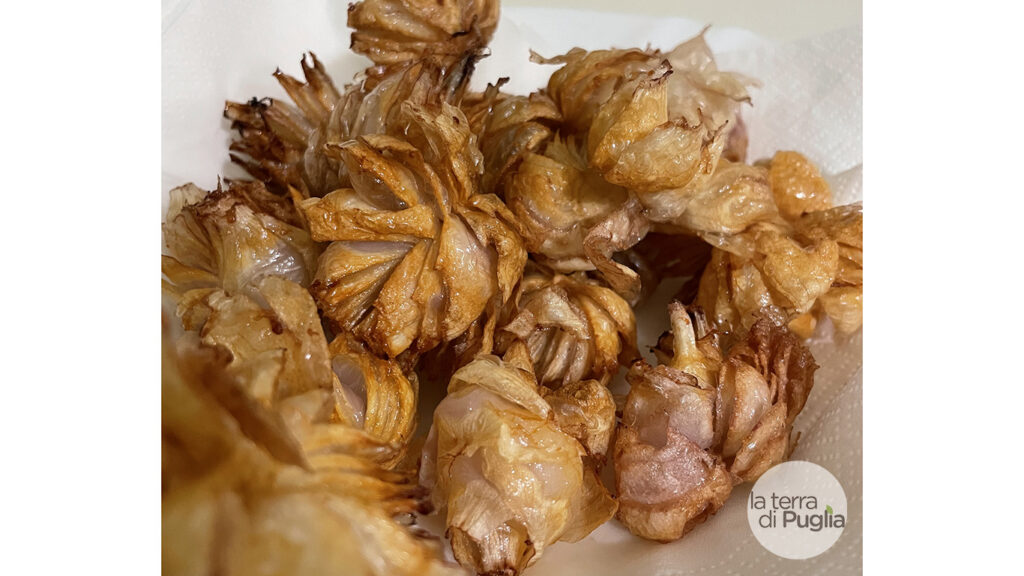
The bulbs measure about 4 to 6 centimetres across and are sold in local markets as something precious. They can be grilled, pickled, cooked over embers, preserved in oil and, of course, fried.
The recipe
This recipe for fried lampascioni is an old one, handed down from one generation to the next. You will need:
- 400 g of fresh lampascioni, cleaned
- Extra virgin olive oil, plenty, for frying
- Salt and pepper to taste
Method:
- Once the lampascioni are cleaned, wash them several times.
- To remove the excess bitterness, leave them in fresh water for a whole night and rinse them the next day.
- Dry them and score each one into four with a cross-shaped cut.
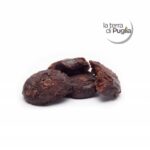
- Lower them into plenty of very hot oil and let them open during cooking, until they almost look like a rose.
- Drain them on kitchen paper and serve them hot, with a little salt and pepper.
Why fried lampascioni open like a flower. The cut into four is not just practical: it is the secret of the most striking thing about this dish. When the bulb goes into the hot oil, its layers react to the heat and open outwards, taking the shape of a flower or a rose, because the inner layers cook faster than the outer ones and curl, pushing out. The result is a lampascione that seems to bloom on the plate, crisp at the edges and softer at the centre. To make the effect stronger, the oil must be properly hot before the bulbs go in: at least 175-180 °C. Oil that is too cool slows everything down and flattens the flower.
Variations: batter, vincotto, eggs
The recipe adapts easily. Besides lampascioni fried without batter, you can try them in batter, which gives a different kind of crunch. For something special, serve them with vincotto, the sweet-sour contrast is surprising, or make small fried lampascioni bites to serve as an antipasto. A very Apulian variation is lampascioni fried with eggs: beaten eggs are added to the pan at the end, making a kind of rustic frittata, the Italian flat omelette.
Fried lampascioni with vincotto: an old pairing from the farm kitchen. Vincotto, literally “cooked wine”, is an Apulian condiment made by slowly cooking grape must until it becomes thick, sweet and slightly tart. Pairing it with fried lampascioni belongs to the farmhouse cooking of Puglia, and the logic is that of sweet-and-sour: the strong bitterness of the bulb is balanced by the sweetness of the vincotto, and each brings out the other without either taking over. You can still find stalls selling home-made vincotto in Apulian markets: if you come across one, buy a bottle. A few drops over freshly drained lampascioni change the dish completely.
Puglia and Basilicata
Lampascioni are not only an Apulian speciality: they are just as loved in neighbouring Basilicata, where fried lampascioni are common too, sometimes served with other local side dishes.
Frequently asked questions
Where can you find lampascioni?
They grow mainly on the Murge and in the Salento, and in parts of Basilicata, and are often sold in local markets in Puglia. If you are not in Puglia you can buy them fresh online or ready-made in oil.
Do lampascioni have any side effects?
Eaten in large quantities, lampascioni can have a laxative effect: enjoy them in moderation.
What is the scientific name of lampascioni?
Muscari comosum, also classified as Leopoldia comosa. In Italian they are also called cipolla canina or cipollaccia turchina, and each Apulian dialect has its own name for them.
More vegetable recipes
Boiled lampascioni and lampascioni baked with potatoes are on the lampascioni page linked above; for the other Apulian vegetable dishes, from cardoncelli mushrooms to stuffed aubergines, see our vegetable recipes.