In short. DOC since 1975, from the north of Puglia, built on Uva di Troia. Red only. The name is dialect and it does not describe the wine — it describes how the wine used to be made, when the equipment was rented by the day.
Of all the Apulian denominations this is the one with the best story attached, and it is a story about being poor rather than about terroir.
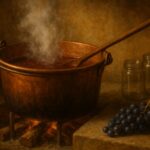
What the name means. In the old masserie of the Foggia country, few growers owned a press and vats of their own: they were hired for a day at a time. So the must was taken out — cacc’e — from the shared vats and the next producer’s was put in — mmitte. The wine is named after the queue.
The zone and the grapes
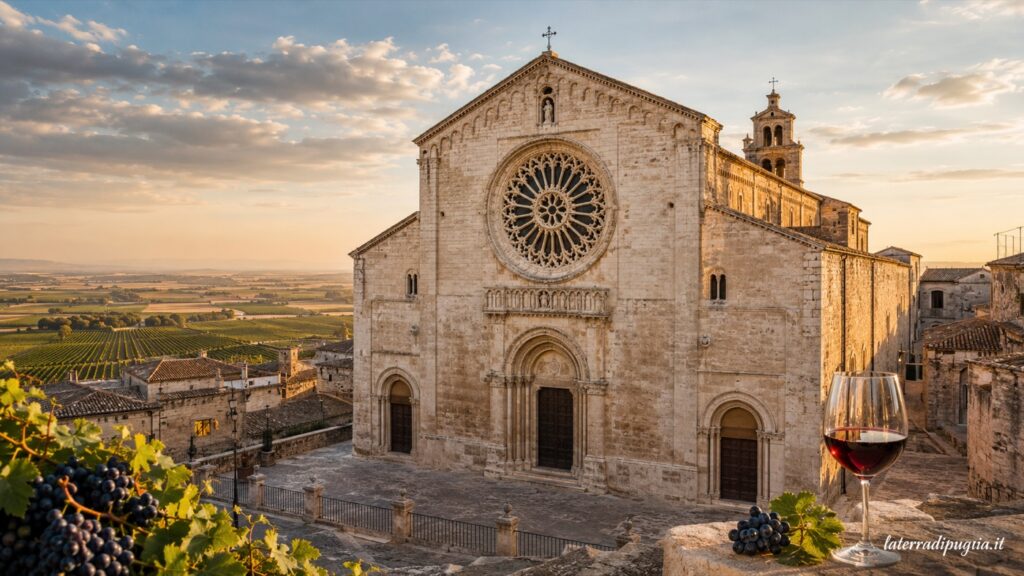
It is made between Lucera, Biccari and Troia, in the province of Foggia — the wheat country of the Tavoliere rather than the seaside Puglia most visitors see.
Uva di Troia for 35–60%, with Sangiovese and Malvasia Nera at 25–35%, and Trebbiano Toscano, Malvasia del Chianti and Bombino Bianco — alone or blended — up to 30%. The presence of white grapes in a red wine is not an accident: it is what the co-operative vats produced, and the disciplinare kept it.
In the glass
- Colour: ruby red in various depths
- Nose: characteristic, very pleasant and deep
- Palate: harmonious
- Ageing: two years
- Alcohol: minimum 11.5%
- Serve at: 18 °C, in a slender tulip glass
At the table: meat-based first courses, cured pork, and all the classic Apulian pastasciutta with tomato sauce.
Uva di Troia, the third grape. Behind Primitivo and Negroamaro there is a third native black grape, and it belongs to the north of the region: Uva di Troia is the backbone of Castel del Monte, Barletta, Rosso di Canosa and Rosso di Cerignola as well as this one — and much less exported than the two southern grapes.
More on the wines of Puglia.