In short. Orecchiette are made from three things: durum wheat semolina, warm water and salt. No eggs, no machine. What turns dough into little ears is a knife blade, a thumb, and a certain amount of practice.
This is the pasta of Puglia, and it is still made by hand here — on wooden boards, in doorways, by women who have been doing it since they were children and can turn out a kilo without looking at their hands.
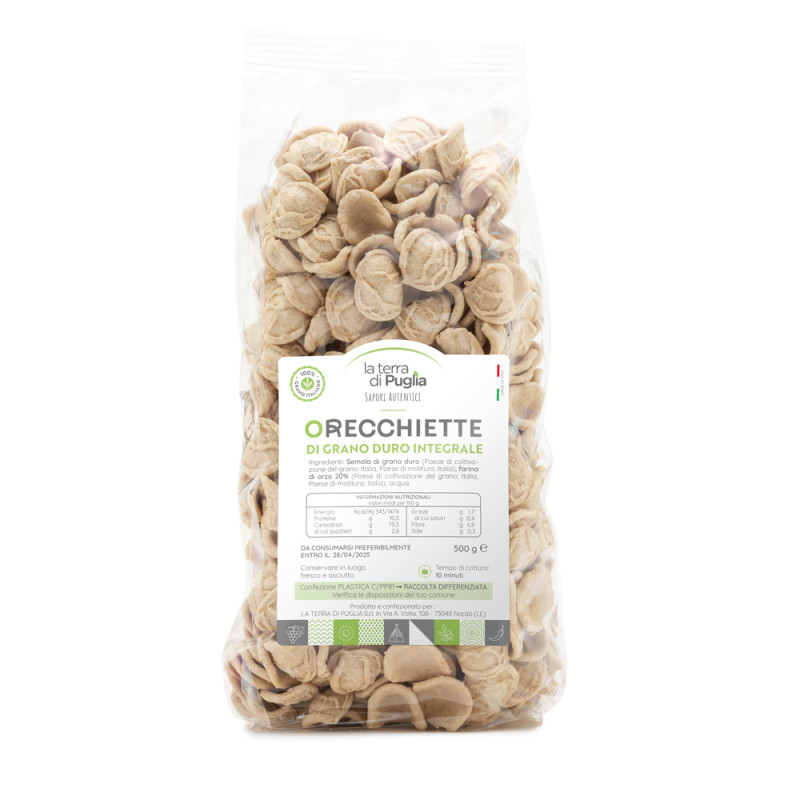
Ingredients
- 400 g of durum wheat semolina
- about 100 ml of tepid water
- salt
Method
1. The dough. Heap the semolina on the board with a little salt, make a well in the middle and add the tepid water a bit at a time. Work the dough for ten minutes, until you see small bubbles appearing in it and the surface is smooth and sleek.
2. The rope. Take a piece of dough and roll it on the floured board into a cylinder about as thick as a pencil. Cut it into pieces roughly 1 cm long.
3. The drag. With the rounded tip of a knife, drag each piece across the board so that it curls over into a shell.
4. The turn. Lay each shell over the tip of your thumb and flip it back the other way — using the knife blade to help if you need to. That second movement is what makes it an ear rather than a shell.
5. Drying. Set them side by side on a cloth or on the board and carry on until the dough is finished.
Make them the night before. Orecchiette need to rest and dry for several hours before cooking — the traditional advice is to make them the evening before you want to eat them. Fresh from the board they will not hold their shape.
Why no egg. Egg pasta is a northern Italian tradition, made with soft wheat. Puglia grows durum wheat, and durum semolina with water alone gives a pasta with a rough, porous surface and real bite — which is exactly what the sauces here need to cling to.
Now that you have them: with turnip tops, with rocket, or with cacioricotta.