In short. Canosa di Puglia was one of the great cities of Magna Graecia and then one of the most prosperous in Roman Apulia, and what it has kept is underground: painted hypogeum tombs, a sixth-century cathedral, an early Christian basilica in an archaeological park, and the tomb of a Norman crusader prince. They call it the city of stone flowers.
This is the least visited town in this guide and among the most rewarding for anyone who likes antiquity. Canosa does not have a beach or a view. It has three thousand years of continuous importance, and it is all still here.
What it was
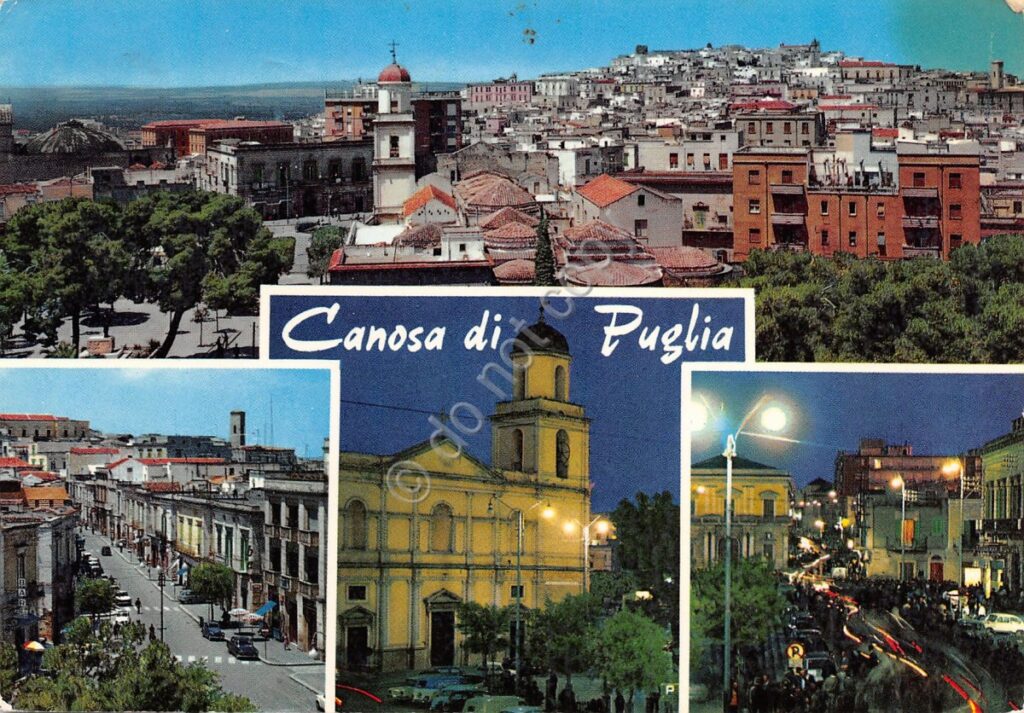
Founded by Illyrian peoples, Canosa became one of the principal cities of Magna Graecia. Under Rome it turned into one of the most prosperous places in Apulia, known for its pottery and as a serious commercial centre. Centuries later, the wealth is legible in what was buried rather than what was built up.
Underground
- The archaeological park of San Leucio — the remains of an early Christian basilica, and the site most visitors come for.
- The Hypogeum of Cerberus and the Lagrasta Hypogeum — chamber tombs cut into the rock, and among the best surviving examples of ancient funerary art and architecture in southern Italy.
- The Cathedral of San Sabino — built in the sixth century, and an outstanding piece of early Christian architecture.
- The Mausoleum of Bohemond — the tomb of the Norman prince Bohemond of Hauteville, who led the First Crusade and ended up buried here.
Why “the city of stone flowers”. The name comes from the carved decoration that runs through Canosa’s monuments and tombs — the floral motifs cut into the local stone, which turn up on the funerary architecture, in the cathedral and across the archaeological sites. It is the most distinctive thing about the place once you start looking for it.
Alive as well as ancient
Canosa is not only a dig. The feast of San Sabino, the patron, is the event that fills the town, and there is a real agricultural economy underneath: olive oil and wine, with vineyards and mills that run tastings and take the promotion of the area seriously.
It travels. The oil and the preserves of northern Puglia ship directly from here: see the shop.
Around it
Canosa is in the BAT province, twenty minutes from Barletta and about the same from Andria, with Castel del Monte on the plateau between them. It pairs naturally with either as a half-day.
Canosa is the Roman end of the Murgia, and the one town here that almost nobody puts on the list.