In short. Five Apulian coastal towns hold Legambiente’s Cinque Vele — the top rating for sea quality combined with services and environmental care. Four are in the Salento, one on the Gargano.
The Cinque Vele are not a beauty contest: they weigh water quality, how the coast is managed and what the town does about sustainability. They are the most useful shortlist there is.
The number behind all of this. Puglia has the cleanest sea in Italy, and has had for six years running. Of the water monitored along nearly 900 km of coast — 676 stretches — 99.9% is classed as excellent under the 2026 national environmental data. Exactly one stretch falls short of excellent, and it is still rated good. That is not a lucky summer: the classification runs on four years of continuous monitoring.
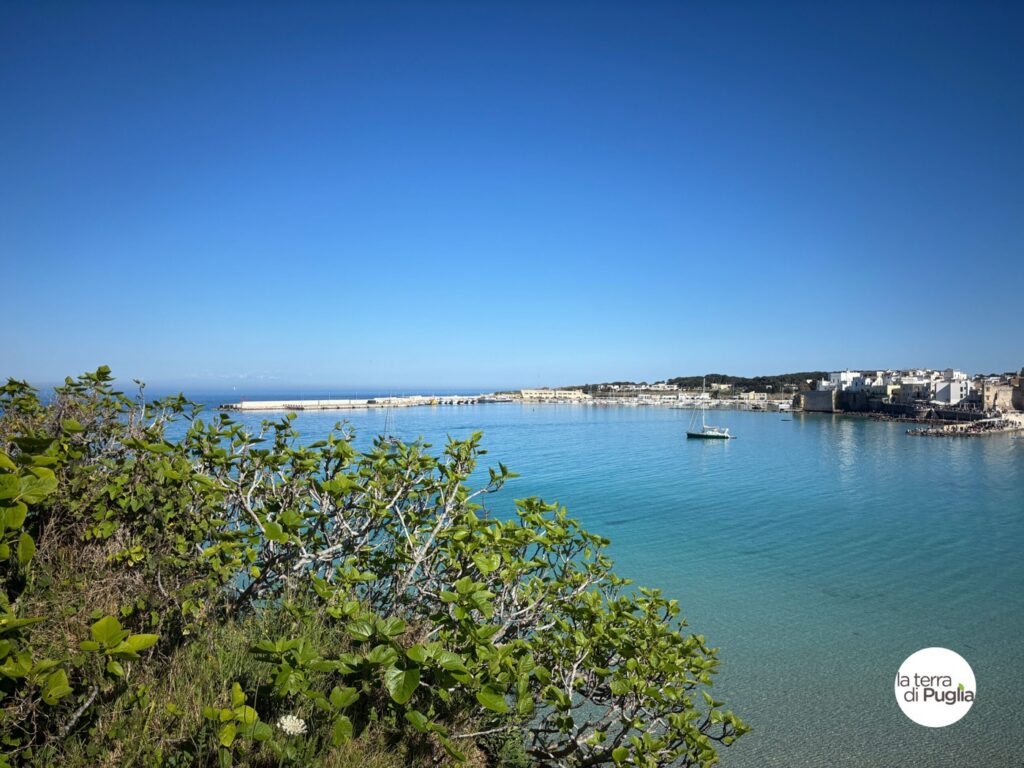
1. Nardò (LE)
The green-blue heart of the Salento: the protected area of Porto Selvaggio, pine woods running down into clear water, and untouched bays. The marinas of Santa Caterina and Sant’Isidoro mix wild coast with proper services.
2. Melendugno (LE)
The new star of the list. Torre dell’Orso with its golden sand and the sea stacks known as the Due Sorelle, the Grotta della Poesia at Roca Vecchia, and the beaches of San Foca and Torre Specchia.
3. Otranto (LE)
One of the pearls of the Adriatic, with a historic centre worth the visit in its own right. Best-loved beaches: Baia dei Turchi, the wide sands of the Alimini lakes, and the clear water of Porto Badisco. More on Otranto here.
4. Gallipoli (LE)
Famous for its nightlife, but the sea is the reason to come — from quiet Rivabella to lively Baia Verde, wide equipped beaches with water that stands comparison with anywhere.
5. Vieste (FG)
North, on the Gargano. The Pizzomunno monolith standing on the beach, the golden sand of Baia San Felice, and a landscape where the forest comes down to the sea. The sea caves are here.
Two seas, two characters. The Adriatic side is rockier, with cliffs and deeper water close in; the Ionian is shallower and sandier and warms up earlier. In the Salento they are less than 50 km apart, so you can pick your sea according to the wind.
Getting to any of them used to be the hard part: how Apulians reached the sea before there were cars.