Corato is a lively town in the province of Bari, on the north-western edge of the Murgia upland, among centuries-old olive groves. It gave its name to the Coratina olive, the backbone of Apulian olive oil, and to a filled calzone with its own festival in October. History, sights, food, how to get there and when to go.
Corato is a lively town in Puglia, in the province of Bari, on the north-western edge of the Murgia, the limestone upland that rises behind the coast. Surrounded by centuries-old olive groves and karst landscapes, it is a stop worth making for anyone who wants to see the everyday heart of Puglia, away from the most beaten tracks.
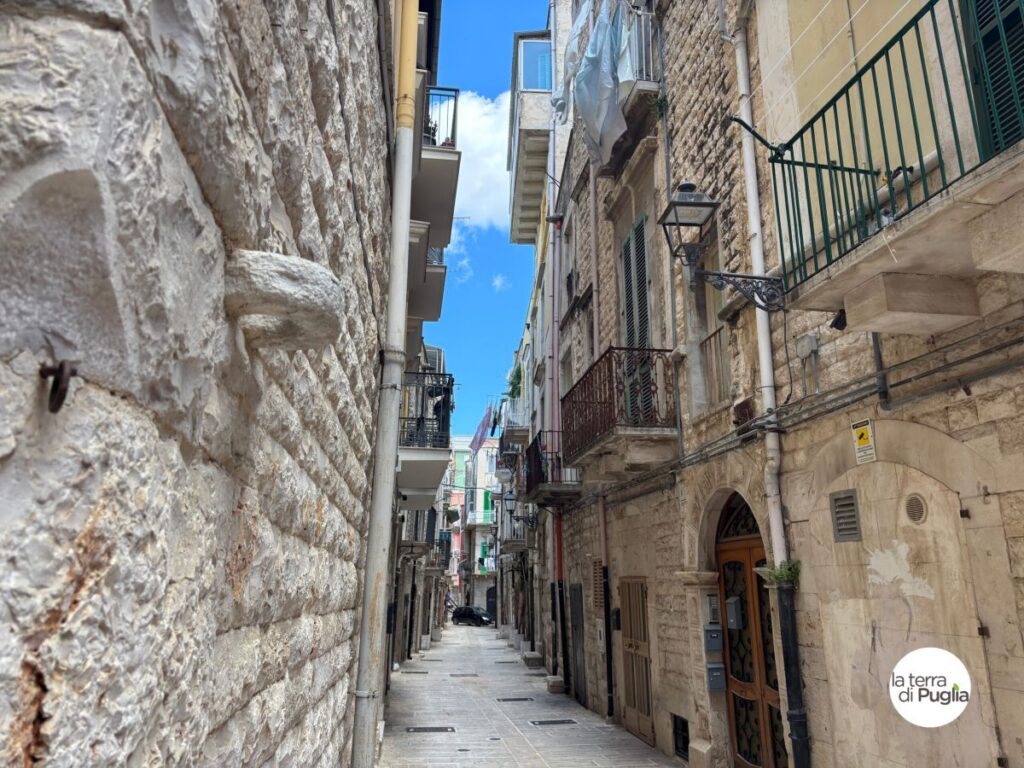
The history of Corato and the origin of its name
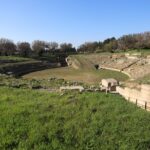
The founding of Corato dates back to the Norman period, around the year 1046, when the Norman leader Peter I built a castrum, a fortified camp. The area, however, had already been inhabited in Roman and pre-Roman times.
The origin of the name is uncertain, and there are several theories. According to some, it comes from the ancient Iapygian people and a town called Corinum. Others suggest a Greek root, linked to words such as Kora or Korion, which might refer to place names or mythological figures. A further theory ties Corato to Roman times, deriving the name from Quadratum, perhaps a reference to the square plan of a settlement or a fortified structure. Together, these readings show how deep and layered the town’s roots are, shaped by the many cultures that followed one another in Puglia over the centuries.
A thousand years of history
The first traces of settlement in the area go back to pre-Roman times, when native peoples such as the Iapygians lived here. In the Roman period Corato grew as an important farming centre, thanks to its good position and the fertile land around it. It kept its importance in the Middle Ages, when it passed through the hands of various feudal lords and became a junction on the trade routes of the time.
Over the centuries Corato was shaped by successive rulers, among them the Normans, the Swabians and the Angevins, who left their mark on its streets and its culture: castles, churches and defensive walls were built, and they still tell the town’s story today. In the Renaissance Corato enjoyed a period of economic and artistic growth driven by farming and local crafts, and in the 19th and 20th centuries it changed again with modern infrastructure and a new interest in its cultural traditions.
Today Corato proudly preserves its heritage, in its monuments, its popular festivals and a lively community that keeps the old customs alive.
Who were the Iapygians? The Iapygians were an ancient Italic people who lived in what is now Puglia and part of Basilicata during the Iron Age, before and during the Roman period. They were divided into three main groups: the Daunians, the Peucetians and the Messapians, each with its own culture and territory. They were skilled farmers, herders and warriors, living in fortified settlements. Their culture shows clear Greek influence, the result of contact with the colonies of Magna Graecia, the Greek cities of southern Italy, and they are known for their decorated pottery, their religious rites and their burial customs. With the expansion of Rome they were gradually Romanised, while keeping some local traditions, and today they are recognised as a fundamental part of the ancient history of Puglia and of the origins of many of its towns, Corato among them.
What to see in Corato
- The old town and Porta Castello: the beating heart of the town, with stone lanes and buildings from the Middle Ages.
- The mother church of Santa Maria Maggiore: a Romanesque-Gothic church with a carved portal.
- Palazzo Gioia: an example of Renaissance architecture, now a cultural venue.
- The sanctuary of the Madonna delle Grazie: a place of pilgrimage with a view over the countryside.
What is a pulo?
A pulo is a sinkhole, a large natural hollow in the ground that forms in limestone country such as the Murgia. It is the result of a long process of erosion: rainwater seeps into the limestone and slowly dissolves it, until the ground above collapses and leaves a wide basin. Pulo is an Apulian dialect word, and locally it simply means a large pit or dip in the ground.
Puli are among the most characteristic features of the Murgia landscape and can be hundreds of metres across and tens of metres deep. They are rich in wildlife and plants, and popular with walkers, naturalists and cavers. Well-known examples are the Pulo di Altamura and the Pulicchio di Gravina.
The karst landscape of the Murgia
The area between Gravina in Puglia, Corato, Altamura and Castellana Grotte is one of the largest and most fascinating karst areas in Italy, karst being the name for landscapes carved by water out of soluble rock. It is part of the Murgia upland, made mostly of Cretaceous limestone that water erodes easily. Over millions of years rain has slowly dissolved the rock, creating a unique landscape shaped by sinkholes, puli, gravine (deep ravines), caves, swallow holes and natural canyons.
The same process formed underground rivers that flow unseen through the cavities in the rock, fed by rainwater that soaks down through natural cracks. Some are still active today and keep reshaping the landscape. The famous Castellana Caves are one of the most spectacular examples of this active karst, with more than 3 kilometres of natural caverns open to visitors, dug out by water over geological time.
Among the best-known formations of the area are the Pulo di Altamura, one of the largest sinkholes in Europe, the Pulicchio di Gravina and the deep Gravina di Laterza ravine. They are rich natural habitats and favourite places for walkers, cavers and nature lovers.
The food of Corato
The cooking of Corato is classic Apulian: fresh pasta made with semolina and flour is a must, along with Bari-style focaccia, vegetables preserved in oil and meat grilled over embers.
- Orecchiette with cime di rapa (turnip tops, a bitter leafy green)
- Focaccia barese
- Lampascioni in oil, the bulbs of the wild tassel hyacinth
- Meat grilled over embers
- Sweets such as pettole and mustaccioli
The calzone of Corato
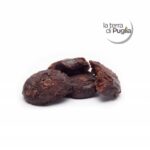
The calzone di Corato is one of the best-loved specialities of the town: a soft, filled focaccia with a rich filling full of the flavours of Apulian cooking.
Its typical filling:
- sweet onions, ideally the red onions of Acquaviva or the local sponsali, long, thin spring onions;
- black olives, for an intense, salty note;
- salted anchovies, for a bold flavour;
- sultanas, whose sweetness balances the saltiness;
- Apulian extra virgin olive oil, which brings everything together.
The dough is much like bread dough, made with flour, water, yeast and oil. Once it has risen it is rolled out, the filling goes on, and it is folded into a half-moon, carefully sealed and baked at a moderate temperature until golden, so that it cooks evenly and the crust turns crisp.
The Sagra del Calzone. To taste the real thing, come to Corato for the Sagra del Calzone, a sagra being a village food festival devoted to one dish. It is held every year on the third weekend of October in Piazza Vittorio Emanuele, in the town centre, with food stalls, music and shows. The rest of the year, look for the bakeries and pizzerias that keep the tradition going.
Coratina: the green gold of Puglia
The Coratina is one of the oldest and most prized olive varieties of Puglia, and it comes from the area around Corato, which gave it its name. It has a high content of polyphenols and an intense, fruity, slightly bitter taste, and it is the most authentic expression of Apulian extra virgin olive oil. Its oil stands out for its bright green colour and its grassy notes with hints of almond, cardoon and artichoke. More than a crop, the Coratina is a symbol of the farming culture of southern Italy, of a generous and harsh land able to produce food that is recognised around the world.
The Carnival of Corato
The Carnevale Coratino is a traditional festival held every year in Corato, and one of the liveliest and most heartfelt events in town. As in many Italian towns, Carnival here means fun, colour, music and popular tradition: the streets fill with allegorical floats, masked groups, live music and dancing, for children and grown-ups alike. There are also traditional masks, cultural events, theatre and plenty of chances to get together, a festival that keeps the town’s roots alive.
How to get to Corato
- By car: A14 Bologna-Taranto motorway, Trani or Andria exit.
- By train: on the Ferrotramviaria line from Bari.
- By plane: Bari Karol Wojtyła airport is 40 km away.
Main distances
- Bari: 43 km
- Trani: 20 km
- Castel del Monte: 18 km
- Matera: 90 km
The climate: when to visit Corato
The climate is Mediterranean with an inland touch, good for visiting both the town and the Murgia:
- Spring (March to May): 15 to 25°C, perfect for walks.
- Summer (June to August): hot and dry, with peaks of 35°C.
- Autumn (September to November): mild, pleasant days.
- Winter (December to February): moderately cold, with lows around 5°C.
Why visit Corato
Corato is the right choice for anyone looking for authenticity, culture and nature. Between honest flavours, living traditions and unusual landscapes, it offers a real taste of the heart of Puglia. The other towns of the area are on the page about the Murgia.