In short. DOC since 1976, red and rosé, from Copertino, Carmiano, Arnesano and Monteroni. Negroamaro from 70% up to 100% — which makes it one of the clearest expressions of the grape you can buy.
Central Salento, a few kilometres west of Lecce: flat land, red earth and low bush-trained vines.
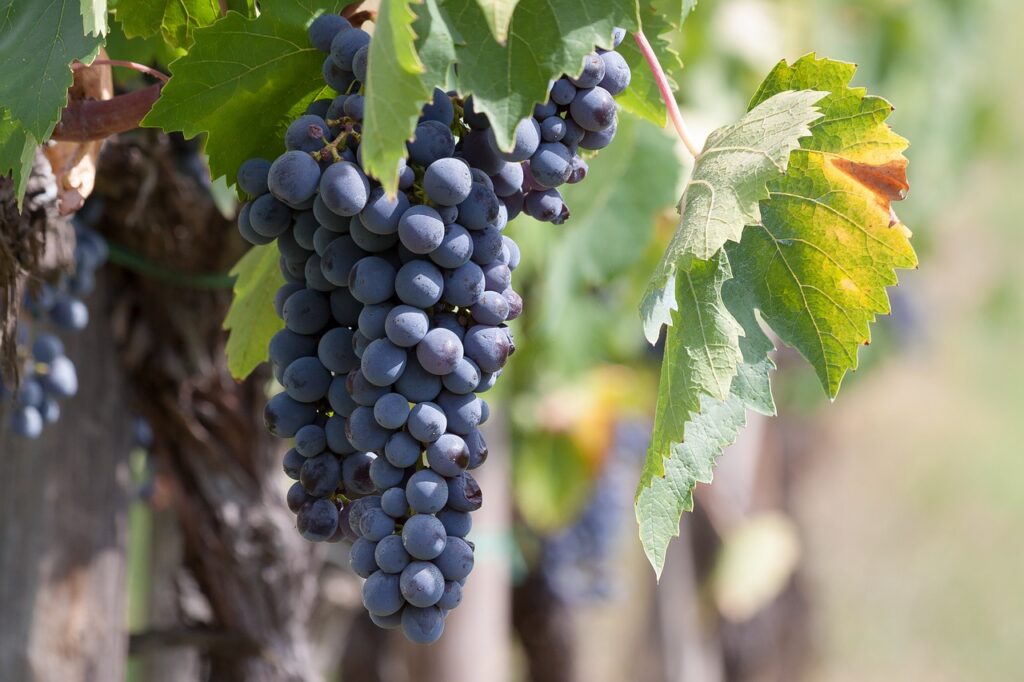
The zone and the grapes
The grapes come from the lands of Copertino, Carmiano, Arnesano and Monteroni, with a part from Galatina and Lequile. Negroamaro makes up 70–100%; Malvasia Nera (of Brindisi and Lecce), Montepulciano and Sangiovese may together reach 30%, with a 15% limit on Sangiovese.
The red becomes riserva after two years’ ageing at 12.5% or more.
Because the disciplinare allows Negroamaro on its own, a Copertino made in purezza is the straightest answer to the question what does this grape actually taste like. The background: Primitivo and Negroamaro.
Copertino Rosso
- Colour: ruby red in various depths, turning orange with age
- Nose: deep
- Palate: dry and velvety, with the bitter aftertaste of the grape
- Alcohol: 12%
- Serve at: 15–18 °C, medium tulip glass
At the table: soups, steamed white meats, aged cheese, risotto. The riserva with substantial first courses, roast red meat and game.
Copertino Rosato
- Colour: salmon pink, sometimes tending to light brown
- Palate: dry without harshness, with a herbaceous base and a pleasantly bitter finish
- Alcohol: at least 12%
- Serve at: 13–16 °C
At the table: light cured pork, spaghetti with mussels, fish in sauce.
The bitter finish is not a fault. Negroamaro leaves a faint bitterness at the end, and every Salento denomination describes it in its own words — amarognolo, a light bitter, a pleasant aftertaste. It is the signature of the grape, and a Salento red that finishes perfectly sweet is usually a Salento red with something else in it.
More on the wines of Puglia.