Anchovies preserved in salt are an old Mediterranean way of keeping fish for the lean months: fresh anchovies layered with coarse sea salt in a jar, pressed under a weight and left for two months. Here is how it is done in Puglia, the one mistake that ruins everything, and how to use them in the kitchen.
A preserve from Puglia: salted anchovies
This is a recipe from the Mediterranean tradition born of necessity: keeping a precious fish like the anchovy on hand during the seasons when fishing, at least in the past, was very difficult. Anchovies in salt are a true Apulian preserve, made along practically every stretch of coast where this small oily fish could be found.
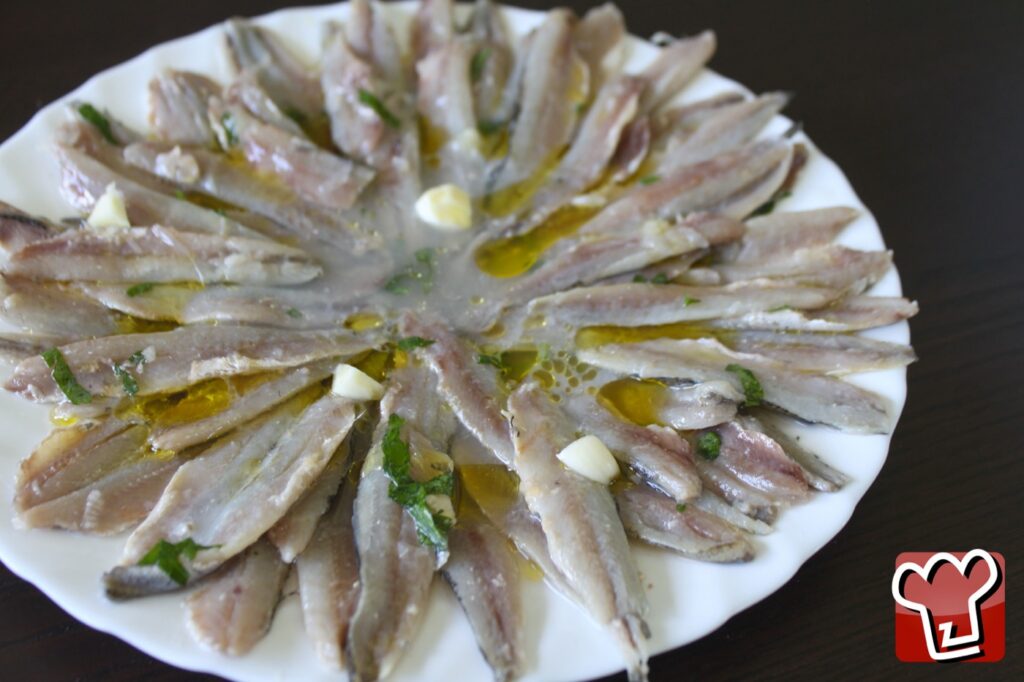
Good salted anchovies are prized because they keep the flavour of the fish intact. The habit of preserving them under salt goes back centuries, to the days when keeping fish through the hard months really mattered.
The secret of a perfect jar of salted anchovies
Keep fresh water away from the fish. The one rule that matters is that the anchovies must never touch water that is not sea water. Fresh water makes the whole batch fail beyond repair: the fish goes off and rots.
The other key is the ingredients. You need really fresh anchovies and good-quality coarse sea salt. The container matters too: a proper preserving jar is what keeps the anchovies in good condition and protects them from contamination.
How to make salted anchovies
- Get a cylindrical glass jar with a wide mouth, open all the way across.
- Take at least a kilo of anchovies. Remove the head and the innards with a simple push of the thumb, then lay them on a tea towel and pat them dry with a second one.
- Cover the bottom of the jar with a layer of salt, add a layer of anchovies, and keep alternating salt and fish until you are a centimetre from the top. Finish with salt.
- Close the jar loosely, not airtight, with a “lid” that sits on the fish (a round piece of wood will do), and put a weight of at least 2 kg on top.
- Every two days, check the jar and pour off the excess liquid, leaving about a centimetre of brine above the anchovies.
- Keep the jars somewhere cool, such as a cellar, out of the sun and, above all, in a dry place.
After two months the salted anchovies are ready. Always use clean cutlery to take them out, and press down the ones left in the jar so that they stay covered by their own liquid. For a tasty variation, some of the anchovies can then be put under oil: rinse and dry the fillets well, then flavour the oil with herbs, spices, chilli and whole cloves of garlic.
Salted anchovies in the kitchen
Salted anchovies are very versatile. One of the best-loved dishes is pasta with anchovies: melt the anchovies in extra virgin olive oil with a clove of garlic and some chilli, add pasta cooked al dente and toss everything together so the flavours blend.
They also go into marinated anchovy starters and spaghetti with anchovies, a simple dish that brings out the taste of the fish, and they can be used to season salads, pizzas and focaccia, adding a touch of the sea to almost anything. If you like this kind of cooking, try two Apulian anchovy recipes: anchovies arraganate, baked with breadcrumbs and oregano, and anchovies with vinegar. Preserving fish at home is a tradition that lets you enjoy the flavours of the sea all year round.
Buying and storing salted anchovies
Salted anchovies can be found in supermarkets, delicatessens and online. Prices vary with quality and origin; anchovies from Spain and from the Ligurian Sea, in north-west Italy, are particularly well regarded for their flavour.
Once bought, they should be kept somewhere cool and dry, away from direct sunlight. Stored properly, they keep their flavour and stay safe to eat.
Making them at home is a way to rediscover an old habit and to have a genuine, full-flavoured ingredient on hand for a whole range of dishes. Other jars from the Apulian pantry are on the page of Apulian preserves.
Acciughe or alici: what is the difference?
In Italy the anchovy goes by two names, acciuga and alice, and the difference confuses many Italians too. In fact they are the same fish, the European anchovy, Engraulis encrasicolus. What changes is the use: the word alici is generally used for the fish eaten fresh and cooked simply, while acciughe is more often used for the preserved fish, under salt, in oil or marinated.
Salting lengthens the life of the fish and concentrates its flavour, and it is a long process. When fresh anchovies are marinated, the process is much shorter and involves no prolonged salting. Same species, then, but very different ways of using it. In English both are simply anchovies.